Key performance
Technical specifications
Engine
- Displacement
- 895 cc
- Power
- 105.0 ch @ 8500 tr/min (77.2 kW)
- Torque
- 93.0 Nm @ 6750 tr/min
- Engine type
- Bicylindre en ligne, 4 temps
- Cooling
- liquide
- Compression ratio
- 13.1 : 1
- Bore × stroke
- 86 x 77 mm
- Valves/cylinder
- 4
- Camshafts
- 2 ACT
- Fuel system
- Injection Ø 48 mm
- Starter
- électrique
- Euro standard
- Euro 5+
Chassis
- Frame
- Treillis en tubes d'acier
- Gearbox
- boîte à 6 rapports
- Final drive
- Chaîne
- Front suspension
- Fourche téléhydraulique inversée Ø 43 mm, déb : 230 mm
- Rear suspension
- Mono-amortisseur, déb : 215 mm
Brakes
- Front brakes
- Freinage 2 disques Brembo Ø 305 mm, étrier 2 pistons
- Rear brakes
- Freinage 1 disque Brembo Ø 265 mm, étrier simple piston
- Front tyre
- 90/90-21
- Front tyre pressure
- 2.20 bar
- Rear tyre
- 150/70-17
- Rear tyre pressure
- 2.50 bar
Dimensions
- Seat height
- 875.00 mm
- Fuel capacity
- 23.00 L
- Weight
- 246.00 kg
- New price
- 15 000 €
Overview
When BMW declines its GS family, it does so across the entire range, from the smallest to the most imposing. But among the mid-displacement trail bikes, only one carries the Adventure badge without compromise: the 2025 F 900 GS Adventure, a direct descendant of a lineage that has long lived in the shadow of the R 1250 GSA. This year, things change a bit, and it’s worth paying attention to.
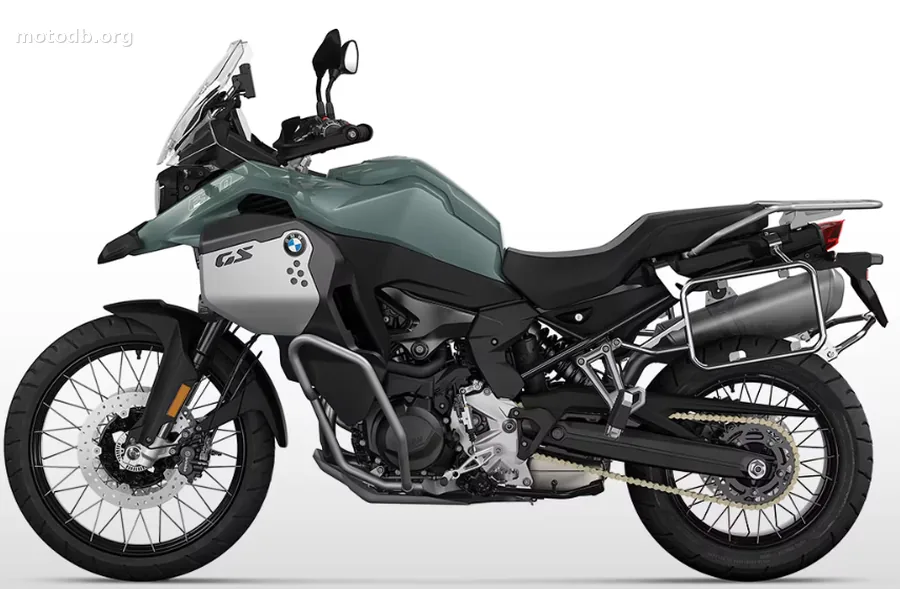
The heart of the novelty is the engine. The parallel-twin grows to 895 cm3, a gain achieved by a simple two-millimeter increase in bore, borrowed from the F 900 R and XR. The resulting torque remains modest, 93 Nm at 6750 rpm, just a little over one Newton-meter more than before. However, power progresses significantly: 105 horsepower at 8500 rpm, ten more than the previous generation. On this type of machine, that’s the difference between a motorcycle that follows and a motorcycle that leads. The torque curve also gains consistency at mid-range, which counts more on a forest track or mountain pass than the raw figures. The six-speed gearbox has also been reworked in its shifts, a detail that makes its mark in everyday use.
The BMW F 900 GS Adventure distinguishes itself from the standard version by everything that makes a motorcycle a serious touring tool. The fuel tank increases to 23 liters, almost nine liters more, which radically changes the range on road and off-road. Crashbars, a luggage rack, and preparation for side cases expand the spectrum of use far beyond the sporty weekend. The adjustable windshield, handguards, USB and 12-volt sockets, heated grips, and aluminum engine guard are part of the standard equipment. For 15,000 euros, the level of finish justifies the investment, even if the standard heated grips on the BMW F 900 GS Adventure 2025 constitute an appreciated advancement compared to previous versions.
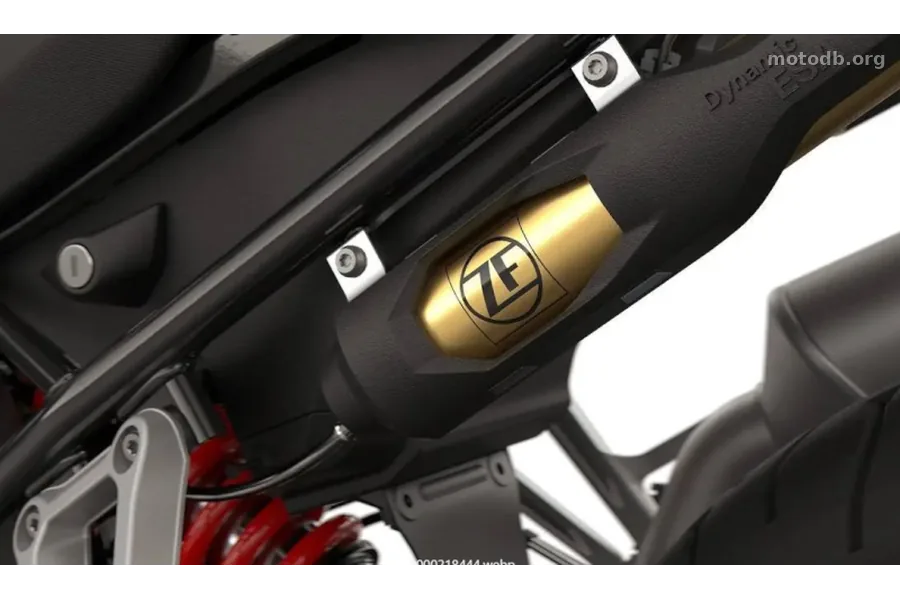
Where things are a little tricky is the comparison with its standard sister. The F 900 GS non-Adventure underwent a radical slimming cure, fourteen kilograms lost thanks to a new plastic tank, a lighter swingarm, and a series Akrapovic silencer. The Adventure doesn't benefit from this: it retains its styling inherited from the F 850 GS Adventure, with only the side panels redesigned. It loses two kilograms on the scale, 246 kg fully fueled, but remains heavier than its younger sibling. For the BMW F 900 GS Adventure price displayed, one could have hoped for more technology sharing. The 43 mm Showa inverted fork, adjustable, is nevertheless shared with the standard: 230 mm of front travel, 215 mm at the rear, values unchanged from the 850 that amply suffice for most terrains. The 875 mm seat remains selective for pilots of modest stature, even if a lowered suspension is available as an option.
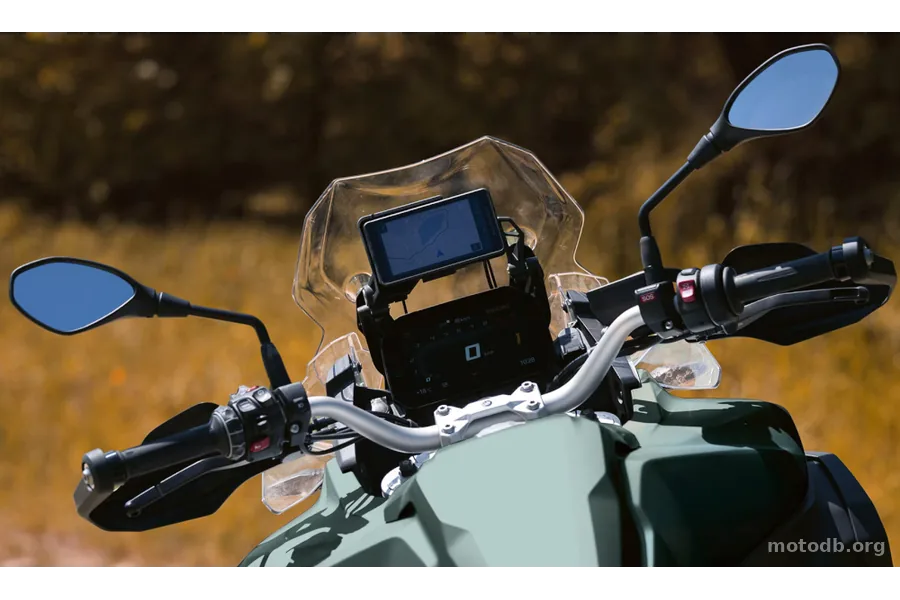
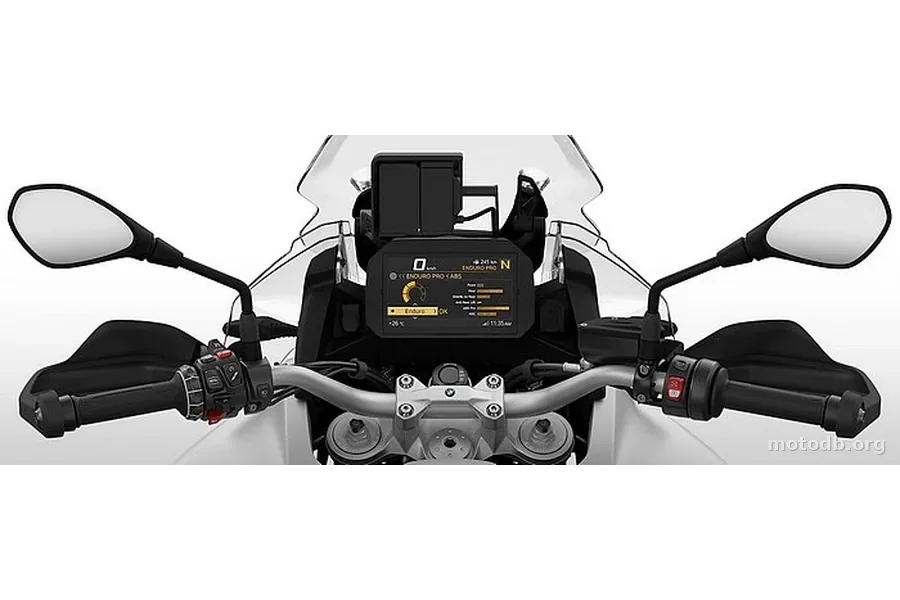
On the electronics front, the standard equipment includes Active ABS Pro in curves, traction control, adjustable engine braking, and two riding modes, Rain and Road. The connected 6.5-inch TFT dashboard manages turn-by-turn navigation, incoming calls, and music via the BMW app. Enduro, Dynamic modes, and the quickshifter arrive via the options catalog, which is becoming a habit with the Bavarian manufacturer. Top speed is announced at 200 km/h, a purely theoretical figure on a machine designed to last on long distances rather than for highway sprints. The target audience is the patient globetrotters, those who count their kilometers in days rather than hours, experienced enough to exploit the chassis but without seeking the sensations of a pure enduro. Faced with the R 1250 GSA, the BMW F 900 GS Adventure’s more compact dimensions and lower price constitute its main argument. Faced with a KTM 890 Adventure R or a Triumph Tiger 900 Rally Pro, the debate is tighter, but BMW plays on perceived quality and the ecosystem of options to retain its customer base.
Standard equipment
- Assistance au freinage : ABS
- Nombre de mode de conduite : 2
- Taille de l'écran TFT couleur : 16,51 cm / 6.5 pouces
- Indicateur de vitesse engagée
- Bluetooth
- Prise USB
- Contrôle de traction
- Poignées chauffantes
- Pare brise réglable
- Crash Bars / Top Blocks
- Embrayage anti-dribble
- ABS Cornering
Practical info
- La moto est accessible aux permis : A
Reviews & comments
No reviews yet. Be the first to share your opinion!