Key performance
Technical specifications
Engine
- Displacement
- 1099 cc
- Power
- 164.0 ch @ 9750 tr/min (120.6 kW)
- Torque
- 122.6 Nm @ 8000 tr/min
- Engine type
- Bicylindre en L à 90°, 4 temps
- Cooling
- liquide
- Bore × stroke
- 104 x 64.7 mm
- Valves/cylinder
- 4
- Fuel system
- injection
Chassis
- Frame
- treillis tubulaire en tube d'acier relié à des platines en alu
- Gearbox
- boîte à 6 rapports
- Final drive
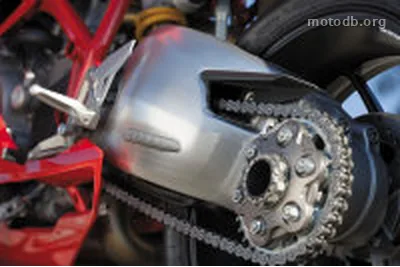
- Chaîne
- Front suspension
- Fourche téléhydraulique inversée Ø nc, déb : 120 mm
- Rear suspension
- Mono-amortisseur, déb : 120 mm
Brakes
- Front brakes
- Freinage
- Rear brakes
- Freinage 1 disque
- Front tyre
- 120/70-17
- Front tyre pressure
- 2.30 bar
- Rear tyre
- 190/55-17
- Rear tyre pressure
- 2.30 bar
Dimensions
- Fuel capacity
- 16.00 L
- Dry weight
- 170.00 kg
- New price
- 25 000 €
Overview
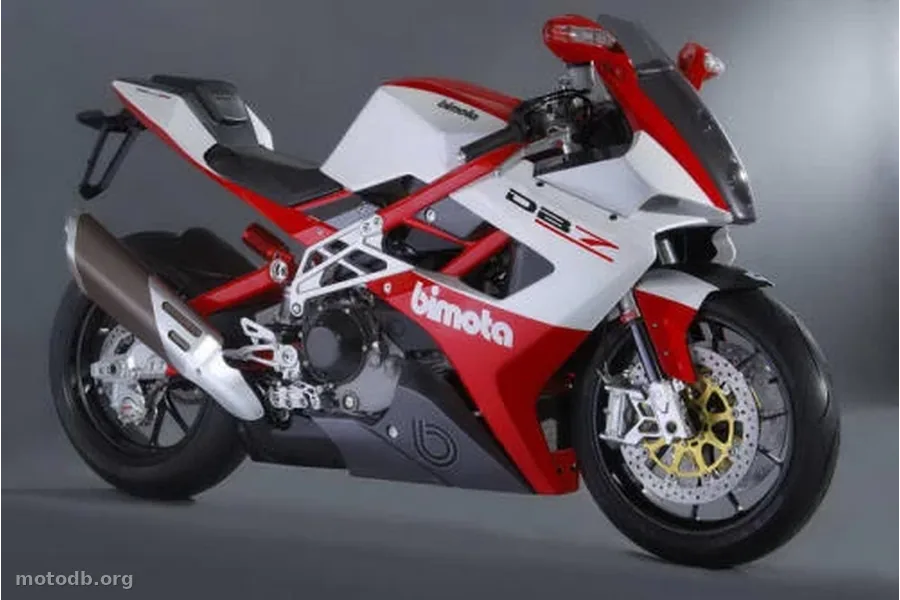
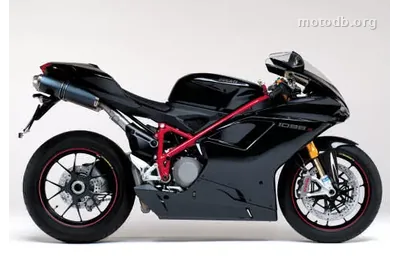
Rimini, a small town on the Adriatic coast, has been home for decades to a handful of obsessive engineers capable of transforming a production engine into something decidedly less reasonable. Bimota had adopted a low profile in recent years, offering machines like the DB5, DB6, or Tesi 3D, all equipped with Ducati’s desmodromic air-cooled twin, seductive but sensible. With the DB7, the Rimini manufacture changes register and hits hard.
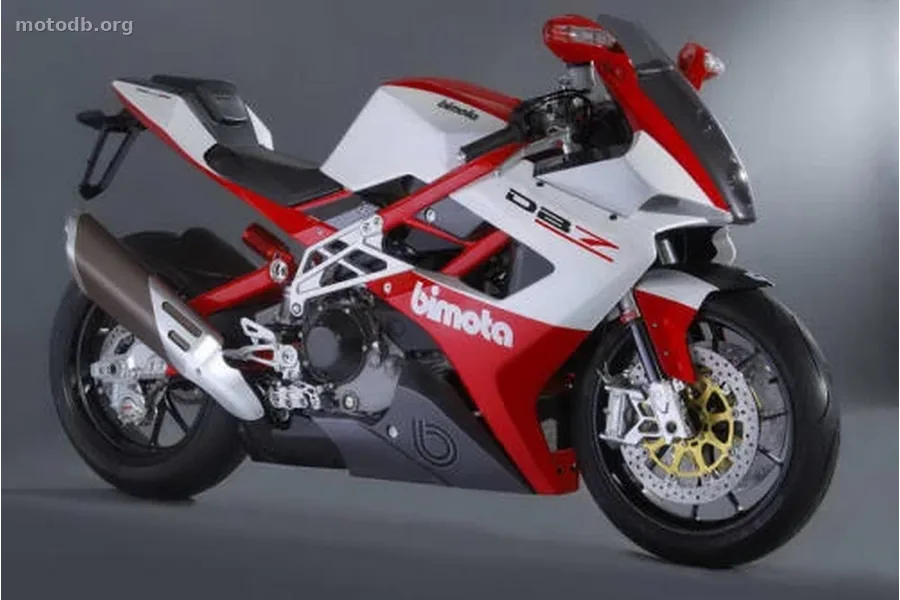
The heart of the beast is the 1099 cm³ L-twin at 90° from Bologna’s 1098, already formidable in its original form. Having passed through the hands of Rimini’s technicians, it develops 164 horsepower at 9750 rpm and 122.6 Nm of torque at 8000 rpm. For a machine that weighs only 170 kg dry, 5 kg less than the previous SB8K, these figures place the DB7 in a category where the air seriously thins. The announced top speed of 280 km/h is not a marketing promise, it is an arithmetic consequence.
What distinguishes Bimota from any tuner is the overall mechanical consistency. The steel trellis frame reinforced with aluminum plates is not just there to look good; it is designed to give a precise meaning to every Newton-meter produced by the twin. The inverted fork and single shock work on a 120 mm stroke each, a setting designed for the track as much as for the road. 120/70-17 tires at the front and 190/55-17 at the rear complete a picture designed for those who really want to use the 164 horsepower available, not just show it off at a standstill.
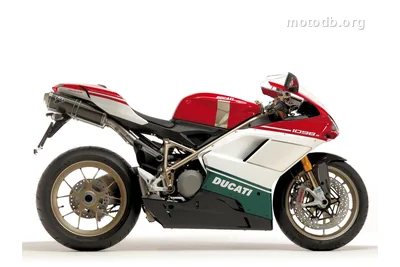
Faced with a base Ducati 1098 or even an MV Agusta F4, the DB7 imposes an argument difficult to contest on a technical level. What Bimota sells is artisanal exclusivity coupled with proven mechanics, a combination that large series cannot offer by definition. The 16-liter tank allows for decent range for sporty riding, without unnecessarily weighing down the whole. The 6-speed chain-driven gearbox completes a no-compromise architecture.
The price of 25,000 euros is the only data that cools enthusiasm, and yet, it’s relative. This is not a motorcycle for beginners, not a motorcycle for touring riders seeking comfort, and certainly not a motorcycle for those who watch their bank statements too closely. It is a machine for enlightened track riders and informed collectors, those who understand that paying twice as much as an equivalent Japanese sportbike means buying something you will never see coming out of a supermarket. Bimota has never claimed to do otherwise.
Practical info
- La moto est accessible aux permis : A
Reviews & comments
No reviews yet. Be the first to share your opinion!