Key performance
Technical specifications
- Power
- 164.0 ch @ 9750 tr/min (120.6 kW) → 160.0 ch @ 9750 tr/min (117.7 kW)
- New price
- 25 490 € → 25 000 €
Engine
- Displacement
- 1099 cc
- Power
- 160.0 ch @ 9750 tr/min (117.7 kW)
- Torque
- 122.6 Nm @ 8000 tr/min
- Engine type
- Bicylindre en L à 90°, 4 temps
- Cooling
- liquide
- Bore × stroke
- 104 x 64.7 mm
- Valves/cylinder
- 4
- Fuel system
- injection
Chassis
- Frame
- treillis tubulaire en tube d'acier relié à des platines en alu
- Gearbox
- boîte à 6 rapports
- Final drive
- Chaîne
- Front suspension
- Fourche téléhydraulique inversée Ø nc, déb : 120 mm
- Rear suspension
- Mono-amortisseur, déb : 120 mm
Brakes
- Front brakes
- Freinage
- Rear brakes
- Freinage 1 disque
- Front tyre
- 120/70-17
- Front tyre pressure
- 2.30 bar
- Rear tyre
- 190/55-17
- Rear tyre pressure
- 2.30 bar
Dimensions
- Fuel capacity
- 16.00 L
- Dry weight
- 170.00 kg
- New price
- 25 000 €
Overview
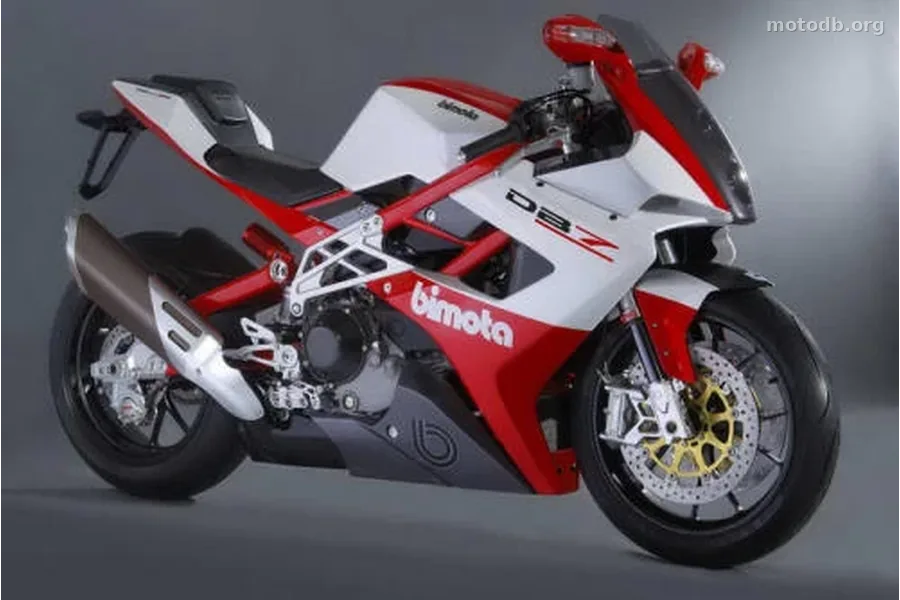
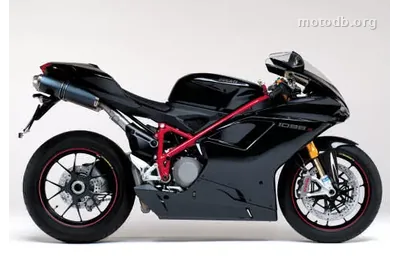
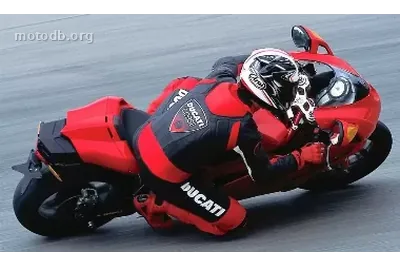
Rimini has never been a city like any other in the motorcycle world. That's where Bimota has built its machines since the 70s, with an almost arrogant determination: to take the best engines of the moment, to enclose them in in-house frames with surgical precision, and to sell the result at a price that severely filters buyers. After a few years of playing the card of sobriety with two-valve air-cooled Ducati twins on the DB5, DB6 and Tesi 3D, the Italian firm decided in 2008 to set the clock right again. The DB7 arrives, and it doesn’t joke around.
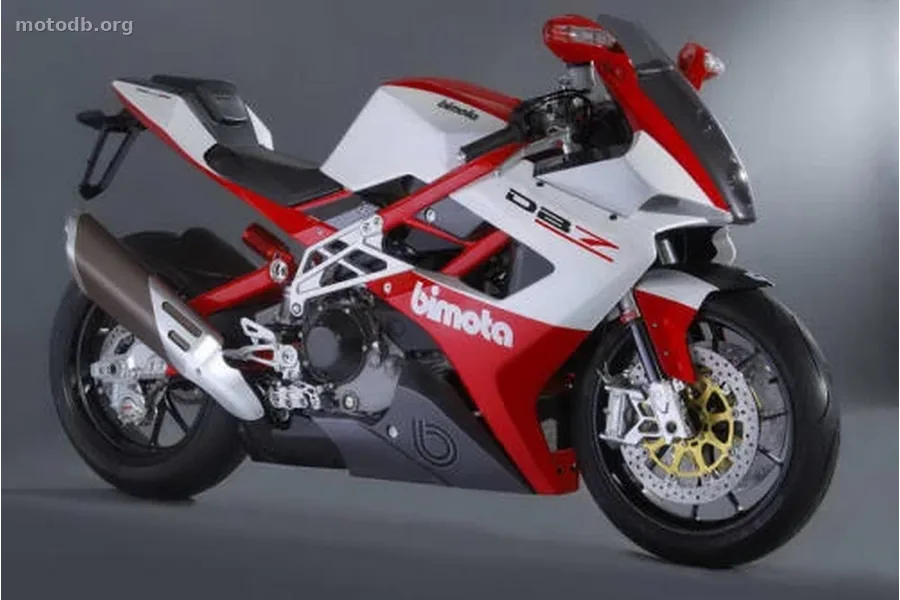
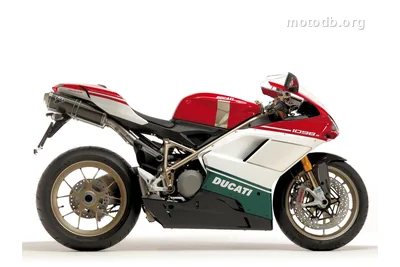
At the heart of the subject is this 90-degree L-twin borrowed directly from Bologna’s 1098. Not the old wheezing desmo of previous generations, but the latest Ducati in its most refined form: 1099 cm3, 160 horsepower at 9750 rpm, 122.6 Nm of torque at 8000 rpm. On the scale, Bimota announces 170 kg dry weight, five kilos less than the SB8K that preceded it in the hypersport register. It's a figure that speaks volumes: at this power-to-weight ratio, you play in the same league as the R1 and CBR1000RR of the time, but with an artisanal aura that the major Japanese manufacturers simply cannot offer. The announced top speed of 280 km/h completes the picture.
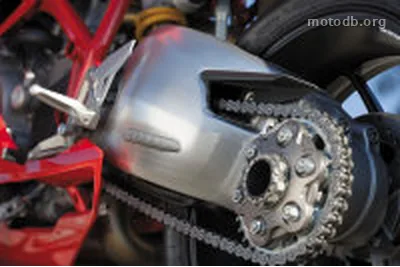
What makes the DB7 credible beyond the figures is its frame. A tubular steel trellis connected to aluminum plates, suspended by an adjustable inverted fork and a monoshock, shod with 120/70 tires at the front and 190/55 at the rear. Bimota has built its reputation on this art, that of assembling geometries that make the engine work in the best possible conditions. The six-speed gearbox and chain transmission complete a no-frills package, designed for fast roads and weekend track days. The 16-liter tank is a sign that the machine is not intended to cross France as a touring bike.
The downside is known in advance with Bimota: €25,000. At that price, you can buy two Ducati 1098, or almost three R1. The target clientele is therefore not one that calculates the cost per kilometer. It's the pure enthusiast, the one who wants something his neighbor will never have, a machine produced in a small series by people who still know what it means to assemble a frame by hand. The inherent flaw in this artisanal logic is after-sales service, always less reassuring than with a large network. And resale, even if a Bimota in good condition maintains a solid rating, remains a niche market.
The DB7 represents a clear shift in Rimini’s strategy. Having proven that interesting things can be done with modest engines, Bimota confirms that its true territory is controlled excess. This machine is for experienced riders who have nothing left to prove to anyone and who are looking for a motorcycle that reflects their image rather than a catalog. Not for beginners, certainly not for urban riders. For lovers of large sportbikes who want to stand out, it is undoubtedly one of the most coherent proposals of its time.
Practical info
- La moto est accessible aux permis : A
Reviews & comments
No reviews yet. Be the first to share your opinion!