Key performance
Technical specifications
Engine
- Displacement
- 1130 cc
- Power
- 163.0 ch @ 10500 tr/min (119.9 kW)
- Torque
- 121.6 Nm @ 8000 tr/min
- Cooling
- liquide
- Compression ratio
- 13 : 1
- Bore × stroke
- 88 x 62 mm
- Valves/cylinder
- 4
- Camshafts
- 2 ACT
- Fuel system
- Injection Ø 53 mm
Chassis
- Frame
- treillis en tube d\'acier relié à des éléments de fonderie
- Gearbox
- boîte à 6 rapports
- Final drive
- Chaîne
- Front suspension
- Fourche téléhydraulique inversée Ø 50 mm, déb : 120 mm
- Rear suspension
- Mono-amortisseur, déb : 120 mm
Brakes
- Front brakes
- Freinage 2 disques Ø 320 mm, fixation radiale, étrier 4 pistons
- Rear brakes
- Freinage 1 disque Ø 240 mm, étrier 2 pistons
- Front tyre
- 120/70-17
- Rear tyre
- 190/50-17
Dimensions
- Seat height
- 810.00 mm
- Fuel capacity
- 18.00 L
- Weight
- 212.00 kg
- Dry weight
- 199.00 kg
- New price
- 14 980 €
Overview
When Pesaro decides to go all guns blazing against Japanese sportbikes, the result is the Benelli Tornado 1130. The 900cc version had everything going for it: a three-cylinder sound that could shake the walls of any pit lane, an Italian silhouette that stood in sharp contrast to the well-behaved Asian plastics. But 138 horsepower against the CBRs, R1s, and GSX-Rs of the era was like bringing a dueling sword to a gunfight. Benelli took note, and the answer came from within the range itself.
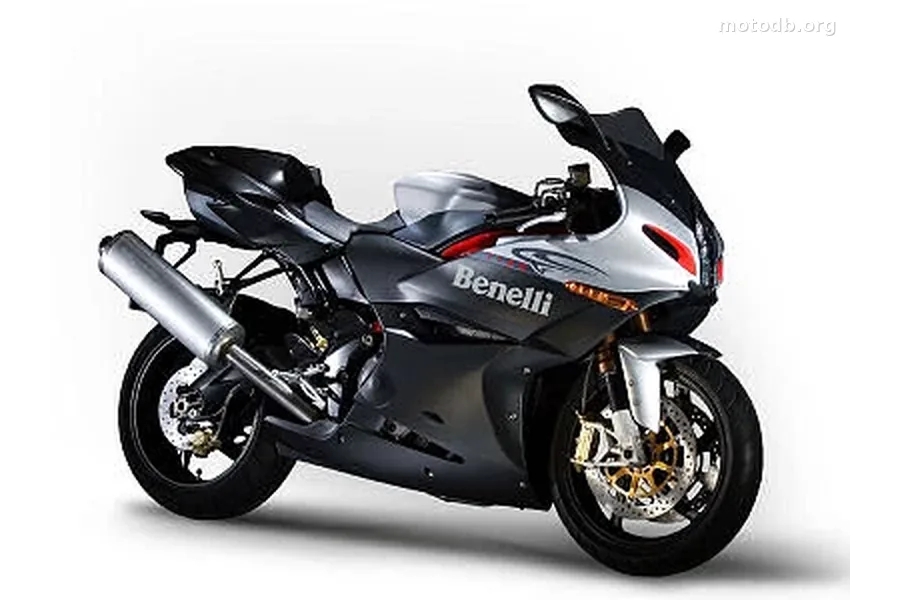
The engine fitted to the Benelli Tornado 1130 is sourced from the TnT roadster — that volcanic 1130cc three-cylinder, reworked here to unleash its power at the top of the rev range. The result: 163 horsepower at 10,500 rpm and 121.6 Nm of torque at 8,000 rpm, all housed in a steel trellis frame combined with cast elements, an architecture that had already proven itself on the 900. The 50mm inverted fork and monoshock each offer 120mm of travel, suggesting serious dynamic behavior without tipping into punishing track-only territory.
At 212 kg fully fueled, the claimed output puts the power-to-weight ratio in a very respectable range. The 18-liter tank provides decent range, and the six-speed gearbox should allow the torque curve to be exploited without spending all day working the gear lever. The brakes adopt radially mounted four-piston calipers on twin 320mm discs up front — an area where the 1130 makes clear progress over its predecessor. That's the kind of detail that matters when talking about a motorcycle capable of brushing 290 km/h.
Less flattering is the ultimately modest evolution of the machine as a whole. Apart from the pumped-up engine, revised calipers, and a lightly refreshed look, the used Benelli Tornado 1130 found on the market today remains very close to the 900 it replaces. At €14,980 on launch, the pricing argument was strained against better-equipped Japanese competition. The target audience is clearly riders who know what they're doing — drawn to the European character of the engine and willing to accept a certain rawness in exchange for a personality that inline-four Japanese bikes have never managed to replicate.
For anyone looking for a Benelli Tornado 1130 for sale today, the potential remains intact: an engine that demands revs to come alive, a three-cylinder sound that is rare in the sportbike market, and a rarity that draws looks in any track day paddock. It is not the most versatile or best-finished motorcycle of its generation, but it is the one you remember.
Practical info
- La moto est accessible aux permis : A
Indicators & positioning
Similar bikes
CBR 1100 XX Super Blackbird
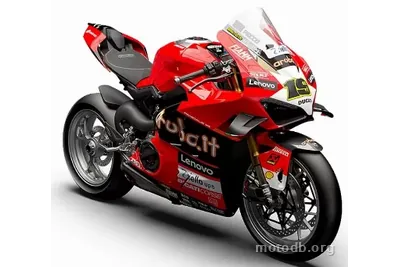
1100 Panigale V4 S Bautista World Champion Replica
Reviews & comments
No reviews yet. Be the first to share your opinion!