Key performance
Technical specifications
Engine
- Displacement
- 1130 cc
- Power
- 163.0 ch @ 10500 tr/min (119.9 kW)
- Torque
- 121.6 Nm @ 8000 tr/min
- Cooling
- liquide
- Compression ratio
- 13 : 1
- Bore × stroke
- 88 x 62 mm
- Valves/cylinder
- 4
- Camshafts
- 2 ACT
- Fuel system
- Injection Ø 53 mm
Chassis
- Frame
- treillis en tube d\'acier relié à des éléments de fonderie
- Gearbox
- boîte à 6 rapports
- Final drive
- Chaîne
- Front suspension
- Fourche téléhydraulique inversée Ø 50 mm, déb : 120 mm
- Rear suspension
- Mono-amortisseur, déb : 120 mm
Brakes
- Front brakes
- Freinage 2 disques Ø 320 mm, fixation radiale, étrier 4 pistons
- Rear brakes
- Freinage 1 disque Ø 240 mm, étrier 2 pistons
- Front tyre
- 120/70-17
- Rear tyre
- 190/50-17
Dimensions
- Seat height
- 810.00 mm
- Fuel capacity
- 18.00 L
- Dry weight
- 195.00 kg
- New price
- 14 980 €
Overview
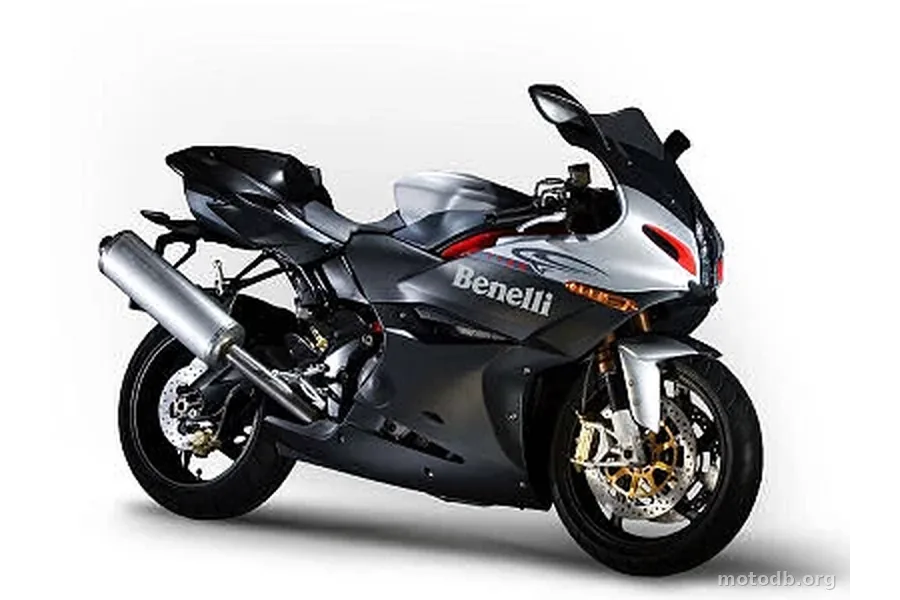
Imagine an Italian sportbike that had everything it needed to seduce, except the raw power to stand up to the large-displacement Japanese machines. The Tornado 900 was an object of desire, certainly, but its Japanese competitors would systematically relegate it to the rearview mirror the moment the road opened up. Benelli drew the obvious conclusion from this imbalance and chose the most radical solution available: transplanting the 1130 triple from the TnT into the bodywork of its sportbike.
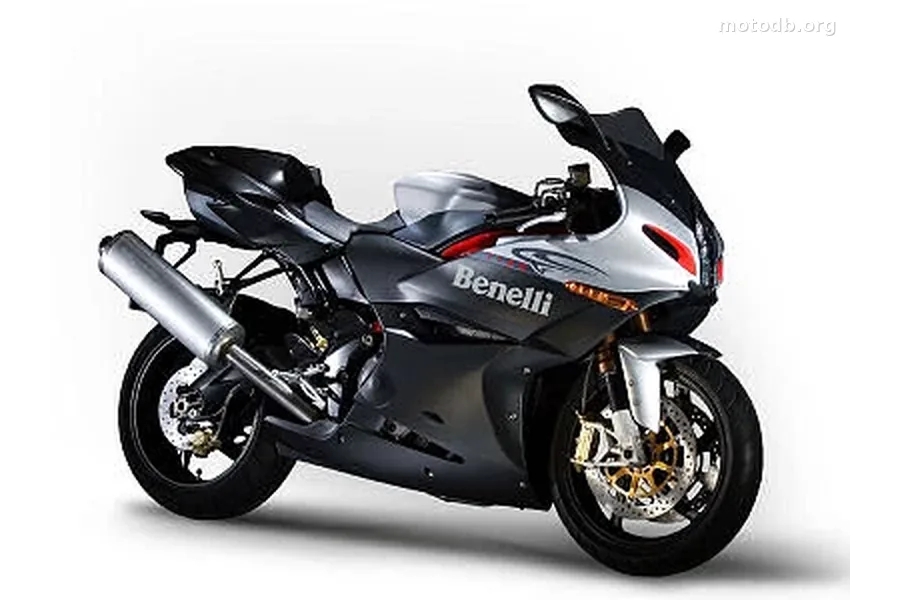
This is no simple mechanical transplant. The three-cylinder engine was reworked to better meet the demands of a sport motorcycle, with compression raised to 13:1 and an 88 x 62 mm architecture that favors high revs. The result is unambiguous: 163 horsepower at 10,500 rpm and 121.6 Nm of torque at 8,000 rpm. On the scales, the 195 kg dry weight places the Benelli Tornado 1130 in a reasonable bracket for the category, comparable to a Honda CBR1000RR or a Suzuki GSX-R 1000 of the same era. The claimed top speed of 290 km/h is there to reassure those who care about figures, even if it is rarely on a circuit that such claims are put to the test.
The steel tubular trellis frame, inherited from the 900 version with some adaptations to the castings, receives a 50 mm inverted fork and a monoshock, each with 120 mm of travel. The front end is now equipped with radial four-piston calipers on 320 mm discs, a welcome improvement that the previous generation sorely lacked. The 810 mm seat height suits a rider of average build, and the entire riding position remains sport-oriented, with no notable concession to long-distance comfort. The 18-liter tank offers a decent range, useful for a rider who has no desire to stop every 150 kilometers on the highway.
What makes the Benelli Tornado 1130 interesting today is precisely its status as an unabashed curiosity. It was never produced in large numbers, and finding a used Benelli Tornado 1130 requires patience and a network of specialist dealers. The market for a Benelli Tornado 1130 for sale remains narrow, making it a motorcycle for knowledgeable enthusiasts rather than the general public. At 14,980 euros list price in 2008, it positioned itself in the premium segment of European sportbikes, a difficult niche to defend against the industrial reliability of Japanese manufacturers.
The target audience is clearly the experienced rider, drawn to mechanical singularity and willing to accept the quirks of a brand with a limited service network. The three-cylinder has a sonic and vibratory character very different from the smooth four-cylinders of the Japanese machines, with a broad torque band that keeps the bike usable without constantly bouncing off the rev limiter. That is both its main appeal and its sonic calling card. Those searching for a Benelli Tornado 1130 for sale today know exactly what they want, and discretion is not part of it.
Practical info
- La moto est accessible aux permis : A
Reviews & comments
No reviews yet. Be the first to share your opinion!