Key performance
Technical specifications
Engine
- Displacement
- 125 cc
- Power
- 42.0 ch (30.9 kW)
- Engine type
- Monocylindre, 2 temps
- Cooling
- Liquid
- Compression ratio
- 10.1:1
- Bore × stroke
- 54.0 x 54.5 mm (2.1 x 2.1 inches)
- Fuel system
- Carburettor. Hitachi Astemo® Keihin PWK38S carburetor
- Lubrication
- Premix
- Ignition
- Digital CDI
- Starter
- Kick
Chassis
- Frame
- Aluminum semi-double cradle
- Gearbox
- 6-speed
- Final drive
- Chain (final drive)
- Clutch
- Multiplate wet clutch
- Front suspension
- KYB® Speed-Sensitive System inverted fork; fully adjustable
- Rear suspension
- KYB® single shock; fully adjustable
- Front wheel travel
- 300 mm (11.8 inches)
- Rear wheel travel
- 315 mm (12.4 inches)
Brakes
- Front brakes
- Single disc. Hydraulic.
- Rear brakes
- Single disc. Hydraulic.
- Front tyre
- 80/100-21
- Rear tyre
- 100/90-19
Dimensions
- Seat height
- 980.00 mm
- Wheelbase
- 1445.00 mm
- Ground clearance
- 366.00 mm
- Length
- 2136.00 mm
- Width
- 826.00 mm
- Height
- 1295.00 mm
- Fuel capacity
- 6.81 L
- Weight
- 94.80 kg
- New price
- 8 399 €
Overview
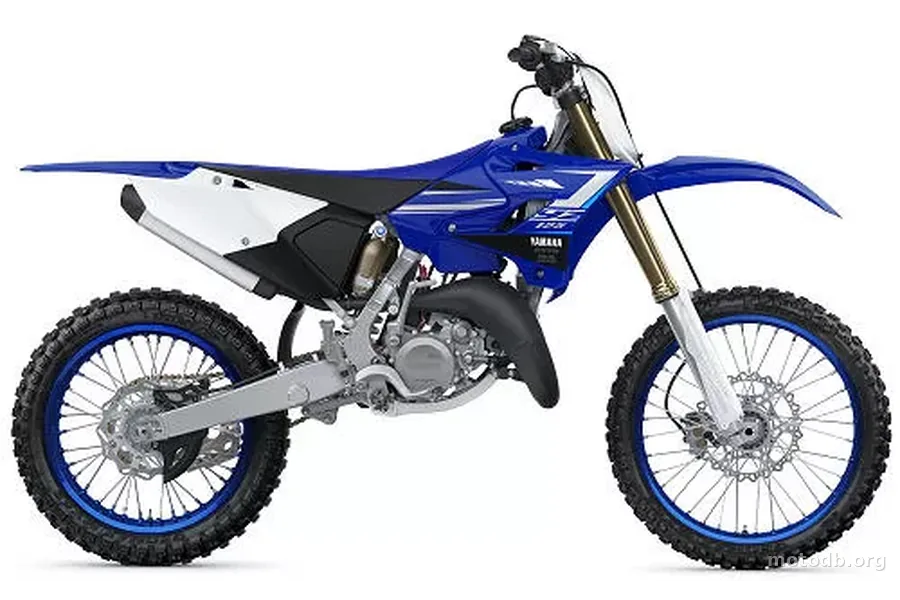
Motorcycle: Yamaha YZ125 (2023)
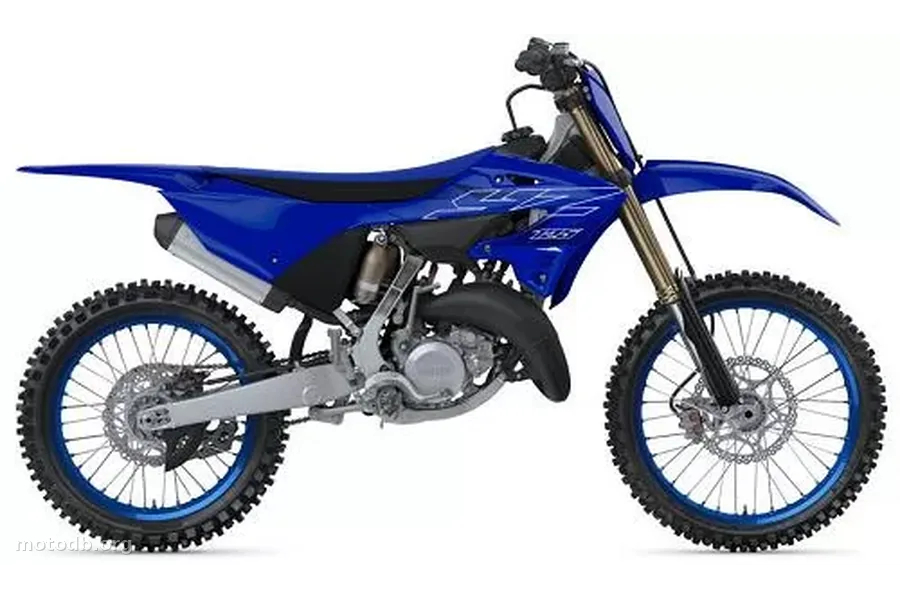
The Yamaha YZ125. A name that has made motocross riders tremble for decades, and a model that, in 2023, continues to prove that two-stroke technology is not a thing of the past, but a precision weapon for the racetrack. With a price tag around €8400, it clearly positions itself in the high-end segment of 125cc motocross bikes, a serious investment for the young competitor or the determined amateur rider.
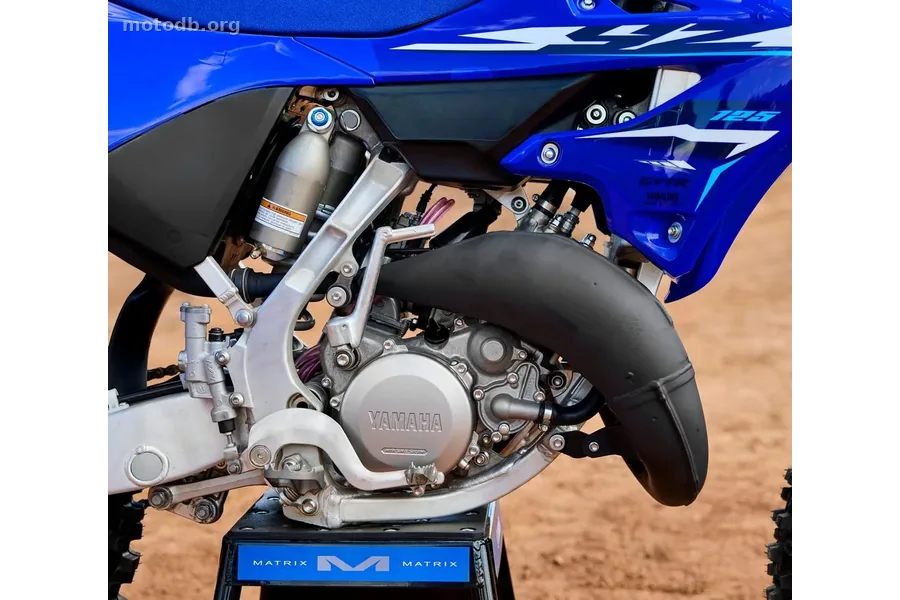
This machine, often referenced when searching for **1982 Yamaha YZ125 parts** to restore an old glory, is the culmination of a long evolution. The current version is presented as the most powerful 125cc motocross bike ever produced by the Japanese manufacturer. Its 125cc two-stroke single-cylinder engine, with a bore and stroke of 54x54.5 mm, has been thoroughly reworked. Engineers have worked on the cylinder head, cylinder, and piston to optimize combustion. The YPVS system, Yamaha’s famous variable exhaust port system, has been recalibrated. They have also installed a new 38.1 mm Keihin PWK carburetor equipped with a Power Jet, paired with a Throttle Position Sensor (TPS) that communicates with a 3D mapping CDI. The objective? More immediate power at low RPM and an explosion of force on corner exits, all to achieve the advertised 42 horsepower. The six-speed transmission has been strengthened to handle this power, with a slightly modified final ratio (13/49) for improved traction.
The chassis, an aluminum twin-spar frame, contributes to a very contained dry weight, around 95 kg fully fueled. Agility is the key phrase. Yamaha has redesigned the rear of the frame, the fuel tank, and the radiators to gain compactness. Knee width for the rider has been reduced by 36 mm, offering a feeling of slimness and immediate control. The seat has been flattened to facilitate movement. The ergonomics are designed for combat. The KYB suspensions, an inverted fork and a fully adjustable mono shock, are benchmarks in the motocross world. They have been revised for 2023, with damping parameters optimized for low-speed applications, crucial on corner exits or in technical sections. The braking system also sees an evolution, with a stiffer two-piston front caliper and a 270 mm disc for increased power and precision.
What is the price of the Yamaha YZ125 2024? It will likely be very close to that of the 2023 model, as this machine is not subject to annual revolutions but to constant optimizations. And is the Yamaha YZ125 homologated? As a pure competition machine, it is not homologated for road use. Its domain is the racetrack, private land. For those seeking an aesthetic inspired by the professional world, Yamaha also offers a **70th anniversary Yamaha YZ125** or special editions like the Monster Energy Yamaha Racing Edition, with its black livery and graphics inspired by factory teams.
In comparison with its direct competitors, such as the KTM 125 SX or the Suzuki RM125, the YZ125 holds its own with a very balanced package. The KTM is often perceived as more aggressive and lively, the Suzuki as very agile. The Yamaha finds its niche in a blend of usable power, intuitive handling, and proven reliability. Its two-stroke engine, although requiring specific maintenance, offers a linear response and an explosiveness that are assets on the track. For a competition novice, it can be an excellent choice, offering a progressive and confidence-inspiring platform. For the experienced racer, it remains a machine capable of very high-level performance.
What is its weakness? Like any pure race bike, it is uncompromising. It requires committed riding, meticulous maintenance (think of the YPVS system and carburetor revisions), and its 6.8-liter fuel tank requires strategic refueling during long races. It is not a machine for trail riding or Sunday leisure. It is a performance tool. Lovers of **dirt bike Yamaha YZ125** for non-competitive leisure will likely find four-stroke options more suitable and less demanding.
In summary, the Yamaha YZ125 2023 is not a revolution, but a targeted evolution. It refines a proven formula: a two-stroke engine worked for power and enjoyment, an ultra-maneuverable chassis, and high-quality suspensions. It targets the ambitious young competitor, the serious amateur rider, or even the expert seeking a reliable and high-performing machine for club racing. In the landscape of 125cc motocross bikes, it maintains its reference position, a machine that doesn’t talk about nostalgia, but about results.
Reviews & comments
No reviews yet. Be the first to share your opinion!