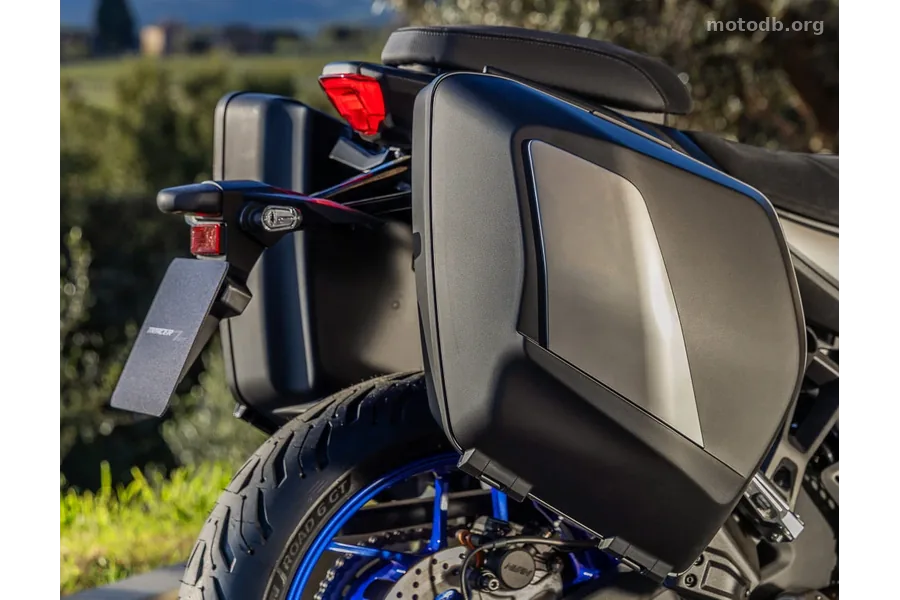
Key performance
Technical specifications
Engine
- Displacement
- 689 cc
- Power
- 73.4 ch @ 8750 tr/min (54.0 kW)
- Torque
- 68.0 Nm @ 7750 tr/min
- Engine type
- Bicylindre en ligne, 4 temps, calé à 270°
- Cooling
- liquide
- Compression ratio
- 11.5 : 1
- Bore × stroke
- 80 x 68.6 mm
- Valves/cylinder
- 4
- Camshafts
- 2 ACT
- Fuel system
- Injection
- Starter
- électrique
- Euro standard
- Euro 5+
Chassis
- Frame
- type Diamant en tubes d'acier
- Gearbox
- boîte à 6 rapports
- Final drive
- Chaîne
- Front suspension
- Fourche téléscopique Ø 41 mm, déb : 130 mm
- Rear suspension
- Mono-amortisseur, déb : 139 mm
Brakes
- Front brakes
- Freinage 2 disques Advics Ø 298 mm, étrier 4 pistons
- Rear brakes
- Freinage 1 disque Nissin Ø 245 mm, étrier simple piston
- Front tyre
- 120/70-17
- Front tyre pressure
- 2.25 bar
- Rear tyre
- 180/55-17
- Rear tyre pressure
- 2.50 bar
Dimensions
- Seat height
- 845.00 mm
- Seat type
- Selle biplaces
- Fuel capacity
- 18.00 L
- Weight
- 212.00 kg
- New price
- 11 499 €
Overview
Motorcycle: Yamaha Tracer 7 GT (2026)
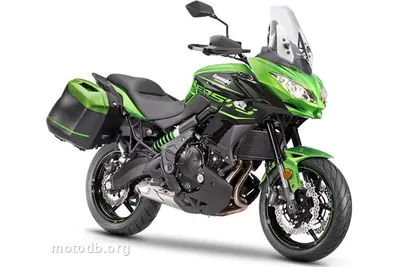
Operation major overhaul for the Tracer 7! Yamaha’s urban crossover must more than ever preserve its strengths and add to them, facing a seasoned but increasingly numerous and present competition. Its best enemies are still there – Kawasaki 650 Versys, Suzuki 650 V-Strom, Honda NC 750 X, Triumph 660 Tiger Sport – but there’s a scramble for new contenders, such as CFMOTO 700 MT, Morini 700 X-Cape, QJ Motor SRX 700, Voge DS 625 X… and the list will grow in the coming years.
Briefly, the little Tracer needs to become more desirable and address its shortcomings. It has perfectly understood this with a skillfully renewed silhouette. Its gaze and fork head are more serious, its shoulders more dynamic with their "double fairing," the seat more sporty by splitting into two parts. Everything competes to have a look worthy of a higher-category motorcycle. Yamaha’s trend seems to be moving away from experimentation in favor of technical and graceful sketches.
Like the Y-AMT robotic clutch. At the release of the 3rd generation mid-2025, we were a little surprised not to see this technology on the Tracer - "It would suit particularly well with a machine displaying GT on its flanks." The 2026 proposal fills this gap with the possibility of taking this semi-automatic transmission as an option. A nudge with a finger on the selector palette and the gears change in a half-second. Or, the rider switches to fully automatic mode and the Y-AMT manages everything. Clutch, gear changes, neutral... no need to touch the clutch lever. Indeed, it does not exist on the Y-AMT Yamahas.
Expect two kilos more and a nice "violet" to have this assistance on the Tracer 7. The price then becomes substantial, even if the GT label raises the pretensions.
The motorcycle wants to highlight its much more raised dispositions than on the previous generation. This enhanced presence is reinforced with a front frame of another caliber. The Tracer 7 GT is now guided by an inverted 41 mm fork, adjustable in rebound. Furthermore, the technical improvements to the chassis also include radial 4-piston brake calipers and a new 40 mm longer swingarm. The machine will be able to raise its road behavior a notch.
Road has a more pronounced meaning here because this Tracer sees the everyday with as many miles as urban. Since the Tracer 7, the GT gains as standard heated grips with 3 levels of adjustment, a center stand, rubberized footrests, a seat with thicker padding and a specific trim – which leads to a 15 mm increase in seat height-, a duo of cases and a specific screen. This windshield, adjustable by 6 cm, affirms its strength. 1 mm thicker, it displays 90 mm of additional height protection. With its upper part wider than on the previous Tracer 7 GT, it should frankly boost the protection. As for the cases, they are of the latest generation. Since the birth of the Tracer 7 GT, they were the City models, with a design dating back to the late 90s. By recovering the Tour models from the Tracer 9 GT, the carrying capacity jumps from 20 to 30 liters per compartment. They can now contain a helmet but their bulk has also crossed a threshold.
Thus, the GT progresses at the same pace as its Tracer 7 sister and MT-07 cousin. However, there is still some work to be done for certain parts. If the handguards are a little larger, they still prioritize style over function. Enough to protect the phalanges but not much more. It would also be necessary to find a way to better hide this horrible catalytic converter. And above all… Oh well, where is the luggage rack? It’s surprising to see this appendage missing from the standard equipment for a GT-oriented machine.
It’s also surprising not to find the SpinForged lightweight rims. These are other updates that the 700 Tracer has recovered, such as the ride-by-wire throttle, three Riding Modes (Sport / Street / Custom) including the last is customizable, three engine maps, two-level traction control that can be disabled, cruise control, a revisited 5-inch TFT color screen interface, new switchgear and new features for the turn signals and brake light.
That’s not all. Yamaha increases its range with a 1-liter larger tank (18 liters) and refines the on-board life with a 25 mm wider and 30 mm higher handlebar, an adjustable seat, a larger passenger seat (40 mm), revised grips, a preload adjustment relocated for the rear shock absorber and redesigned footrests.
Regarding the engine, it’s this enthusiastic CP2 engine that retains its functions in the Tracer. Yamaha validates it for Euro5+ and does not deem it necessary to revise its displacement or power. This block, despite being over 10 years old, still holds up against other engines, thanks to a punch and a delightful joviality. Therefore, we retain its character more than its 73 horsepower. Both are lively in use, letting the years pass without trembling. The recent standards have calmed it down a bit but it still has the essentials.
In its mutation, the Tracer 7 GT has only gained 2 kilos. Displayed at 212 kg fully fueled, this road crossover shows a contained weight and a real desire to maintain its place on the market. Yamaha has not performed a simple facelift for it but a notable evolution. The price indexing, on the other hand, is likely to make you smile less.
Main features of the Tracer 7:
Exclusively on the Tracer 7 GT
Credits info and images: manufacturer
Standard equipment
- Assistance au freinage : ABS
- Nombre de mode de conduite : 3
- Volume de rangement : 60 litres
- Taille de l'écran TFT couleur : 12,70 cm / 5 pouces
- Jantes aluminium
- Bluetooth
- Pare brise réglable
- Prise USB
- Régulateur de vitesse
- Indicateur de vitesse engagée
- Valises
- Béquille centrale
- Selle réglable
- Poignées chauffantes
- Embrayage anti-dribble
Practical info
- Véhicule accessible au permis A2 ou bridable à 47.5ch / 35 Kw
- La moto est accessible aux permis : A, A2
- Pays de fabrication : France
Indicators & positioning
Similar bikes
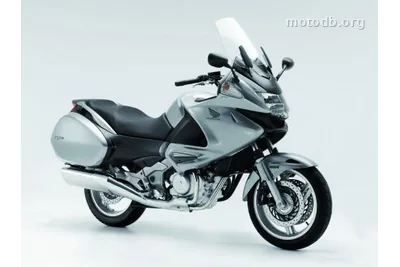
NT700V Deauville
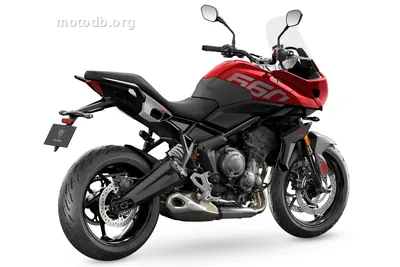
Nouvelle Tiger Sport 660
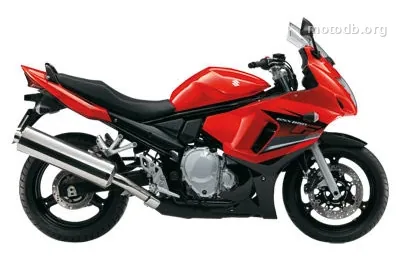
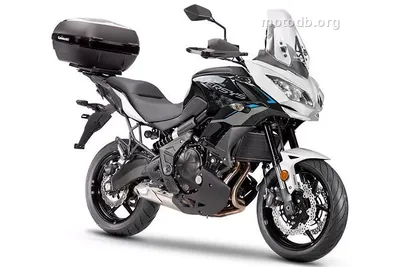
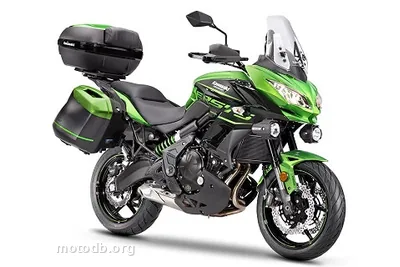
VERSYS 650 Mobility
Reviews & comments
No reviews yet. Be the first to share your opinion!