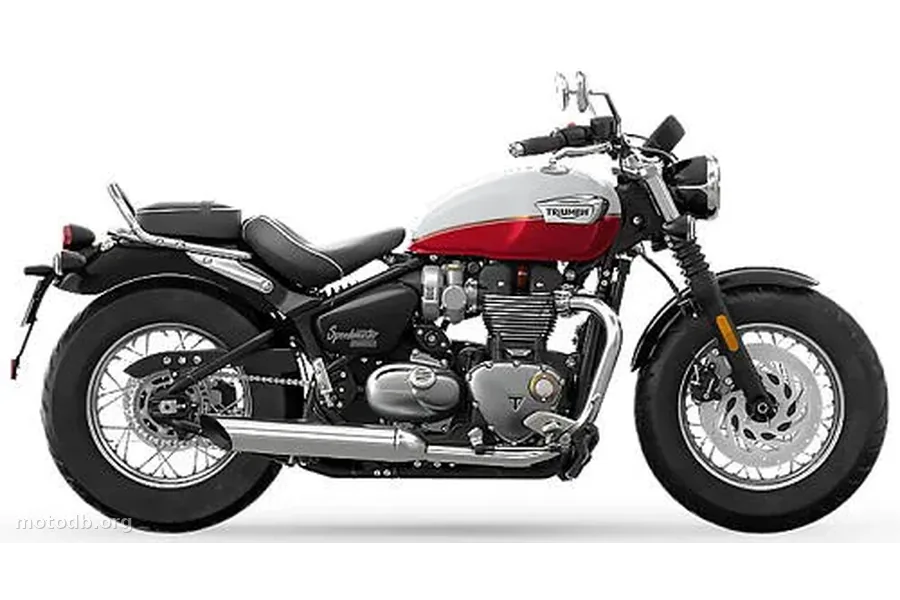
Key performance
Technical specifications
- Fuel system
- Injection. Multipoint sequential electronic fuel injection → Injection
- Frame
- Tubular steel, twin cradle. Twin sided fabrication swing arm. → Tubular steel cradle. Twin-sided, tubular steel swing arm.
- Clutch
- Wet, multi-plate torque assist → Wet, multi-plate assist clutch
- Front suspension
- 47 mm Showa cartridge forks → KYB 41 mm forks with cartridge damping
- Rear suspension
- Mono-shock RSU with linkage and preload adjustment → KYB monoshock with linkage and stepped preload adjuster
- Front brakes
- Double disc. ABS. Brembo 2-piston floating caliper → Single disc. ABS. Brembo 2-piston floating caliper
- Wheelbase
- 1500.00 mm → 1510.00 mm
- Ground clearance
- 91.00 mm → —
- Width
- 910.00 mm → 770.00 mm
- Height
- 1055.00 mm → 1040.00 mm
- Fuel capacity
- 12.00 L → 12.11 L
- Weight
- 263.10 kg → —
- Dry weight
- — → 245.50 kg
Engine
- Displacement
- 1200 cc
- Power
- 77.0 ch @ 6100 tr/min (56.2 kW)
- Torque
- 106.0 Nm @ 4000 tr/min
- Engine type
- Twin, four-stroke
- Cooling
- Liquid
- Compression ratio
- 10.0:1
- Bore × stroke
- 97.6 x 80.0 mm (3.8 x 3.1 inches)
- Valves/cylinder
- 4
- Fuel system
- Injection
- Valve timing
- Single Overhead Cams (SOHC)
- Starter
- Electric
Chassis
- Frame
- Tubular steel cradle. Twin-sided, tubular steel swing arm.
- Gearbox
- 6-speed
- Final drive
- Chain (final drive)
- Clutch
- Wet, multi-plate assist clutch
- Front suspension
- KYB 41 mm forks with cartridge damping
- Rear suspension
- KYB monoshock with linkage and stepped preload adjuster
- Front wheel travel
- 90 mm (3.5 inches)
- Rear wheel travel
- 73 mm (2.9 inches)
Brakes
- Front brakes
- Single disc. ABS. Brembo 2-piston floating caliper
- Rear brakes
- Single disc. ABS. Nissin 2-piston floating caliper
- Front tyre
- 130/90-B16
- Rear tyre
- 150/80-R16
Dimensions
- Seat height
- 705.00 mm
- Wheelbase
- 1510.00 mm
- Width
- 770.00 mm
- Height
- 1040.00 mm
- Fuel capacity
- 12.11 L
- Dry weight
- 245.50 kg
Overview
It’s 2004, and Triumph, freshly risen from the ashes, is seeking to seduce America without betraying its British soul. The Speedmaster of that era is a bit of this bold response: taking the Bonneville base, injecting a dose of custom style, but maintaining a temperament that’s a bit more lively than the America. The result? A machine that plays on two fronts with more conviction than one might have thought.
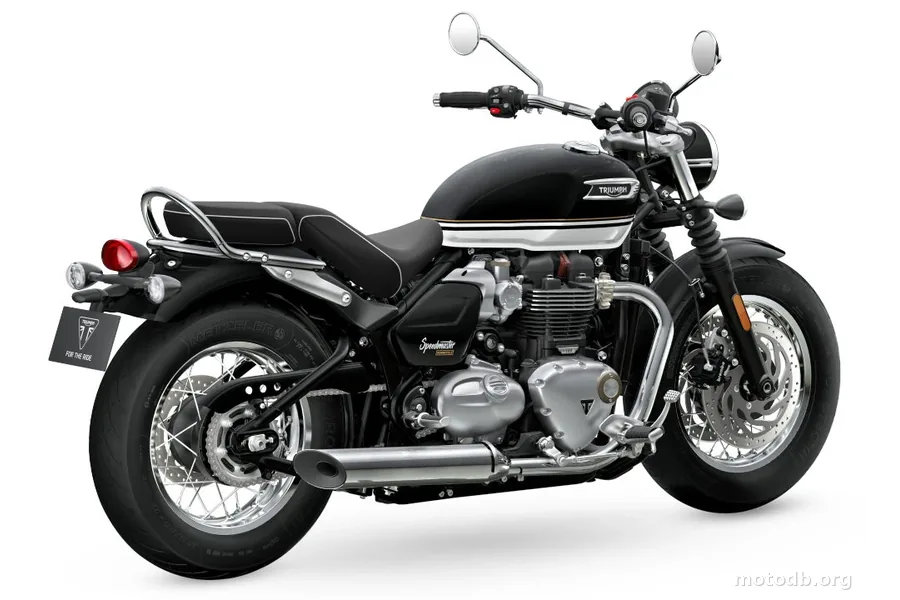
Under the 16.6-liter tank, the 790 cm³ parallel-twin, offset at 270 degrees, is the heart of the beast. It delivers only 62 horsepower, a modest power figure today, but it’s its early torque of 60 Nm at 3500 rpm that makes all the difference. It vibrates, it growls, it gives a lively sensation that today’s more sanitized engines have sometimes lost. This engine, coupled with a five-speed gearbox with shortened ratios, gives surprising agility to this custom that weighs 245 kg with its pockets full.
But where does this Triumph Speedmaster really stand? It stretches across a wide spectrum. On one side, the riding position, with its feet forward and wide handlebar, shouts leisurely cruising. On the other, the handling is frankly serious for a custom, and the front brakes with dual discs inspire confidence. The Achilles' heel? The suspension, especially at the rear, which tends to be dry and harshly reminds you of the road’s imperfections. The limited ground clearance also quickly tempers enthusiasm in corners. It's a sporty cruiser that invites you to play, but quickly brings you back in line.
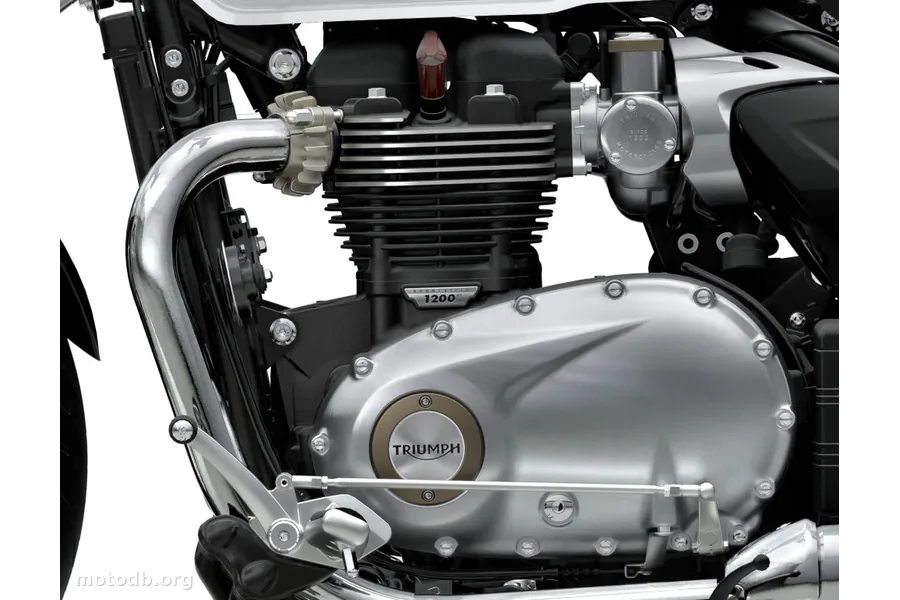
Who rides this machine? For those seeking authentic custom style, without the bulk and lack of reactivity of large-displacement American bikes. It’s an ideal gateway into the world of customs, easy to live with thanks to its low 720 mm seat, but offering more sensations than a simple wheelchair. Today, finding a Triumph Speedmaster from this generation on the used market is a treasure hunt for lovers of modern classics. It also foreshadows the evolutions towards the 865, then the Speedmaster 900 and 1200 models currently available, which are more refined but also more sanitized.
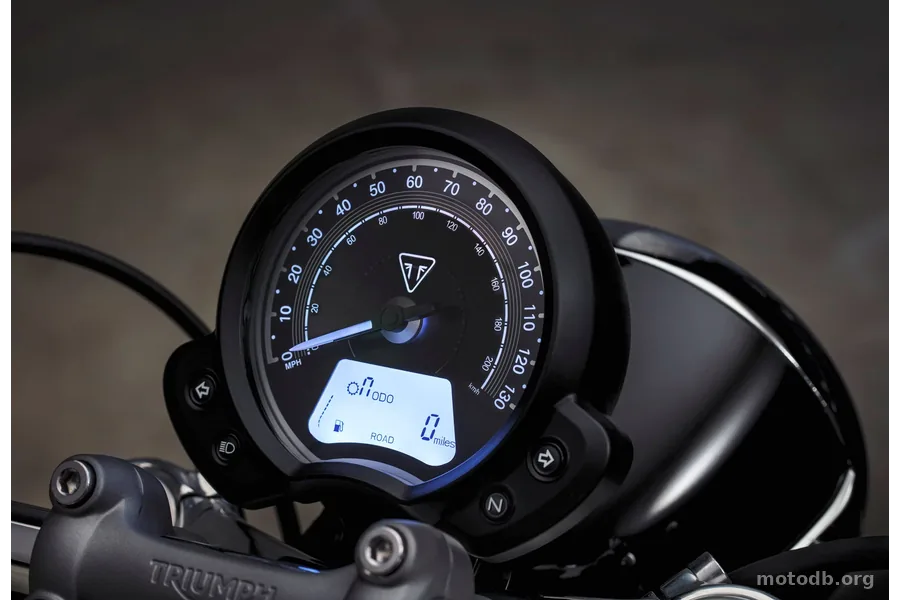
In conclusion, this 2004 Speedmaster is not a perfect motorcycle. It is a compromise, sometimes rough, between relaxed aesthetics and a frustrated sporty temperament. But it is precisely this ambiguous character, this mechanical authenticity, that gives it its charm today. A test ride on a Triumph Speedmaster from this era will convince you that you can smile without needing 100 horsepower, simply with an engine that speaks and a style that doesn’t go unnoticed. For a Triumph Speedmaster review, mine is clear: it’s a historical machine, much more interesting and lively than its specifications suggest.
Indicators & positioning
Similar bikes
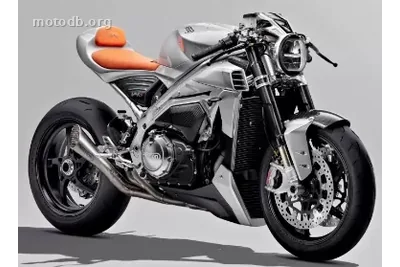
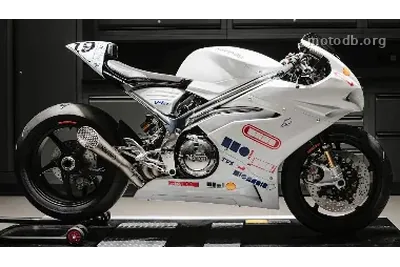
1200 V4 SV One of One 'RCW 588 replica'
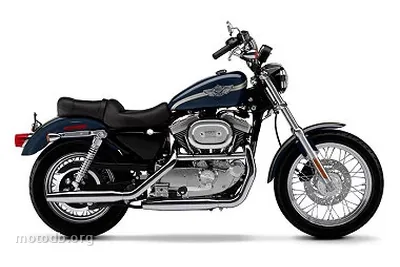
XLH Sportster 1200
Reviews & comments
No reviews yet. Be the first to share your opinion!