Key performance
Technical specifications
Engine
- Displacement
- 1000 cc
- Power
- 185.0 ch @ 11500 tr/min (135.0 kW)
- Torque
- 117.0 Nm @ 10000 tr/min
- Engine type
- In-line four, four-stroke
- Cooling
- Liquid
- Compression ratio
- 13.2:1
- Bore × stroke
- 76.0 x 55.1 mm (3.0 x 2.2 inches)
- Valves/cylinder
- 4
- Fuel system
- Injection. Ride-by-Wire throttle bodies
- Valve timing
- Double Overhead Cams/Twin Cam (DOHC)
- Lubrication
- Wet sump with oil cooler
- Starter
- Electric
Chassis
- Frame
- Twin-spar made of five cast sections
- Gearbox
- 6-speed
- Final drive
- Chain (final drive)
- Clutch
- Wet, multi-plate
- Front suspension
- Inverted telescopic, coil spring, oil damped
- Rear suspension
- Link type, single shock, coil spring, oil damped
- Front wheel travel
- 120 mm (4.7 inches)
- Rear wheel travel
- 130 mm (5.1 inches)
Brakes
- Front brakes
- Double disc. Brembo 4-piston. ABS.
- Rear brakes
- Single disc. Nissin-1 piston. ABS.
- Front tyre
- 120/70-ZR17
- Rear tyre
- 190/50-ZR17
Dimensions
- Seat height
- 825.00 mm
- Wheelbase
- 1485.00 mm
- Ground clearance
- 130.00 mm
- Length
- 2075.00 mm
- Width
- 705.00 mm
- Height
- 1145.00 mm
- Fuel capacity
- 16.00 L
- Weight
- 202.00 kg
Overview
Suzuki sometimes seems more occupied with honoring its past than forging its future. Following a series of special editions that have marked recent years, the Japanese brand returns with a proposition that borders on indecency: six different versions of the GSX-R1000R, each celebrating a world champion who has carried the brand to the top. A collection, rather than a single model. One could see this as a marketing trick to boost sales of a machine whose official specifications remain frozen, but there is also a real story to tell here, that of a brand that has dominated the world stage with iconic riders.
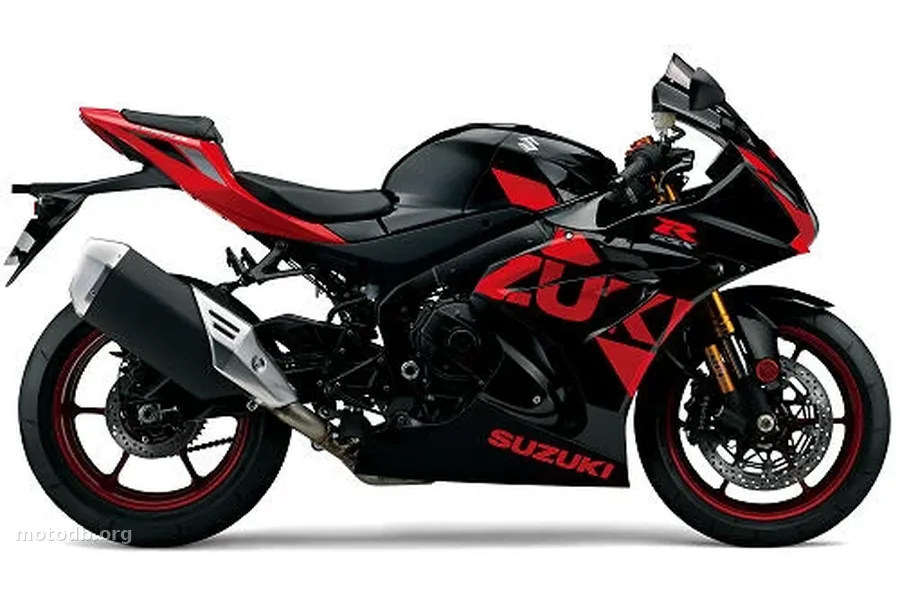
Each machine in this "Legend Edition" is a painted tribute on the same mechanical platform. The base is the GSX-R1000R, this sportbike that still carries with dignity its inline 4-cylinder engine of 999.8 cm³. Its 202 horsepower at 11500 rpm and its torque of 117 Nm at 10000 rpm remain serious arguments, even against the BMW M 1000 RR or Ducati Panigale V4 which play in a different technological league. The wet weight of 202 kg and the 16-liter tank recall that this motorcycle is made for the track, or for winding roads where its precise chassis excels. The base price, around €22,500, increases significantly for these special versions, with an announced supplement of 15%. This is the price of exclusivity and the carbon Akrapovic exhaust that comes with each copy.
From Barry Sheene in 1976 with his Heron-Texaco colors, to Joan Mir in 2020 with the blue and silver livery of Team Ecstar, each model is a journey through time. For the motorcycle history enthusiast, this is a compelling proposition. For the pure track rider looking for the most efficient machine, it may be an unnecessary detour. The question of the weight and power of the Suzuki GSX-R1000R remains the same, regardless of the color scheme. These editions change nothing about the fundamentals: explosive engine performance, an aggressive ergonomics with a 825 mm seat, and effective Brembo braking.
This strategy of limited series raises a real question about the future of the sportbike at Suzuki. While rumors of a new Suzuki GSX-R1000R 2026 or 2025 circulate, the brand seems to be playing the nostalgia card. The official specifications of the GSX-R1000R 2026, if it arrives, will have to integrate stricter anti-pollution standards, probably with an evolution of this inline 4-cylinder to meet Euro5+. In the meantime, these Legend Edition are a niche product, intended for collectors and unconditional fans of the brand. The exclusive online purchase process via the Suzuki Italia website confirms this highly targeted approach.
In conclusion, this surge of historical versions is a stroke of genius to talk about a motorcycle that, technically, has not changed much in recent years. It flatters the ego of the owner who obtains a unique machine, but it does not change the riding experience. For those who simply want the best sportbike for their money, the standard version, or more modern competitors, will be more rational choices. Suzuki is playing here on the sensitive chord of memory, a powerful argument, but which will not be enough to mask the need for a real technical innovation in the years to come.
Indicators & positioning
Similar bikes
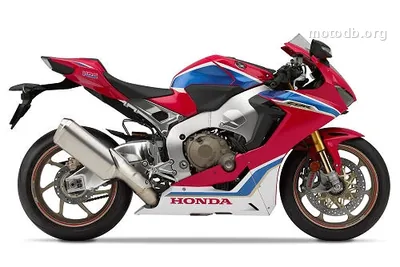
CBR 1000 RR Fireblade SP2
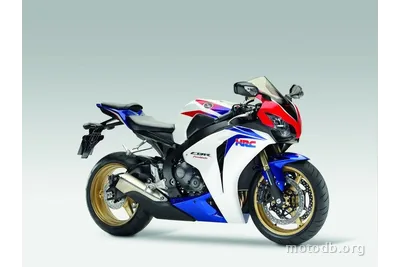
CBR 1000 RR PLAYBOY Replica
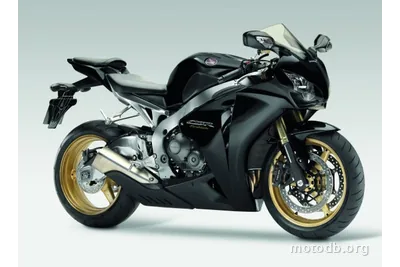
CBR 1000 RR Fireblade Limited Edition TT
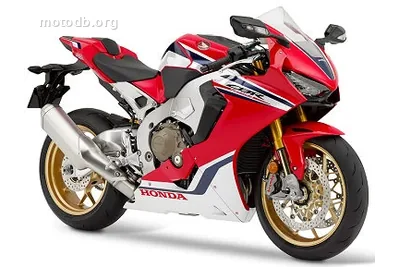
CBR 1000 RR Fireblade SP
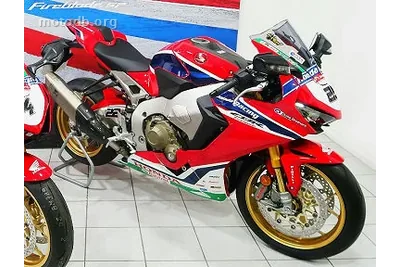
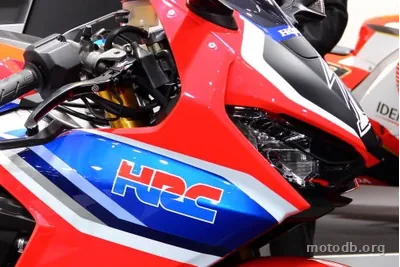
CBR 1000 RR Fireblade SP BSB replica
Reviews & comments
No reviews yet. Be the first to share your opinion!