Key performance
Technical specifications
Engine
- Displacement
- 1000 cc
- Power
- 195.0 ch @ 13200 tr/min (143.4 kW)
- Torque
- 110.0 Nm @ 11000 tr/min
- Engine type
- 4 cylindres en ligne, 4 temps
- Cooling
- liquide
- Compression ratio
- 13.8 : 1
- Bore × stroke
- 76 x 55.1 mm
- Valves/cylinder
- 4
- Camshafts
- 2 ACT
- Fuel system
- Injection Ø 48 mm
- Starter
- électrique
- Euro standard
- Euro 5+
Chassis
- Frame
- périmétrique en aluminium
- Gearbox
- boîte à 6 rapports
- Final drive
- Chaîne
- Front suspension
- Fourche téléhydraulique inversée BPF à cartouches Ø 43 mm
- Rear suspension
- Mono-amortisseur
Brakes
- Front brakes
- Freinage 2 disques Brembo Ø 320 mm, fixation radiale, étrier 4 pistons
- Rear brakes
- Freinage 1 disque Ø 220 mm, étrier simple piston
- Front tyre
- 120/70-17
- Rear tyre
- 190/55-17
Dimensions
- Seat height
- 825.00 mm
- Seat type
- Selle biplaces
- Fuel capacity
- 16.00 L
- Weight
- 203.00 kg
- New price
- 20 490 €
Overview
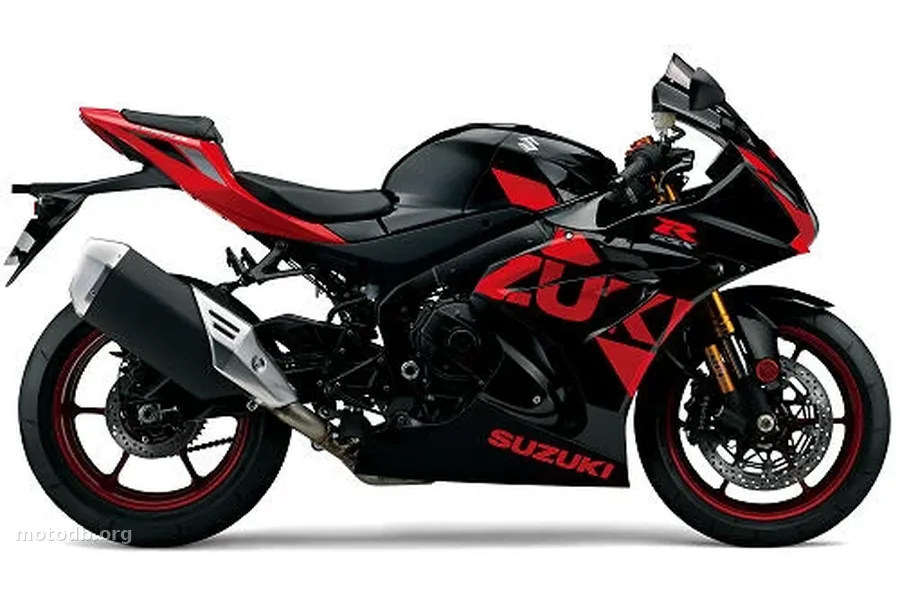
Yahou !!!! The GSX-R1000 is back! Suzuki’s sportbike returns to our market for 2026, with its share of improvements to compete in the hypersport battles. We can only applaud the brand's decision to evolve this sport legend.
Evolving, yes, because this is not a new GSX-R but an update of the model that appeared in 2017. It arrives in R version, with 40 years of memories tattooed and a track-focused gaze. But can it become the benchmark of the category again!? Not sure......
A GSX-R is always recognizable, whatever its generation. The 2026 GSX-R1000R retains the look of the previous model, with the only stylistic modifications being the exhaust (less massive) and a pair of winglets. As a result, it seems to have already lived a life and may suffer from an outdated aesthetic. In terms of boldness, we’ll pass. The installation of a new silencer gives a less loaded rear, which led to a redesign of the lower fairing. To give a slight change of tone, the engine casings are now gray, the disc brake hats are gold, the GSX-R logo is embroidered on the seat and etched on the exhaust.
The Hamamatsu hypersport introduces front wings made of Japanese-made carbon fiber, inspired by those of the GSX-R CN Challenge entered in the 2024 8 Hours of Suzuka. Suzuki has adapted to the trend, with a certain restraint. Its wings are thus among the least prominent and least visible in the category. We do not doubt their usefulness but, as always, at high speed and by experienced riders.
An engine of a GSX-R1000 is fiery, regardless of the year. It is one of the most potent and reliable engines in the sector. Its designers took a long time, a lot of time, before adapting it to European standards. Here is their work to put it back on the track: - A redesigned cylinder head - Larger exhaust valves (from 24 mm to 25 mm - New forged pistons - A new cylinder head gasket - An increased compression ratio (from 13.2:1 to 13.8:1) - Revised camshafts - A larger intake (48 mm instead of 46 mm) - 10-hole injectors instead of 8 - A new crankshaft with thicker connecting rod journals - Shorter intake funnels to favor high RPMs but which lose their variable height - Lighter pistons, reduced by 3 grams - Optimized cooling
They retained the SR-VVT variable intake system to shift the corresponding ACT (the distribution sprocket and chain have been revised), the SCAS anti-dribble clutch, and the dual injector rail. This should allow us to hope for great wattage gains but...
These improvements have not prevented the engine from losing some breath in the process. 7 horsepower have disappeared! Its power has been reduced to 195 horsepower. Although substantial, this power is a slap in the face to the great era of the GSX-R1000: its first generations systematically outperformed the competition; today, the Suz' is the least powerful in the group and the only one below 200 hp. The gap varies by 5 units with the R1 Race to 22 hp compared to the CBR 1000 RR-R (let's not talk about the Panigale V4 and RSV4, aided by their higher displacement). Torque has also suffered a setback, with 110 Nm instead of 118. Suzuki hopes to compensate with a more linear behavior. We can also think of the reliability reputation of this engine to make up for the almost bitter taste of its diminished power.
In the realm of hypersports, electronic evolution is galloping as fast as power. Ducati amazes us every time. The new GSX-R1000R plays with more modesty, without omitting small updates.
Starting with a lighter ABSA stem control unit by 51 grams, a Bosch IMU relieved by 10 gr, and a Lithium-Ion battery with 2 kilos less. Then, what’s new in the SIRS, Suzuki’s global rider assistance system? There is now a wheelie control, a slip angle management module, and the Launch Control has been updated.
The three injection maps (A: Sport / B: Balanced / C: Comfort), 10-level traction control, curve-active ABS, anti-stoppie, the Up&Down shifter, the Low RPM Assist (low-speed assistance), and the Suzuki Easy Start System (one-press start) are carried over.
Briefly, the big Gex refines its electronics without making it a hyper-technological missile like its competitors have become. In order to always reconcile great efficiency on the road, a certain versatility, and strong legitimacy on the track? The GSX-R1000 has always been multi-faceted; it seems that its policy has not changed.
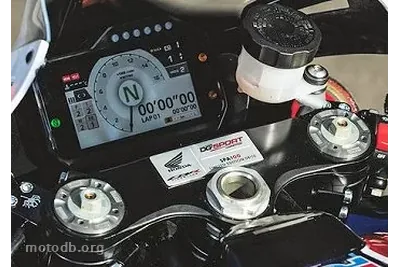
Surprisingly, there is no color TFT screen on this Gex upgrade. Almost enough to make it seem dated for technology enthusiasts. It doesn’t change the performance but for a motorcycle of this caliber, it’s meager, even disappointing.
Suzuki maintains absolute confidence in the chassis of its machine since 2017. To the point that it is transposed to the 2026 model without modification. With a schema as proven as on the 750SR and so many Japanese sportbikes, it is built with an aluminum double-beam frame where a very sturdy reinforced swingarm (with an adjustable pivot point) and Showa suspensions are attached. The inverted fork remains the BFF model with external cartridges to optimize damper circuits. The rear damper is a BFRC, balancing oil pressure in an external circuit to the main body. This gives more control and smoother reactions. An electronic steering damper completes the equipment.
The braking system also remains unchanged. A Brembo assembly with 320 mm discs held by a mix of eyelet and T-Drive for anchoring to the disc hats and enduring the force of the 4-piston calipers. In this area, it would be appropriate for the GSX-R to update. The competitors are mostly equipped with M50 or Stylema calipers, or Hypure for the latest Italians. The M4.32 calipers here are technologically born more than 10 years ago... They will have to tame a 203 kg machine - an unchanged value since the previous version.
As for the tires, Suzuki maintains its (very good) choice of Bridgestone RS11; enough to have great confidence with a lot of grip and plenty of progression. A tire that shares the same sporting philosophy as the GSX-R.
Whether fans of the GSX-R1000 are thrilled or disappointed with this evolution, the simple fact of relaunching its career is a victory in itself. The segment has suffered, has lost charismatic motorcycles, is becoming increasingly exclusive – the Gex brings a bit of democracy back into all of this. It didn’t want to go too far but will its public judge it so closely?
The GSX-R1000R 2026 was visible at the Bol d’Or 2025. On this occasion, pre-orders were officially opened.
This update accompanies the 40th anniversary of the GSX-R. An anniversary mentioned in bold on the side of the fairing, via a sticker on the top of the tank, a logo on the contact key, and by a proposal of colors:- the traditional and sporty blue, white and red - a pearlescent yellow / stellar blue, very close to the motorcycles of the Alstare team in the great era of this team in WSBK - A candy red / pearl white, suggestive of Kevin Schwantz’s epic (10 years with Suzuki).
M.B - Manufacturer photos
The GSX-R1000 still exists in two versions, R and standard. The first is distinguished by its more advanced suspensions. The other Gex was not planned for our countries or those of our European neighbors and will find its public in North America.
Standard equipment
- Assistance au freinage : ABS
- Nombre de mode de conduite : 3
- Taille de l'écran TFT couleur : 12,70 cm / 5 pouces
- ABS Cornering
- Centrale inertielle
- Aide au démarrage
- Aide à la manoeuvre
- Shifter
- Contrôle de traction
- Embrayage anti-dribble
- Winglets
- Indicateur de vitesse engagée
- Contrôle anti wheeling
- Contrôle de glisse
- Amortisseur de direction
- Aide au départ arrêté (Launch Control)
Practical info
- La moto est accessible aux permis : A
- Pays de fabrication : Japon
Indicators & positioning
Similar bikes
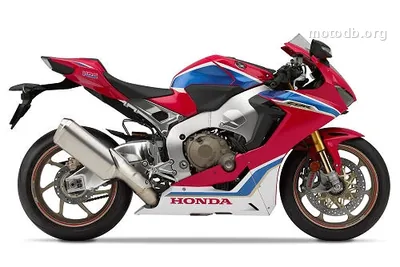
CBR 1000 RR Fireblade SP2
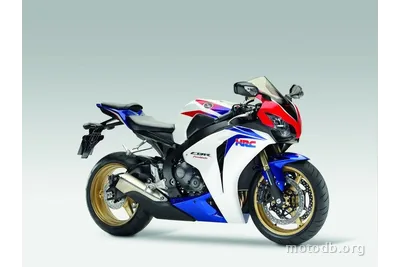
CBR 1000 RR PLAYBOY Replica
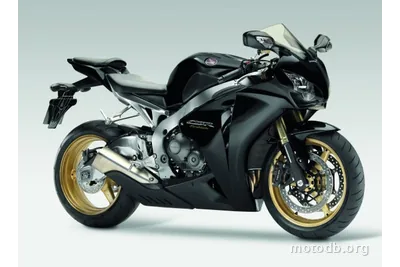
CBR 1000 RR Fireblade Limited Edition TT
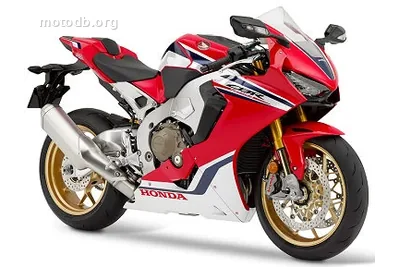
CBR 1000 RR Fireblade SP
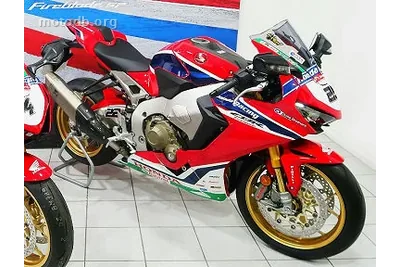
CBR 1000 RR Fireblade SP BSB replica
Reviews & comments
No reviews yet. Be the first to share your opinion!