Key performance
Technical specifications
Engine
- Displacement
- 600 cc
- Power
- 80.0 ch @ 10500 tr/min (58.8 kW)
- Torque
- 55.9 Nm @ 9500 tr/min
- Engine type
- 4 cylindres en ligne, 4 temps
- Cooling
- combiné air / huile
- Compression ratio
- 11.3:1
- Bore × stroke
- 62.6 x 48.7 mm
- Valves/cylinder
- 4
- Camshafts
- 2 ACT
Chassis
- Frame
- Double berceau tubulaire en acier
- Gearbox
- boîte à 6 rapports
- Final drive
- Chaîne
- Front suspension
- Fourche téléhydraulique Ø 41mm, déb : 130 mm
- Rear suspension
- Mono-amortisseur, déb : 130 mm
Brakes
- Front brakes
- Freinage 2 disques Ø 290 mm, étrier 2 pistons
- Rear brakes
- Freinage 1 disque Ø 240 mm, étrier 2 pistons
- Front tyre
- 120/70-17
- Front tyre pressure
- 2.25 bar
- Rear tyre
- 150/70-17
- Rear tyre pressure
- 2.50 bar
Dimensions
- Seat height
- 785.00 mm
- Fuel capacity
- 20.00 L
- Weight
- 229.00 kg
- Dry weight
- 202.00 kg
- New price
- 6 299 €
Overview
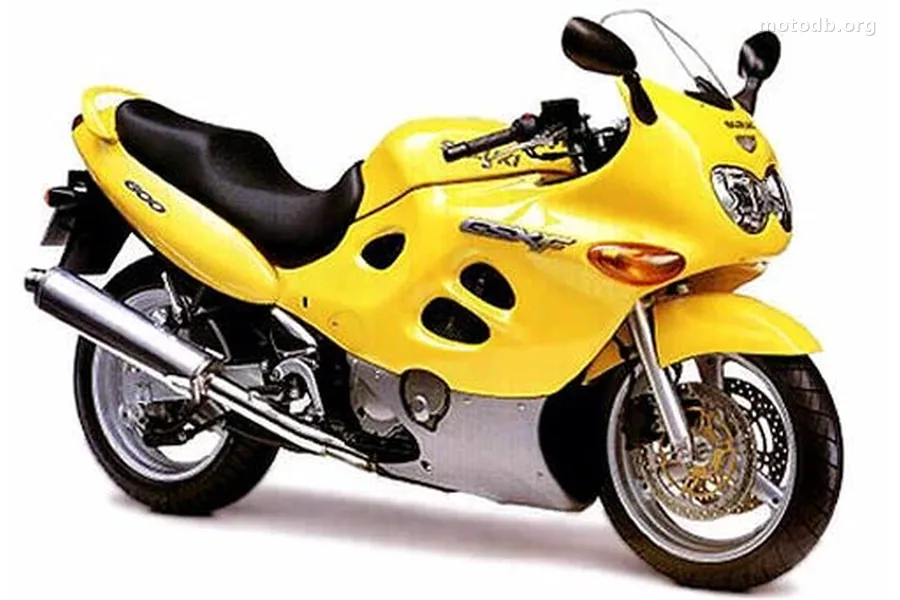
Who still remembers that in the early 2000s, you could get a fully faired four-cylinder 600 for barely 6,299 euros? The 2002 Suzuki GSX-F 600 occupied a niche that nobody else coveted: that of the mid-displacement faired tourer, accessible, with no sporting pretensions. A niche so narrow that it reigned alone, facing Honda Hornets and Yamaha Fazers that played the semi-faired roadster card. The GSX-F fully embraced its full fairing inherited from the 750, with that slightly dated bio-organic design, that distinctive face, and that tail light recognizable from a mile away.
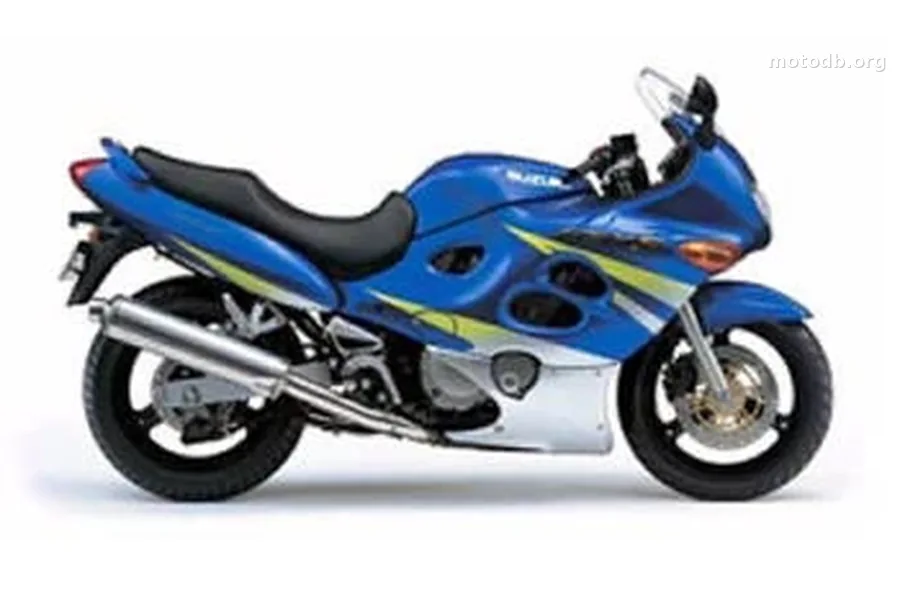
On the technical side, the 600 cc inline four-cylinder develops 80 horsepower at 10,500 rpm with 55.9 Nm of torque peaking at 9,500 rpm. Modest figures, consistent with the machine's philosophy. The engine, fed by good old carburetors, proves docile at mid-range but demands that you chase the revs to really feel anything. That's the law of the Japanese four-cylinder of that era: below 6,000 rpm, the engine purrs politely without any real conviction. Above that, it wakes up and pulls decently to a top speed of 203 km/h. Nothing blistering, but more than enough to cruise comfortably on A-roads and motorways.
The tubular steel double-cradle frame betrays a design dating back to 1988. The 41 mm telehydraulic fork and rear mono-shock each offer 130 mm of travel, which suits road riding without shining on the first roundabout taken a bit hard. The braking, handled by two 290 mm front discs with twin-piston calipers, gets the job done without particular enthusiasm. It's a far cry from a GSX-R, and that's perfectly normal: the target audience isn't after outright performance. What does a Suzuki GSX-F 600 weigh? Count on 229 kg wet, 202 kg dry. That's substantial, but the low 785 mm seat height and well-placed center of gravity make the machine manageable at low speed. The 20-liter tank provides comfortable range for both daily commutes and weekend rides.
The riding position, slightly tilted forward, suggests a sporty touring temperament without falling into the discomfort of clip-on handlebars. It's on main roads, in fast sweeping curves taken smoothly, that the Suzuki GSX-F 600 is at its best. Stability is its strong suit. On the other hand, don't ask it for the agility of a modern sportbike through tight sequences of turns: the weight and geometry require you to plan your lines ahead, to lay the machine into lean with method rather than with gusto. It's an old-school riding school that rewards fluidity over brute force.
Who is this motorcycle made for? First and foremost, beginners and newly licensed riders, especially since it was available in a restricted 34-horsepower version. But also for pragmatic riders who want a reliable bike, cheap to maintain, capable of doing everything without doing anything exceptionally. The Suzuki GSX-F 600, produced from 1988 to 2006 with minor cosmetic updates, remains a model of mechanical honesty. It doesn't lie about what it is. And in a market where every manufacturer promises the moon with ever-inflated power figures, that sincerity has something refreshing about it, even twenty years on.
Practical info
- Moto bridable à 34 ch pour l'ancien permis A MTT1 - pas garanti pour le permis A2
- La moto est accessible aux permis : A, A (MTT1)
Indicators & positioning
Similar bikes
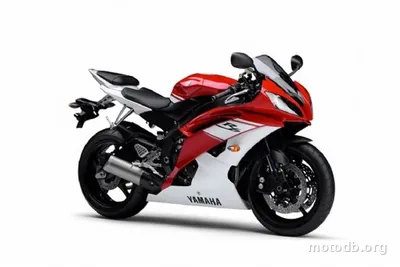
YZF-R6 600 WGP 50th Anniversary
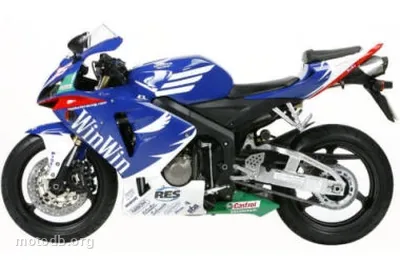
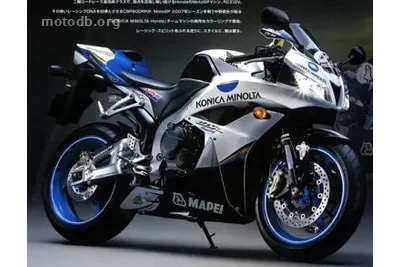
CBR 600 RR Replica WIN WIN Sébastien Charpentier
Reviews & comments
No reviews yet. Be the first to share your opinion!