Key performance
Technical specifications
Engine
- Displacement
- 600 cc
- Power
- 80.0 ch @ 10500 tr/min (58.8 kW)
- Torque
- 55.9 Nm @ 9500 tr/min
- Engine type
- 4 cylindres en ligne, 4 temps
- Cooling
- combiné air / huile
- Compression ratio
- 11.3:1
- Bore × stroke
- 62.6 x 48.7 mm
- Valves/cylinder
- 4
- Camshafts
- 2 ACT
Chassis
- Frame
- Double berceau tubulaire en acier
- Gearbox
- boîte à 6 rapports
- Final drive
- Chaîne
- Front suspension
- Fourche téléhydraulique Ø 41mm, déb : 130 mm
- Rear suspension
- Mono-amortisseur, déb : 130 mm
Brakes
- Front brakes
- Freinage 2 disques Ø 290 mm, étrier 2 pistons
- Rear brakes
- Freinage 1 disque Ø 240 mm, étrier 2 pistons
- Front tyre
- 120/70-17
- Front tyre pressure
- 2.25 bar
- Rear tyre
- 150/70-17
- Rear tyre pressure
- 2.50 bar
Dimensions
- Seat height
- 785.00 mm
- Fuel capacity
- 20.00 L
- Weight
- 229.00 kg
- Dry weight
- 202.00 kg
- New price
- 6 299 €
Overview
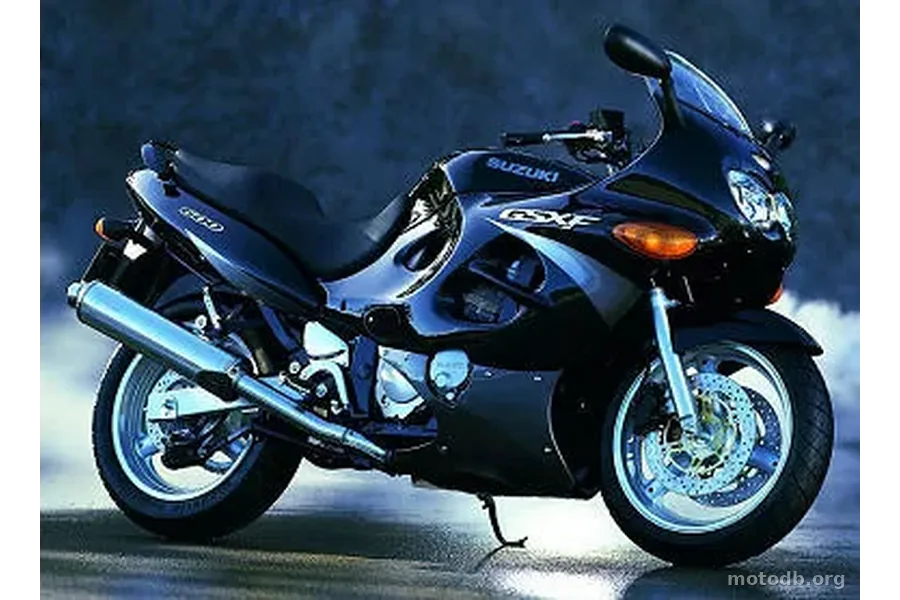
Who still remembers a time when a faired 600 could be something other than a radical sportbike? The Suzuki GSX-F 600, sold from 1989 to 2002, occupied a niche that has become nearly extinct: the mid-displacement tourer dressed in a full fairing, with no track pretensions. For the 2001 model year, the recipe hadn't changed one iota. You get the same 600 cc inline four-cylinder, carbureted, producing 80 hp at 10,500 rpm with 55.9 Nm of torque peaking at 9,500 rpm. Modest figures compared to the GSX-R, R6, and other CBR 600 F models of the same era, but the purpose is radically different.
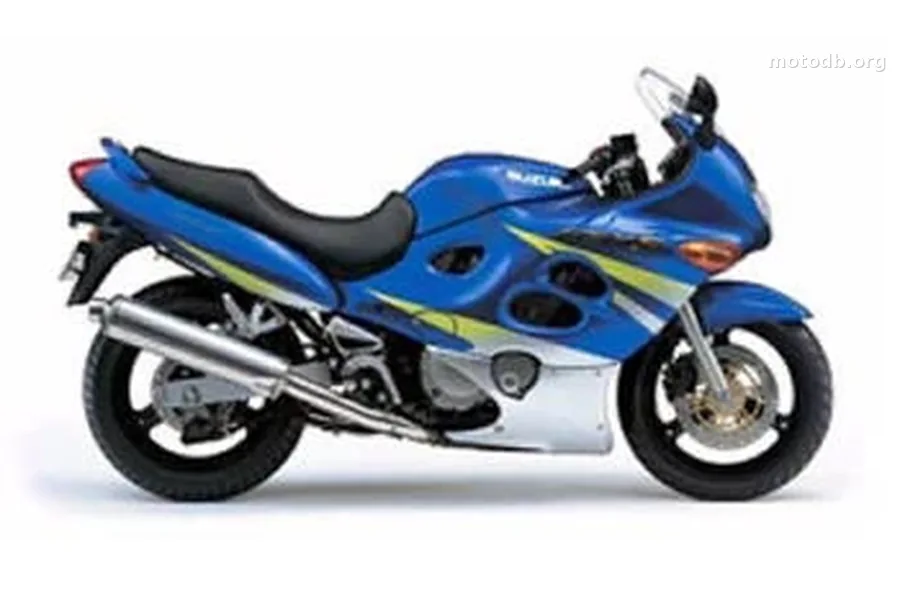
In terms of ergonomics, the Suzuki GSX-F 600 plays the accessibility card. With a seat height of just 785 mm and a wet weight of 229 kg, it reassures smaller riders and beginners alike. The riding position leans slightly forward, just enough to give a sporty feel without breaking your back on long rides. The 20-liter tank provides decent range between fuel stops, a trait shared by touring-oriented bikes of the era like the Kawasaki ZZ-R 600. For those wondering what the weight of a Suzuki GSX-F 600 is, the scale reads 202 kg dry, placing it squarely in the average for its generation.
The inline four proves docile in the mid-range but demands revs to deliver its power. Below 6,000 rpm, the engine feels sluggish. You have to chase the top end to feel anything resembling genuine thrust. What is the power output of the Suzuki GSX-F 600? Its 80 hp is enough to push the machine to a top speed of 203 km/h, but nobody buys this bike to chase lap times. The tubular steel double-cradle frame betrays a design born in the late '80s. The 41 mm telescopic hydraulic fork and rear mono-shock, both calibrated with 130 mm of travel, get the job done without fanfare. In sweeping bends taken at a brisk pace, stability is solid. However, as soon as you pick up the pace through tighter twisties, the frame's lack of rigidity and the soft suspension quickly remind you of the platform's limitations.
The braking follows the same utilitarian logic: two 290 mm front discs gripped by two-piston calipers, a single 240 mm disc at the rear. Nothing shameful, but nothing that invites you to push hard either. The 1993 Suzuki GSX F 600 already featured this same setup, proof that Suzuki saw no need to upgrade this department in nearly ten years of production. It's a deterrent for anyone seeking a minimum of bite, but consistent with the machine's easygoing philosophy.
Priced at 6,299 euros in 2001 and available in a restricted 34 hp version for the A2 license of the time, the GSX-F 600 clearly targeted the beginner rider or the budget-conscious commuter who wanted a faired bike without breaking the bank. Against the Honda CBR 600 F, more refined but pricier, or the Kawasaki ZZ-R 600, more powerful, the Suzuki played the rock-bottom price and mechanical simplicity card. On the used market today, it's a machine that never breaks down and can be found for next to nothing. Not the most exciting 600, nor the prettiest with its bio-organic design borrowed from the 750. But an honest road companion, reliable and free of nasty surprises, with the merit of only promising what it can deliver.
Practical info
- Moto bridable à 34 ch pour l'ancien permis A MTT1 - pas garanti pour le permis A2
- La moto est accessible aux permis : A, A (MTT1)
Indicators & positioning
Similar bikes
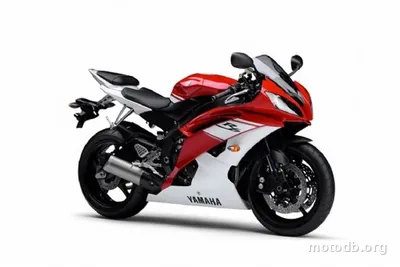
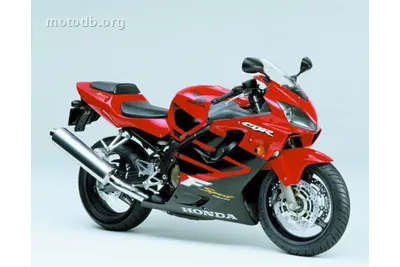
YZF-R6 600 WGP 50th Anniversary
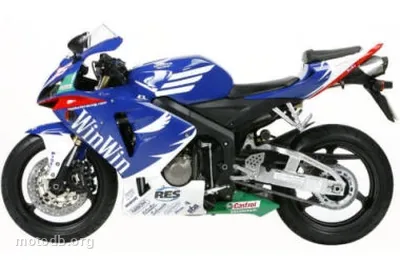
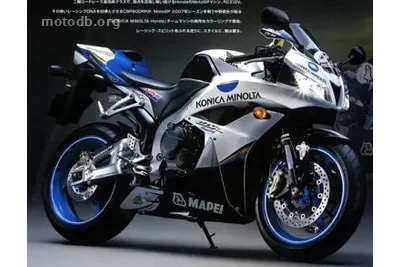
CBR 600 RR Replica WIN WIN Sébastien Charpentier
Reviews & comments
No reviews yet. Be the first to share your opinion!