Key performance
Technical specifications
Engine
- Displacement
- 1255 cc
- Power
- 98.0 ch @ 7500 tr/min (72.1 kW)
- Torque
- 107.9 Nm @ 3700 tr/min
- Engine type
- 4 cylindres en ligne, 4 temps
- Cooling
- liquide
- Compression ratio
- 10.5 : 1
- Bore × stroke
- 79 x 64 mm
- Valves/cylinder
- 4
- Camshafts
- 2 ACT
- Fuel system
- Injection Ø 36 mm
Chassis
- Frame
- Double berceau tubulaire en acier
- Gearbox
- boîte à 6 rapports
- Final drive
- Chaîne
- Front suspension
- Fourche téléhydraulique Ø 43 mm, déb : 130 mm
- Rear suspension
- Mono-amortisseur, déb : 136 mm
Brakes
- Front brakes
- Freinage 2 disques Ø 310 mm, étrier 4 pistons
- Rear brakes
- Freinage 1 disque Ø 240 mm, étrier simple piston
- Front tyre
- 120/70-17
- Front tyre pressure
- 2.50 bar
- Rear tyre
- 180/55-17
- Rear tyre pressure
- 2.90 bar
Dimensions
- Seat height
- 790.00 mm
- Fuel capacity
- 19.00 L
- Weight
- 250.00 kg
- Dry weight
- 225.00 kg
- New price
- 8 499 €
Overview
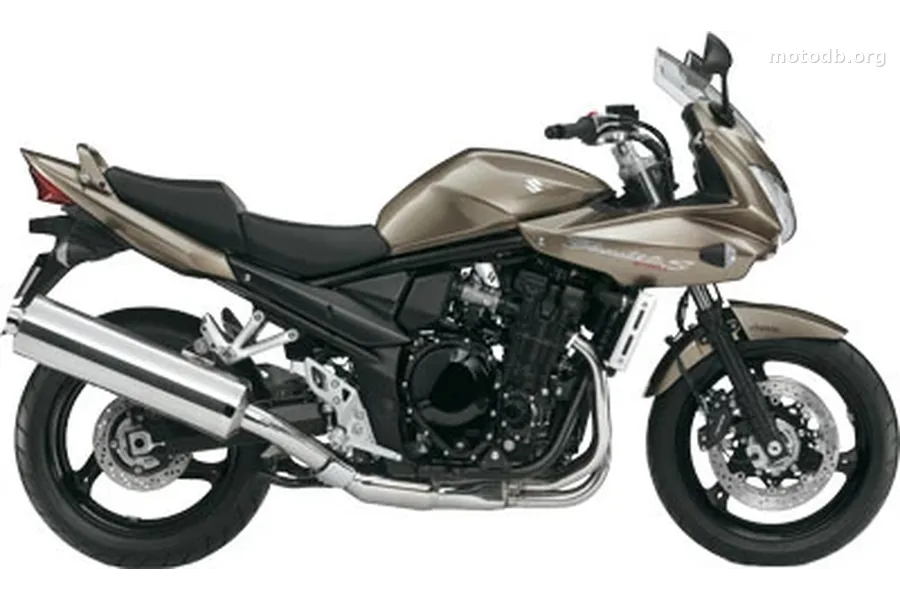
Who still remembers the old air and oil-cooled SACS engine, inherited from the 1986 GSX-R 1100? For over a decade, this engine kept the Bandit running with clockwork reliability. But Euro 3 regulations sounded the death knell for this mechanical relic of another era. The Suzuki GSF 1250 Bandit S therefore arrives with a thoroughly overhauled inline four-cylinder, now liquid-cooled with electronic fuel injection. A major turning point for a motorcycle that had built its reputation on simplicity.
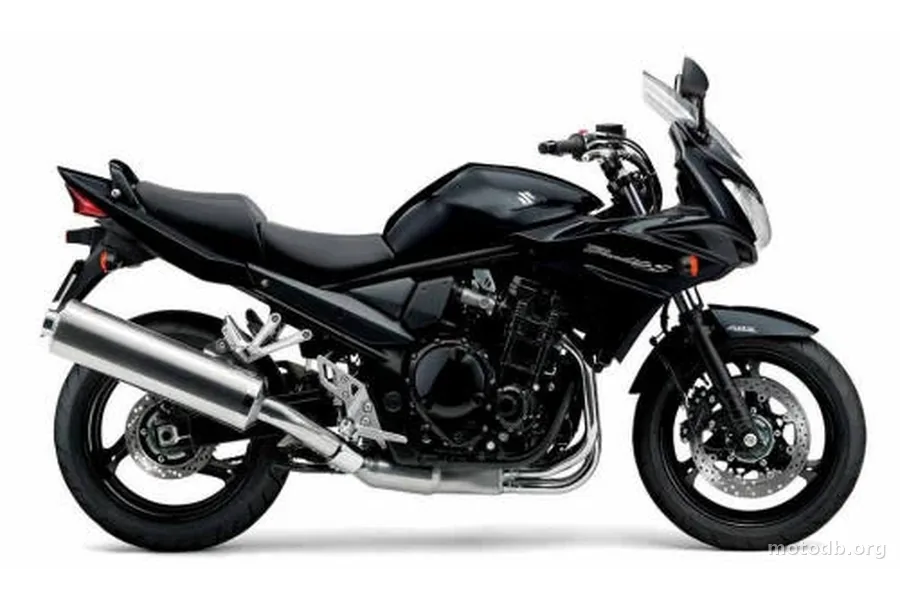
The engine grows to 1255 cc thanks to a longer piston stroke, with a bore of 79 mm, a stroke of 64 mm, and a compression ratio of 10.5:1. The result: 98 horsepower at 7500 rpm and, more importantly, 107.9 Nm of torque available from just 3700 rpm. It's not a sportbike, and nobody's asking it to be one. But this generous low and mid-range output, paired with the 6-speed gearbox, makes the Bandit a formidably effective machine for eating up miles without breaking a sweat. The top speed of the Suzuki GSF 1250 Bandit S maxes out at 230 km/h, a figure consistent with its touring vocation. The fresh air injection system feeding into the catalytic exhaust keeps emissions in check without sacrificing engine character.
On the chassis side, Suzuki didn't reinvent the formula. The tubular steel double-cradle frame retains its architecture, but the tubes gained in diameter to provide 10% more rigidity. The 43 mm telehydraulic fork with 130 mm of travel and the rear mono-shock with 136 mm of travel get the job done without pretending to compete with high-end GT machines. Braking relies on two 310 mm discs clamped by four-piston calipers up front and a 240 mm disc at the rear. Adequate, nothing more. ABS was only offered as an option, which feels a bit stingy for a motorcycle in this category. The seat, adjustable to 790 or 810 mm, accommodates most rider builds without difficulty.
The downside is the scales. At 250 kg wet weight with a 19-liter tank, the Bandit 1250 shows noticeable weight gain compared to its predecessor. In the city, this extra weight makes itself felt during low-speed maneuvers. Fuel consumption on the Suzuki GSF 1250 Bandit S remains reasonable for a big four-cylinder, but the tank lost a liter compared to the 1200, slightly nibbling into highway range. Up against a sharper Yamaha FZ1 Fazer or a more aggressive Kawasaki Z1000, the Bandit plays a different tune: one of comfort and versatility without showboating.
What was the price of a new Suzuki GSF 1250 Bandit S? At 8499 euros at the time, the Bandit hit the sweet spot to attract touring riders and everyday motorcyclists looking for a reliable, comfortable machine with no surprises at service time. It's neither the most exciting nor the most modern of its generation, but it's a motorcycle that does exactly what's asked of it, nothing less. For an experienced A-license rider who rides year-round and wants a solid workhorse rather than a Sunday toy, it remains a smart choice on the used market.
Practical info
- La moto est accessible aux permis : A
Reviews & comments
No reviews yet. Be the first to share your opinion!