Key performance
Technical specifications
- Engine type
- 4 cylindres en ligne, 4 temps → In-line four, four-stroke
- Cooling
- combiné air / huile → Oil & air
- Compression ratio
- 9.5 : 1 → 9.5:1
- Bore × stroke
- 79 x 59 mm → 79.0 x 59.0 mm (3.1 x 2.3 inches)
- Fuel system
- — → Carburettor
- Valve timing
- — → Double Overhead Cams/Twin Cam (DOHC)
- Gearbox
- boîte à 5 rapports → 5-speed
- Final drive
- Chaîne → Chain (final drive)
- Front brakes
- Freinage 2 disques Ø 310 mm, étrier 6 pistons → Dual disc
- Rear brakes
- Freinage 1 disque Ø 230 mm, étrier 2 pistons → Single disc
- Front tyre
- 120/70-17 → 120/70-ZR17
- Rear tyre
- 180/55-17 → 180/55-ZR17
- Wheelbase
- — → 1430.00 mm
- Ground clearance
- — → 130.00 mm
- Length
- — → 2140.00 mm
- Width
- — → 765.00 mm
- Height
- — → 1100.00 mm
Engine
- Displacement
- 1157 cc
- Power
- 100.0 ch @ 8500 tr/min (73.6 kW)
- Torque
- 90.2 Nm @ 6500 tr/min
- Engine type
- In-line four, four-stroke
- Cooling
- Oil & air
- Compression ratio
- 9.5:1
- Bore × stroke
- 79.0 x 59.0 mm (3.1 x 2.3 inches)
- Valves/cylinder
- 4
- Camshafts
- 2 ACT
- Fuel system
- Carburettor
- Valve timing
- Double Overhead Cams/Twin Cam (DOHC)
Chassis
- Frame
- Double berceau tubulaire en acier
- Gearbox
- 5-speed
- Final drive
- Chain (final drive)
- Front suspension
- Fourche téléhydraulique Ø nc, déb : 130 mm
- Rear suspension
- Mono-amortisseur, déb : 125 mm
Brakes
- Front brakes
- Dual disc
- Rear brakes
- Single disc
- Front tyre
- 120/70-ZR17
- Front tyre pressure
- 2.50 bar
- Rear tyre
- 180/55-ZR17
- Rear tyre pressure
- 2.50 bar
Dimensions
- Seat height
- 790.00 mm
- Wheelbase
- 1430.00 mm
- Ground clearance
- 130.00 mm
- Length
- 2140.00 mm
- Width
- 765.00 mm
- Height
- 1100.00 mm
- Fuel capacity
- 20.00 L
- Weight
- 244.00 kg
- Dry weight
- 214.00 kg
- New price
- 7 799 €
Overview
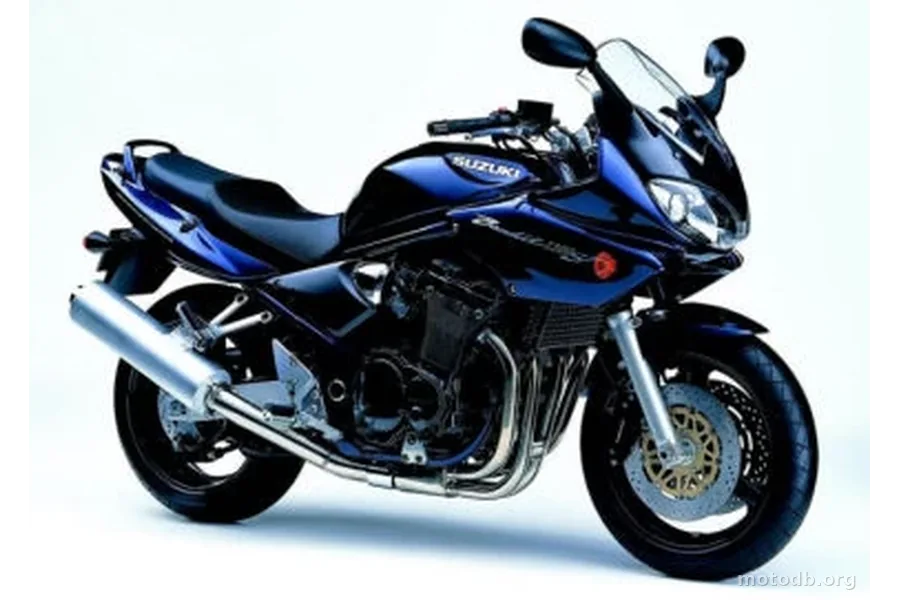
Who still remembers the shock wave of 1996, when Suzuki rolled up with a big 1157 cc air-and-oil-cooled four-cylinder, housed in a steel double-cradle frame, all sold at a rock-bottom price? The Suzuki GSF 1200 Bandit shook up the muscular roadster market by offering a simple yet devastatingly effective formula. Six years later, the 2002 model year arrived with the ambition of correcting the teething problems without betraying the beast's DNA. A risky bet, because tampering with a popular icon always means walking on eggshells.
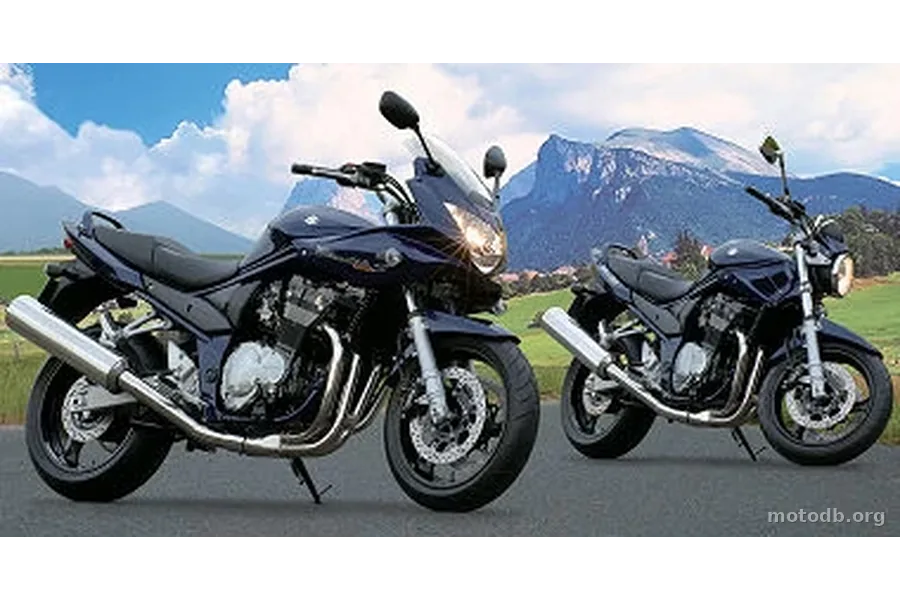
On paper, the spec sheet of the 2002 Suzuki GSF 1200 Bandit stays within the segment's norms. The Suzuki GSF 1200 Bandit's power output holds at 100 horsepower delivered at 8,500 rpm, an honest figure against the Yamaha XJR 1300 or Kawasaki ZRX 1200 of the era. Torque peaks at 90.2 Nm from just 6,500 rpm, which guarantees strong mid-range punch without needing to flog the four-pot. The Hamamatsu factory primarily reworked the power curve to make it more linear, more usable in daily riding. The engine runs smoothly, pulls long thanks to its five-speed gearbox, and offers a flexibility that will please the hurried city rider as much as the touring enthusiast devouring back roads. On the other hand, those who loved the somewhat raw character of the early models will find this engine almost too refined.
The chassis received a serious overhaul. New geometry, revised suspension, reinforced swingarm: the GSF 1200 Bandit proves easier to tip into corners and noticeably more stable at high speed. The seat height, set at 790 mm, remains accessible to most rider builds, which is no small matter on a machine whose wet weight reaches 244 kg. The 20-litre tank allows for decent range, even though the average fuel consumption of a Suzuki GSF 1200 Bandit sits around 6.5 to 7 litres per hundred kilometres under spirited riding. On the styling front, Suzuki borrowed from the smaller 600's wardrobe: taut frame lines, six-piston calipers, and a black-painted engine deliver a welcome facelift. Braking gains power, but the lever feel still lacks progressiveness. A recurring flaw at Suzuki during this period, also found on the GSX 1200 Inazuma for those eyeing a more neo-retro look.
Let's talk candidly about what disappoints. Build quality remains the Bandit range's historic weak point. Slightly cheap plastics, visible welds, perfectible panel gaps: we're far from the rigour of a Honda CB 1300 or even a Yamaha XJR. The suspension, despite improvements, still proves wanting on long, loaded trips. The Suzuki GSF 1200 Bandit's reliability, however, is beyond question. This four-cylinder soaks up the miles with remarkable endurance, and owners showing 80,000 or even 100,000 km on the clock are not uncommon. It is precisely this proven reliability that more than makes up for the shortcomings in presentation and suspension. The big Bandit, produced from 1995 to 2006, redeems itself through a mechanical friendliness that few competitors can claim.
At 7,799 euros when new at the time, the price of a Suzuki GSF 1200 Bandit was a killer argument. Hard to find better equipped for that budget in the big roadster category. Today, on the used market, it represents a credible entry point for a rider looking for cubic capacity without breaking the bank, provided they accept a tamer temperament compared to the earliest generations. The 2002 GSF 1200 Bandit is neither the most exciting nor the most refined in its class, but it remains one of the most endearing. A sensible motorcycle, built to last, that has aged with a kind of mechanical dignity that only solid engines and proven recipes can achieve.
Practical info
- La moto est accessible aux permis : A
Indicators & positioning
Similar bikes
Speed Triple 1200 RR Breitling
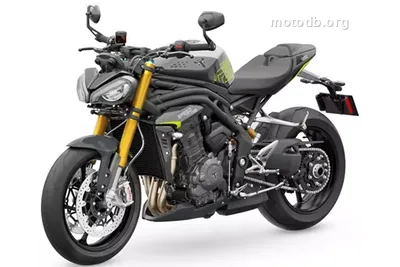
Speed Triple 1200 RS
Nouvelle 1200 Speed Triple RS
Reviews & comments
No reviews yet. Be the first to share your opinion!