Key performance
Technical specifications
Engine
- Displacement
- 999 cc
- Power
- 220.0 ch (161.8 kW)
- Engine type
- 4 cylindres en ligne, 4 temps
- Cooling
- liquide
- Bore × stroke
- 74.5 x 57.3 mm
- Valves/cylinder
- 4
- Camshafts
- 2 ACT
- Fuel system
- Injection Ø 44 mm
Chassis
- Frame
- périmétrique en aluminium
- Gearbox
- boîte à 6 rapports
- Final drive
- Chaîne
- Front suspension
- fourche téléhydraulique inversée Öhlins Ø nc
- Rear suspension
- Mono-amortisseur Öhlins
Brakes
- Front brakes
- Freinage 2 disques Brembo, fixation radiale, étrier 4 pistons
- Rear brakes
- Freinage 1 disque
Dimensions
- Fuel capacity
- 24.00 L
- New price
- 150 000 €
Overview
Twelve years is a long time. Twelve years of Superbike battles under Alstare's blue and white colors, twelve years of Francis Batta going all-in to defend the GSX-R against rival factory teams. Then one morning, Suzuki turns the page, coldly, like switching suppliers. Loyalty has its limits when the balance sheets tell a different story. Enter the Crescent team, a British outfit that had built a serious reputation in the British Superbike Championship before stepping up to the World Championship. The change in class is no small thing.
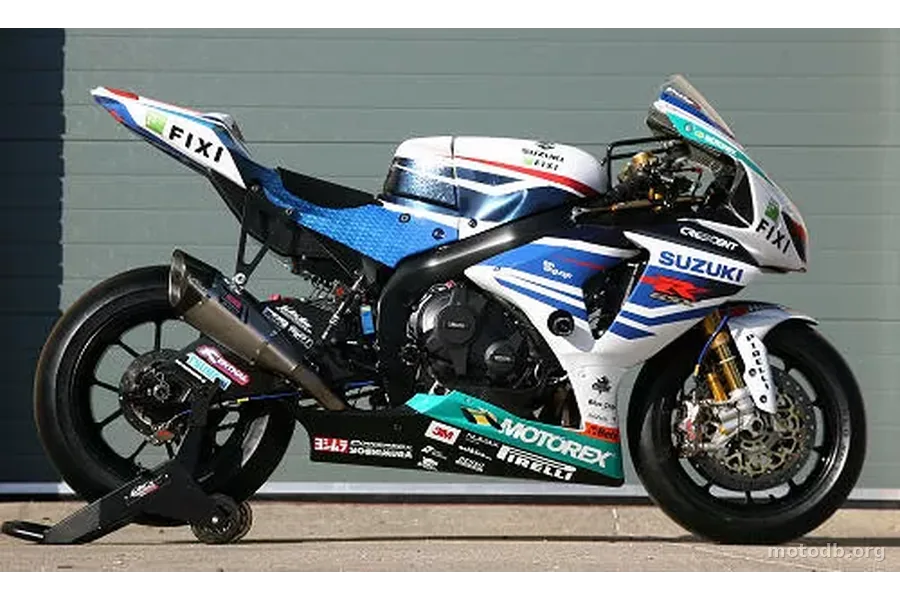
To keep pace with machines like the Aprilia RSV4 and the BMW S 1000 RR, Crescent put together a careful shopping list. Léon Camier, who spent a long time alongside Max Biaggi at Aprilia, knows the Superbike world inside out. By his side, John Hopkins, with eight MotoGP seasons under his belt, was meant to bring that top-level experience. A crash during private testing in Australia in mid-February decided otherwise: it is ultimately Josh Brookes who steps in. The lineup remains solid, even if it perhaps lacks that name capable of making the Ducatis shake on the front row.
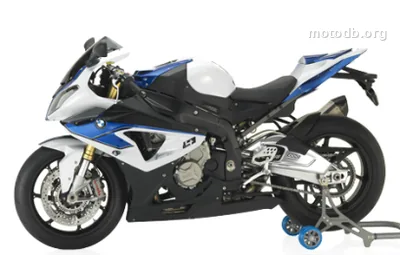
The real subject is the machinery. The GSX-R 1000 has been around for several seasons without a major update, and Suzuki is visibly concentrating its engineers on a return to MotoGP. It is therefore Yoshimura, the brand's historic partner, that has taken the engine in hand. The result: fitted with the prototype R-11 exhaust and meticulous preparation work, the 999 cc inline four-cylinder is said to produce between 210 and 220 horsepower. At 150,000 euros per machine, that is to be expected. Around that engine, the Superbike specification is respected down to the last detail: carbon fairing, Öhlins inverted fork, Öhlins shock absorber, competition swingarm, four-piston radial Brembo calipers, JB Power 16.5-inch wheels, MoTeC data acquisition, traction control and mappings accessible via the left thumb. A 24-liter fuel tank rounds out the package. On paper, the Hamamatsu missile boasts a top speed of 300 km/h and an aluminum perimeter frame that remains untouched, as it stays one of the platform's recognized strong points.
The problem is not there. It lies in development, or rather in its absence. While the Italian and German competition evolved season after season, the Suzuki stood still. Francis Batta said it, repeated it, shouted it. To no avail. A competition motorcycle that stops evolving will inevitably slip down the standings, and the GSX-R is no exception to that rule. Crescent has done the maximum with the tools available, but tools have their limits. Camier and Brookes will fight, clearly. Troubling the Aprilias and Kawasakis for the overall victory is another matter entirely.
Reviews & comments
No reviews yet. Be the first to share your opinion!