Key performance
Technical specifications
Engine
- Displacement
- 999 cc
- Power
- 185.0 ch @ 12000 tr/min (136.1 kW)
- Torque
- 107.9 Nm @ 10000 tr/min
- Engine type
- 4 cylindres en ligne, 4 temps
- Cooling
- liquide
- Compression ratio
- 12.5:1
- Bore × stroke
- 73.4 x 59 mm
- Valves/cylinder
- 4
- Camshafts
- 2 ACT
- Fuel system
- Injection
Chassis
- Frame
- Double poutre alu
- Gearbox
- boîte à 6 rapports
- Final drive
- Chaîne
- Front suspension
- Fourche téléhydraulique inversée Ø 43 mm, déb : 125 mm
- Rear suspension
- Suspension AR monoamortisseur, déb : 135 mm
Brakes
- Front brakes
- Freinage 2 disques Ø 310 mm, fixation radiale, étrier 4 pistons
- Rear brakes
- Freinage 1 disque Ø 220 mm, étrier 2 pistons
- Front tyre
- 120/70-17
- Front tyre pressure
- 2.50 bar
- Rear tyre
- 190/55-17
- Rear tyre pressure
- 2.90 bar
Dimensions
- Seat height
- 810.00 mm
- Fuel capacity
- 18.00 L
- Dry weight
- 172.00 kg
- New price
- 13 499 €
Overview
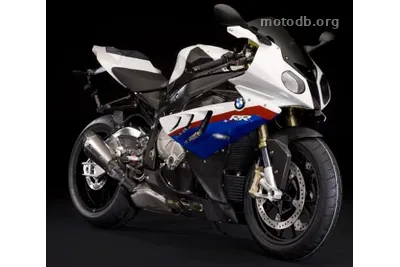
Choosing a MotoGP livery to dress the GSX-R 1000 in 2008 is a debatable gamble. Suzuki was returning to the world championship with genuine ambitions, but the results on the starting grid told a different story: respectable, never spectacular, far from the dominance the brand's tifosi had hoped for. Decorating a limited series in the colors of a program still finding its footing means betting on prestige that was still under construction.
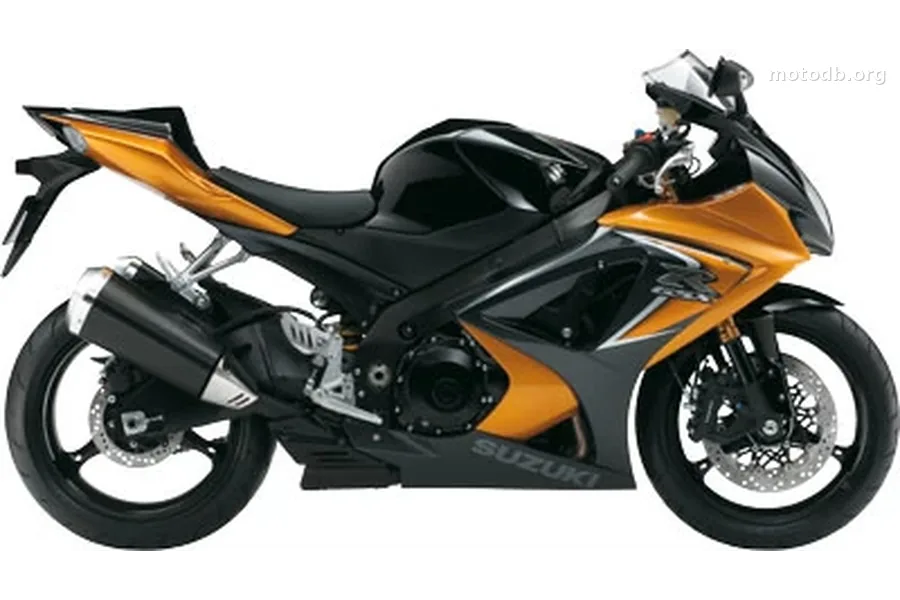
The machine itself, however, has no such identity crisis. The GSX-R 1000 of this generation produces around 185 horsepower at 12,000 rpm, with 107.9 Nm of torque available at 10,000 rpm. All of it housed in an aluminum twin-spar frame tipping the scales at 172 kg dry, a figure that puts the Suzuki at the front of the pack in its category. With a claimed top speed of 310 km/h, this is clearly not the territory of Sunday rides. The 43 mm inverted forks, the radial calipers biting on two 310 mm front discs, the rear monoshock with 135 mm of travel: everything here speaks the language of the track.
The problem is not the motorcycle, then. It is the communication strategy. In 2008, Suzuki holds considerably stronger symbolic capital on the World Superbike side. The Alstare team, its instantly recognizable blue and white liveries, its riders capable of troubling the Ducatis and Hondas in the championship: that would have been sporting credibility that made sense on a special edition. The GSX-R wrote part of its history in Superbike, not in MotoGP paddocks where it remains an outsider. Dressing the beast as a replica of the championship where it struggles rather than as a tribute to the one where it shines means choosing aspiration over reality.
For the buyer, the reasoning still holds. At €13,499, the GSX-R 1000 sits within the expected range for a sports bike of this caliber alongside the Yamaha R1, Honda CBR1000RR, and Kawasaki ZX-10R of the era. The 810 mm seat height and 18-liter fuel tank serve as a reminder that this is a pure sportbike, not a disguised GT. The buyer drawn to this replica version knows what they are getting: a GSX-R at the peak of its form, with a livery that stakes a claim to the world of motorsport. The MotoGP color scheme will always stand out more in a parking lot than a standard version.
The missed opportunity remains real, nonetheless. A version in Alstare colors would have carried stronger sporting coherence and an identity more deeply rooted in the GSX-R's history. That choice would have spoken to the true connoisseurs — those who know what the brand has built in Superbike over the years. By opting for MotoGP, Suzuki reaches a broader audience: one that follows world championship results without necessarily distinguishing the nuances between categories. It is an understandable commercial logic. It is not the boldest one.
Practical info
- La moto est accessible aux permis : A
Reviews & comments
No reviews yet. Be the first to share your opinion!