Key performance
Technical specifications
- Camshafts
- 1 ACT → —
- Front suspension
- Hydraulic telescopic fork → Hydraulic telescopic fork 40mm
- Rear suspension
- Dual shocks → Swingarm with double shock absorber with adjustable spring preload. No rebound adjustment on rear shock.
- Front wheel travel
- 116 mm (4.6 inches) → 130 mm (5.1 inches)
- Rear wheel travel
- — → 99 mm (3.9 inches)
- Front brakes
- Single disc. ABS → Single disc. ABS. Brembo opposed four-piston callipers.
- Front tyre
- 100/90-16 → 130/90-16
- Seat height
- 780.00 mm → 808.00 mm
- Wheelbase
- 1478.00 mm → 1465.00 mm
- Length
- — → 2185.00 mm
- Width
- — → 840.00 mm
- Height
- — → 1160.00 mm
- New price
- 10 500 € → 10 499 €
Engine
- Displacement
- 853 cc
- Power
- 55.0 ch @ 6250 tr/min (40.1 kW)
- Torque
- 62.0 Nm @ 3000 tr/min
- Engine type
- V2, four-stroke
- Cooling
- Air
- Compression ratio
- 10.5:1
- Bore × stroke
- 84 x 77 mm
- Valves/cylinder
- 2
- Fuel system
- Injection. Weber-Marelli electronic fuel injection
- Starter
- Electric
Chassis
- Frame
- ALS steel twin tube cradle frame
- Gearbox
- 5-speed
- Final drive
- Shaft drive (cardan) (final drive)
- Front suspension
- Hydraulic telescopic fork 40mm
- Rear suspension
- Swingarm with double shock absorber with adjustable spring preload. No rebound adjustment on rear shock.
- Front wheel travel
- 130 mm (5.1 inches)
- Rear wheel travel
- 99 mm (3.9 inches)
Brakes
- Front brakes
- Single disc. ABS. Brembo opposed four-piston callipers.
- Rear brakes
- Single disc. ABS
- Front tyre
- 130/90-16
- Front tyre pressure
- 2.50 bar
- Rear tyre
- 150/80-16
- Rear tyre pressure
- 2.80 bar
Dimensions
- Seat height
- 808.00 mm
- Wheelbase
- 1465.00 mm
- Length
- 2185.00 mm
- Width
- 840.00 mm
- Height
- 1160.00 mm
- Fuel capacity
- 15.00 L
- Weight
- 199.00 kg
- Dry weight
- 199.00 kg
- New price
- 10 499 €
Overview
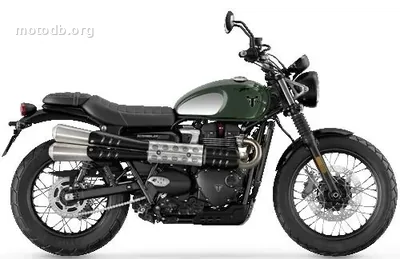
Who still remembers that in 2016, Moto Guzzi decided to start from a clean sheet to design an entirely new twin? The V-twin from the V7, inherited from the V65, had reached its dimensional limits. Enter a brand-new 853 cc V-twin, with an 84 mm bore and 77 mm stroke, designed to power two machines with distinct personalities: the Roamer and the Moto Guzzi V9 Bobber. The latter, in its 2020 version, delivers 55 hp at 6,250 rpm and, more importantly, 62 Nm of torque available from just 3,000 rpm. On paper, it's modest. On the road, it's a completely different story. This 90-degree V-twin, mounted transversely facing the road, produces that famous rocking torque reaction that makes the bike sway side to side at a standstill when you blip the throttle. A mechanical signature that only Mandello del Lario knows how to produce. For those eyeing the Moto Guzzi V9 Bobber 2021, know that the twin gains an additional 10 hp and 11 Nm, which noticeably changes the character in the mid-range.
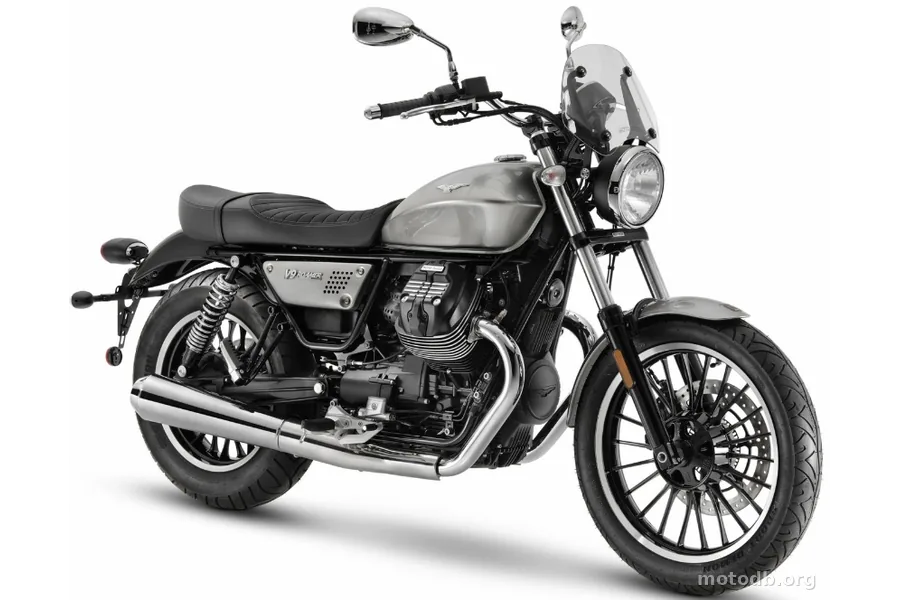
The Moto Guzzi V9 Bobber spec sheet reveals a tubular steel double-cradle frame, a wet weight of 199 kg, and a seat height of 808 mm. Nothing to intimidate average-sized riders, nor A2 license holders since its 40.1 kW output makes it eligible. On the rolling chassis side, the 16-inch front and rear tires in balloon sections (130/90 and 150/80) give the bike that squat silhouette that justifies the bobber designation. But this styling choice comes at a cost behind the handlebars: the steering feels heavy, the front tire lacks precision, and demands a committed riding style. The 40 mm telescopic fork and twin rear shocks with adjustable preload do the bare minimum. No rebound adjustment at the rear, and a thin seat that filters nothing. On rough roads, your spine takes a beating.
The ergonomics deserve a closer look. The riding position, somewhere between cruiser and roadster, places the torso slightly forward thanks to flat handlebars that evoke an Italian-revised Harley Sportster. The transverse twin forces you to spread your knees to clear the cylinders, which naturally pushes the rider toward the rear of the Moto Guzzi V9 Bobber seat. Since 2017, footpegs moved 10 cm rearward and raised 3.5 cm have corrected this, making the seating position more natural. A detail that matters when considering a used Moto Guzzi V9 Bobber: check the model year, as the first Moto Guzzi V9 Bobber 2016 or 2017 models didn't have this correction as standard.
On the equipment front, the dashboard boils down to a round gauge with a small digital screen. Minimalist, consistent with the spirit of the machine. The MGCT traction control offers two levels plus full deactivation, and the dual-channel ABS by Brembo provides reassurance with its four-piston front calipers. The shaft drive eliminates the chore of chain maintenance — a genuine selling point for daily use. The 15-liter tank, combined with a claimed consumption of 5 liters per 100 km, offers decent range but nothing more. Top speed caps out at 170 km/h, which clearly places the V9 Bobber outside sportbike territory. Its domain is the winding back road, the stylish urban commute, the Sunday ride where mechanical pleasure trumps performance.
At €10,499, the Moto Guzzi V9 Bobber 2020 stands against the Triumph Street Twin or the BMW R nineT Pure, with one argument neither of those two can claim: that raw engine character, that V-twin that pulses and vibrates like a living organ. The Moto Guzzi V9 Bobber custom market is thriving, as the platform lends itself perfectly to accessories and personal modifications. This is not a perfect motorcycle. The suspension lacks refinement, the seat comfort limits long-distance riding, and the steering demands commitment. But a single Moto Guzzi V9 Bobber test ride is all it takes to understand: you don't choose this Italian with a spreadsheet — you choose it with your gut.
Standard equipment
- Assistance au freinage : ABS
Practical info
- La moto est accessible aux permis : A
Indicators & positioning
Similar bikes
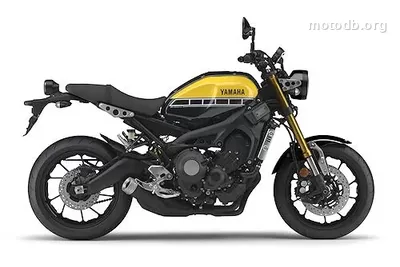
XSR 900 60eme anniversaire
Reviews & comments
No reviews yet. Be the first to share your opinion!