Key performance
Technical specifications
Engine
- Displacement
- 445 cc
- Power
- 53.8 ch @ 8500 tr/min (39.6 kW)
- Engine type
- Bicylindre parallèle, 4 temps
- Cooling
- liquide
- Valves/cylinder
- 4
- Camshafts
- 2 ACT
- Fuel system
- injection
- Starter
- électrique
- Euro standard
- Euro 5
Chassis
- Frame
- Structures en tubes d'acier
- Gearbox
- boîte à 5 rapports
- Final drive
- Chaîne
- Front suspension
- fourche à balancier Ø 41 mm
- Rear suspension
- 2 amortisseurs latéraux
Brakes
- Front brakes
- Freinage
- Rear brakes
- Freinage 1 disque
Dimensions
- Fuel capacity
- 18.00 L
- Weight
- 375.00 kg
- New price
- 12 699 €
Overview
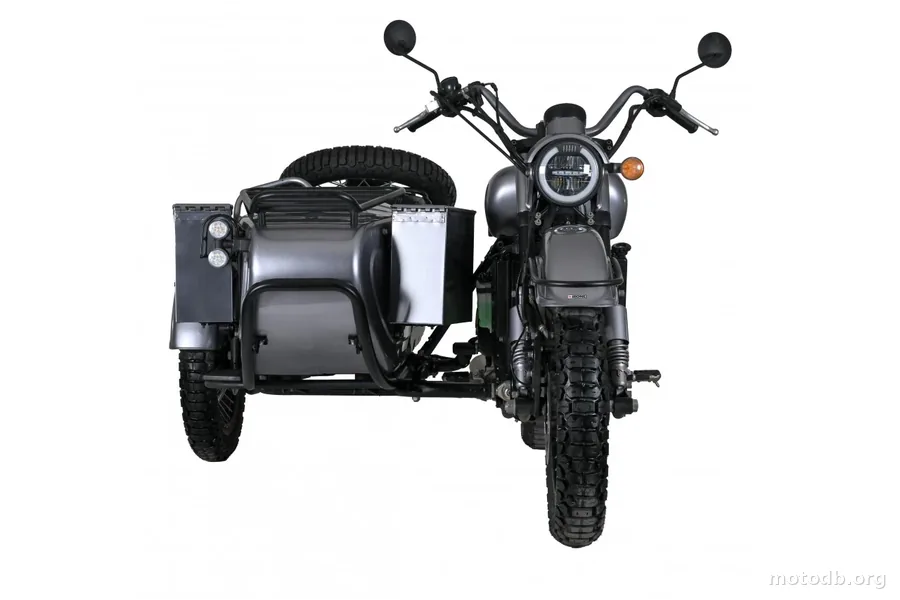
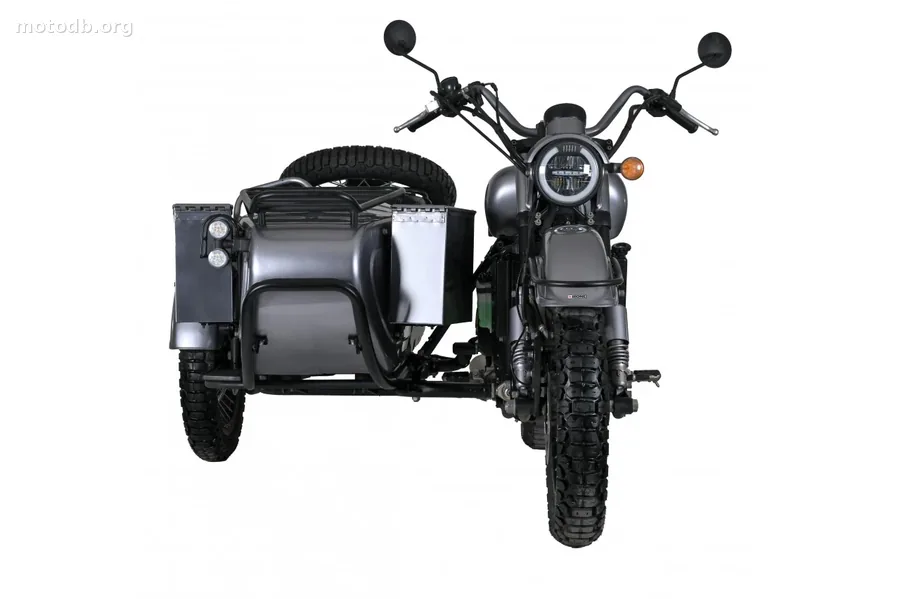
When a Franco-Chinese Burgundian brand decides to take on the sidecar market, you smile. When it persists, you pay attention. Mash began its three-wheeled adventure with modest machines — an underpowered single-cylinder engine and an undeniable retro charm, all at prices that made competitors blush. Today, the B-Side 500 changes the game without changing its DNA. The machine remains massive, almost military in its stance, clearly inspired by the Russian Urals with their silhouette of a reconnaissance vehicle pulled from some forgotten conflict. The single aluminum grey colorway does nothing to dispel that impression; you think of Soviet twin-engined aircraft frozen in black-and-white documentaries.
What truly changes is what lies beneath the tank. The anaemic single-cylinder that struggled to pull 317 kg gives way to a water-cooled parallel twin displacing 445 cc, derived from the Honda CB500 engine, producing 53.8 hp at 8,500 rpm. Nearly double the horsepower for barely 49 cc more than the previous powerplant — technological progress works wonders. The gearbox loses one ratio compared to the original unit to retain reverse gear, an indispensable feature the moment you hitch a generously sized sidecar basket. You therefore have five forward gears and one reverse ratio to manoeuvre the 375 kg ensemble, a noticeably heavier figure than previous versions, a direct consequence of the beefier engine and the return of equipment that had been sacrificed on certain earlier variants.
The B-Side does indeed reconnect with a generous equipment level: side racks, spare wheel, front and rear loading platforms, a crash bar protecting the sidecar, and a mount on the sidecar mudguard. The spec sheet also lists a circular-display TFT colour dashboard, backlit switchgear, a tank enlarged to 18 litres — five more than before — and various revised trim details. On the chassis side, the recipe remains classic: steel double cradle frame, 41 mm leading-link fork, twin rear shock absorbers, 18-inch wire-spoke wheels shod with knobbly tyres to handle forest tracks. Three coupled brake discs bring the ensemble to a halt, one whose top speed is capped at 110 km/h, which clearly defines the intended use.
Because this Mash is not aimed at those seeking sporting thrills. Its audience is the long-distance adventure enthusiast who wants to carry family or gear, the traveller who favours a leisurely pace, perhaps the rider with reduced mobility who finds in the sidecar an alternative to a traditional motorcycle. Pitched against a Ural Gear-Up listed at around €16,000, the B-Side's €12,699 price point remains coherent, even if the symbolic €10,000 threshold has now been crossed compared to the less well-equipped previous variants. The question is not whether the B-Side is perfect — it isn't, as evidenced by the coolant reservoir bolted somewhat hastily onto the side of the bike — but whether the ratio between what you pay and what you get holds up. With an engine finally up to the task of moving the mass it has to propel, the answer is yes for the first time in the history of Mash's sidecar range.
Standard equipment
- Jantes à rayon
- Prise USB
- Marche arrière
- Indicateur de vitesse engagée
- Commodes rétro-éclairés
- Freinage combiné
Practical info
- La moto est accessible aux permis : A
- Pays de fabrication : Chine
Reviews & comments
No reviews yet. Be the first to share your opinion!