Key performance
Technical specifications
Engine
- Displacement
- 397 cc
- Power
- 28.0 ch @ 7000 tr/min (20.6 kW)
- Torque
- 29.9 Nm @ 5500 tr/min
- Engine type
- Monocylindre, 4 temps
- Cooling
- par air
- Valves/cylinder
- 4
- Camshafts
- 1 ACT
- Fuel system
- Injection
Chassis
- Frame
- Cadre tubulaire en acier
- Gearbox
- boîte à 5 rapports
- Final drive
- Chaîne
- Front suspension
- Fourche téléhydraulique Ø 41 mm
- Rear suspension
- 2 amortisseurs latéraux
Brakes
- Front brakes
- Freinage
- Rear brakes
- Freinage 1 disque
- Front tyre
- 100/90-19
- Rear tyre
- 130/70-18
Dimensions
- Fuel capacity
- 13.00 L
- Dry weight
- 230.00 kg
- New price
- 9 290 €
Overview
The French sidecar market stands on two legs. On one side, the Ural with its multiple variants, a Soviet symbol recycled into a lifestyle icon. On the other, the Mash Family Side, which has achieved something remarkable: making desirable a category that many had written off as doomed. The manufacturer based in Beaune has not merely sold sidecar motorcycles — it has sold an idea, an image, a deliberate step back in time. It is this feat that makes the machine difficult to judge through the lens of specifications alone.
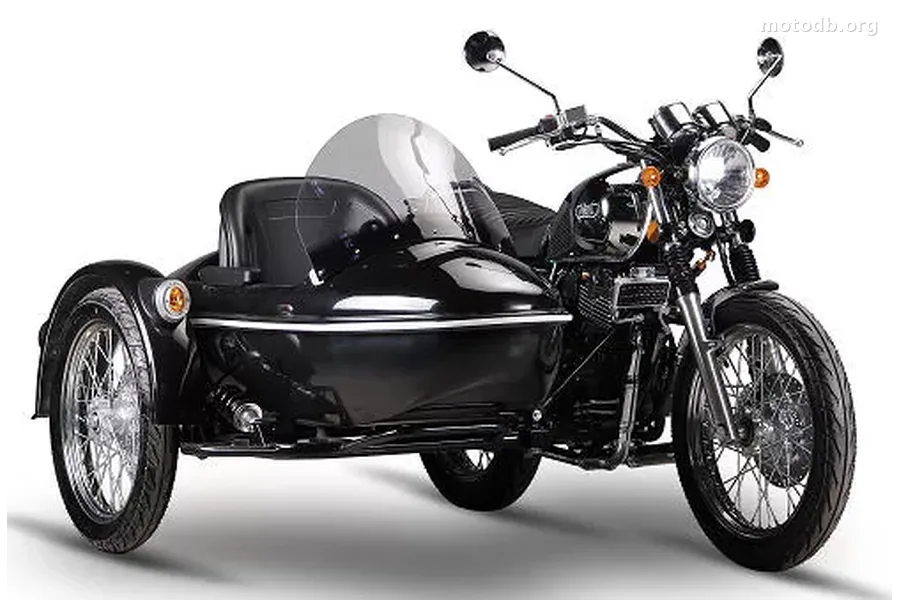
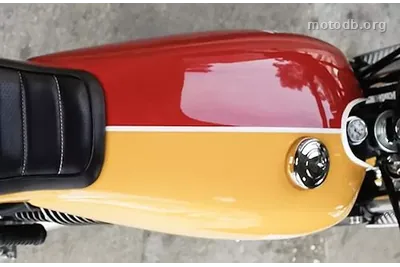
The Chrome & Black version pushes this logic even further. Where the standard Family Side played the English card — tweed and bottle green — this special edition goes deep black on the sidecar and throws chrome onto the tank and several body elements. The result is reminiscent of Hollywood productions from the 1930s, when luxury expressed itself in sharp contrasts. The leather strap on the tank, topped with a Monza-inspired filler cap, are the details that distinguish a finished product from a considered one. The price premium over the base model remains modest, around 300 euros, for a final price of 9,290 euros. It is the least expensive sidecar on the market, and the commercial argument is genuine when set against the Ural, which sits well above that bracket.
Beneath the chromed tank, the 397 cc single-cylinder produces 28 horsepower at 7,000 rpm and 29.9 Nm of torque at 5,500 rpm. These figures will not set any track days alight, and that is not the point. The engine, now fitted with a small oil cooler to improve longevity, is perfectly suited to its intended use. Top speed is capped at 100 km/h, the gearbox offers five ratios, and the whole assembly sits on a steel tubular frame with a 41 mm telescopic hydraulic fork and two lateral shock absorbers. The mechanicals are sound, unpretentious, built for country roads and sunken lanes rather than motorways.
What demands attention is getting to grips with the machine. The sidecar does not handle like a solo motorcycle, and the Family Side is no exception. Corner trajectories, asymmetric braking, the reflexes that need unlearning — all of this justifies a training course before venturing out on a ride. The dry weight of 230 kg also commands a certain respect during low-speed manoeuvres. Once the geometry is properly adjusted and these fundamentals are absorbed, the machine reveals its true nature: a standing invitation to take forgotten roads for no particular reason. That is precisely the audience Mash is targeting — neither the long-distance tourer nor the thrill-seeker, but the rider who wants to travel differently, with a passenger or a dog, under the amused gaze of passersby.
Practical info
- La moto est accessible aux permis : A
Reviews & comments
No reviews yet. Be the first to share your opinion!