Key performance
Technical specifications
Engine
- Displacement
- 599 cc
- Power
- 118.0 ch @ 12500 tr/min (86.8 kW)
- Torque
- 66.7 Nm @ 9800 tr/min
- Engine type
- 4 cylindres en ligne, 4 temps
- Cooling
- liquide
- Compression ratio
- 13:1
- Bore × stroke
- 67 x 42.5 mm
- Valves/cylinder
- 4
- Camshafts
- 2 ACT
- Fuel system
- Injection Ø 38 mm
Chassis
- Frame
- périmétrique en aluminium
- Gearbox
- boîte à 6 rapports
- Final drive
- Chaîne
- Front suspension
- Fourche téléhydraulique inversée Ø 41 mm, déb : 120 mm
- Rear suspension
- Mono-amortisseur, déb : 135 mm
Brakes
- Front brakes
- Freinage 2 disques Ø 280 mm, fixation radiale, étrier 4 pistons
- Rear brakes
- Freinage 1 disque Ø 220 mm, étrier simple piston
- Front tyre
- 120/65-17
- Rear tyre
- 180/55-17
Dimensions
- Seat height
- 825.00 mm
- Fuel capacity
- 18.00 L
- Weight
- 191.00 kg
- Dry weight
- 161.00 kg
- New price
- 10 699 €
Overview
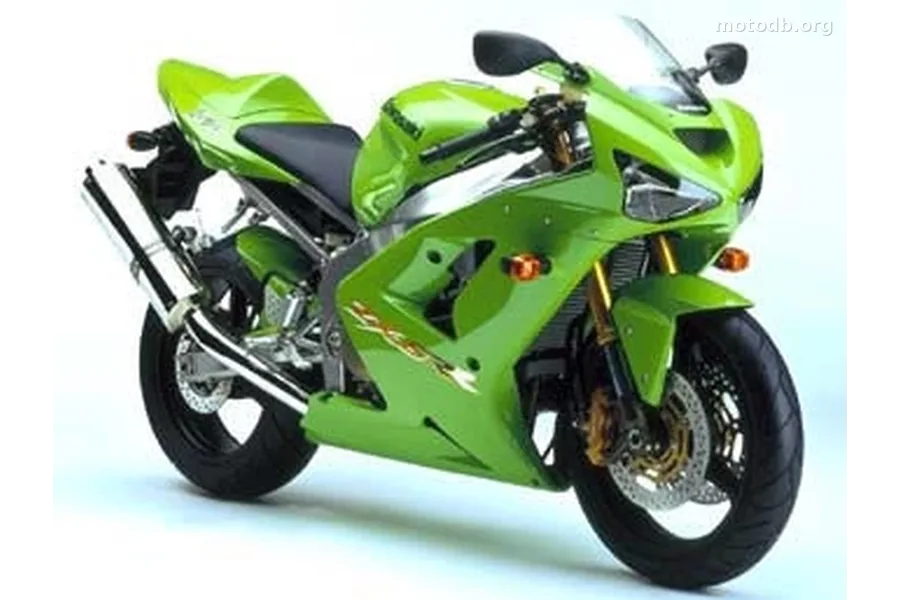
Do you remember the era when a 600 could be a daily companion, almost reasonable under 10,000 RPM? Kawasaki, with the ZX-6R of the 2000s, embodied that approach: an engine that pulled, acceptable ergonomics, a machine you could use without a caffeine fix. In 2004, with this ZX-6RR, they decided to turn the page. Abruptly. It’s no longer an accessible sportbike; it’s a race machine with turn signals, a track-focused concentrate that comes to remind you that the 600 class was, originally, a matter of war on the track.
The first contact is a lesson in design. It looks more compact, more aggressive than the previous one, even though the wheelbase remains the same. Seat height rises to 825 mm, the screen is shortened, the frame brackets go under the fork – everything is done to signal a racing intention. On paper, the 118 horsepower at 12,500 RPM and 66.7 Nm of torque at 9,800 RPM don’t seem revolutionary. But it’s in the way they are delivered that everything changes.
The engine is the most significant departure. The old ZX-6R had that politeness at low RPM, a capacity to ride without demanding total commitment. This RR, with its 599 cc inline four-cylinder engine, no longer has that civility. Below 7,000 RPM, it’s hollow, almost soft. You have to mistreat it, keep it in the high RPM range to reveal its character. Between 9,500 and 15,000 RPM, it transforms into a linear and insatiable fury. Kawasaki has shortened the ratios of the 6-speed gearbox, clearly to optimize track use. Road versatility is sacrificed; track ferocity becomes the sole credo.
This radical repositioning is served by a chassis that never falters. The perimeter aluminum frame and the 41 mm inverted fork offer rigidity and precision that were the standard of superbikes of this generation. At 191 kg fully fueled, it’s not the lightest, but this mass is well placed. In corners, it is disarmingly obvious, stable, predictable. The braking, with its two 280 mm front discs and radial calipers, is of an effectiveness and feeling that leaves no room for doubt.
But this technical perfection comes at a price, both literally and figuratively. At 10,699 euros at the time, it positioned itself at the top of the 600 market. And its audience? It’s no longer the touring rider looking for a sportbike capable of travel, nor the urban dweller seeking style. It’s the track rider, the circuit enthusiast who accepts sacrificing all ease to have the sharpest weapon in the class. Compared to a Honda CBR600RR or a Yamaha YZF-R6 of the same period, it is often more extreme in its engine approach, less accommodating to low RPM.
The 2004 ZX-6RR is therefore a connoisseur's object, a return to the fundamentals of racing. Kawasaki chose to make a specialized, almost pointed machine, abandoning the compromise that had made its previous Ninjas successful. It is devastatingly effective on a track, but it demands total commitment from its rider. You won’t ride it to get bread; you’ll ride it to seek the limit, and it will give it to you, without frills. It’s a courageous decision, which recalls that sometimes, in the pursuit of progress, you have to know how to return to the very essence of mechanical sport.
Practical info
- La moto est accessible aux permis : A
Indicators & positioning
Similar bikes
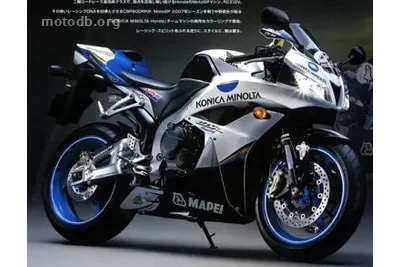
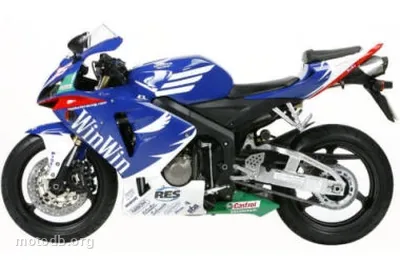
CBR 600 RR édition HANNspree Ten Kate
CBR 600 RR Replica MOVISTAR
Reviews & comments
No reviews yet. Be the first to share your opinion!