Key performance
Technical specifications
Engine
- Displacement
- 599 cc
- Power
- 118.0 ch @ 12500 tr/min (86.8 kW)
- Torque
- 66.7 Nm @ 9800 tr/min
- Engine type
- 4 cylindres en ligne, 4 temps
- Cooling
- liquide
- Compression ratio
- 13:1
- Bore × stroke
- 67 x 42.5 mm
- Valves/cylinder
- 4
- Camshafts
- 2 ACT
- Fuel system
- Injection Ø 38 mm
Chassis
- Frame
- périmétrique en aluminium
- Gearbox
- boîte à 6 rapports
- Final drive
- Chaîne
- Front suspension
- Fourche téléhydraulique inversée Ø 41 mm, déb : 120 mm
- Rear suspension
- Mono-amortisseur, déb : 135 mm
Brakes
- Front brakes
- Freinage 2 disques Ø 280 mm, fixation radiale, étrier 4 pistons
- Rear brakes
- Freinage 1 disque Ø 220 mm, étrier simple piston
- Front tyre
- 120/65-17
- Rear tyre
- 180/55-17
Dimensions
- Seat height
- 825.00 mm
- Fuel capacity
- 18.00 L
- Weight
- 191.00 kg
- Dry weight
- 161.00 kg
- New price
- 10 699 €
Overview
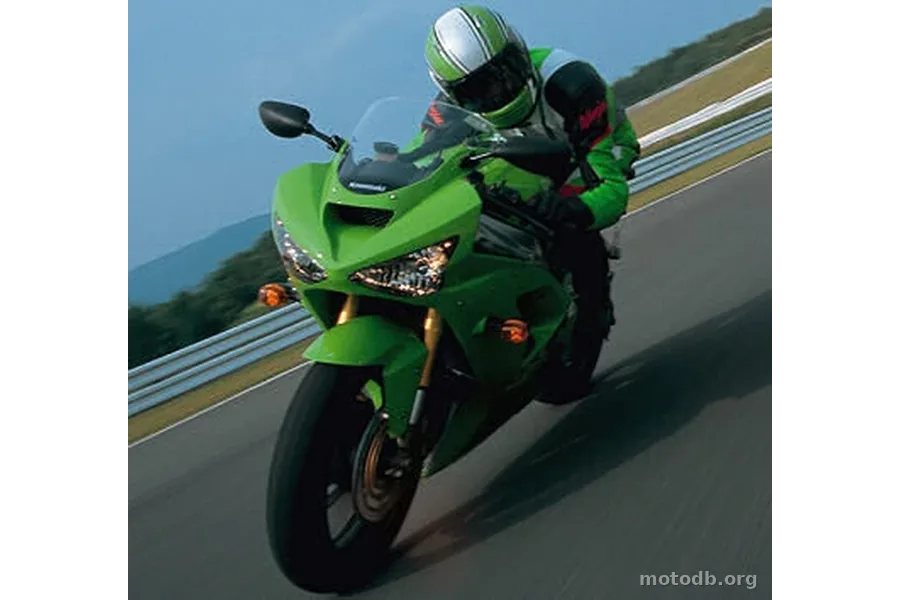
Imagine a mountain circuit on a Sunday morning, where the previous generation of 600 Ninja weaved with an almost touring politeness. The ZX-6RR of 2003, on the other hand, arrives with a full-face helmet and a firm intention of pulverizing the same course. Kawasaki has clearly drawn a line through compromise. This machine is no longer a slightly sensible road sportbike; it's a barely disguised race replica, a track machine equipped with turn signals and a headlight for an improbable homologation.
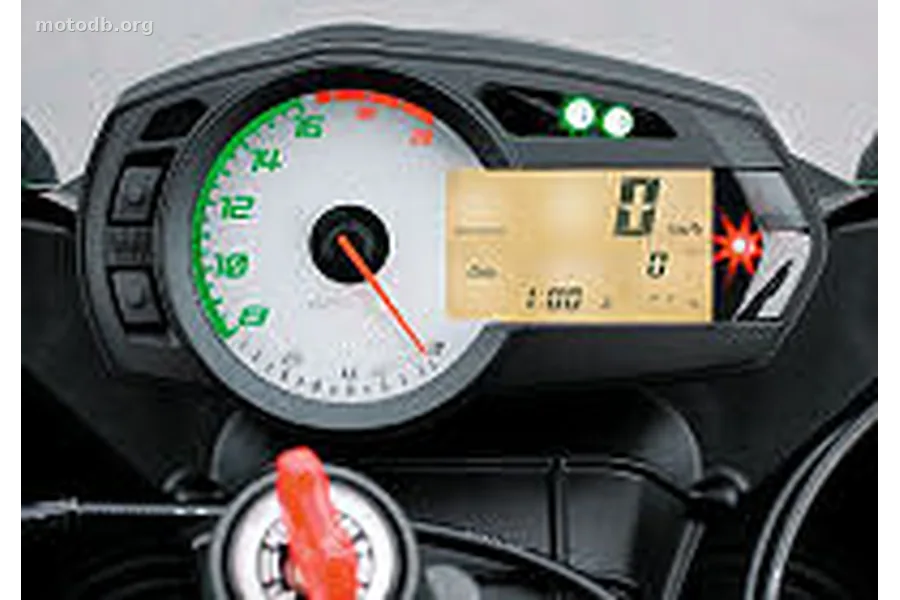
From the moment it’s started, the message is clear. The 599 cm³ four-cylinder engine, which delivers 118 horsepower at 12,500 rpm, runs with a dry rumble. Forget any suppleness at low rpm. Below 7,000 rpm, it’s a desert, an abyssal hollow where its ancestors were already pulling. You have to be patient, or rather aggressive, and keep it in the high part of the rev range for it to deliver its substantial marrow. Between 13,000 rpm and the rev limiter, it transforms into a mechanical fury, pushing with a vehemence that fully justifies its 260 km/h top speed. The six-speed gearbox, deliberately shortened, only asks to be whipped. It's a pure circuit philosophy, which cheerfully sacrifices urban or relaxed use.
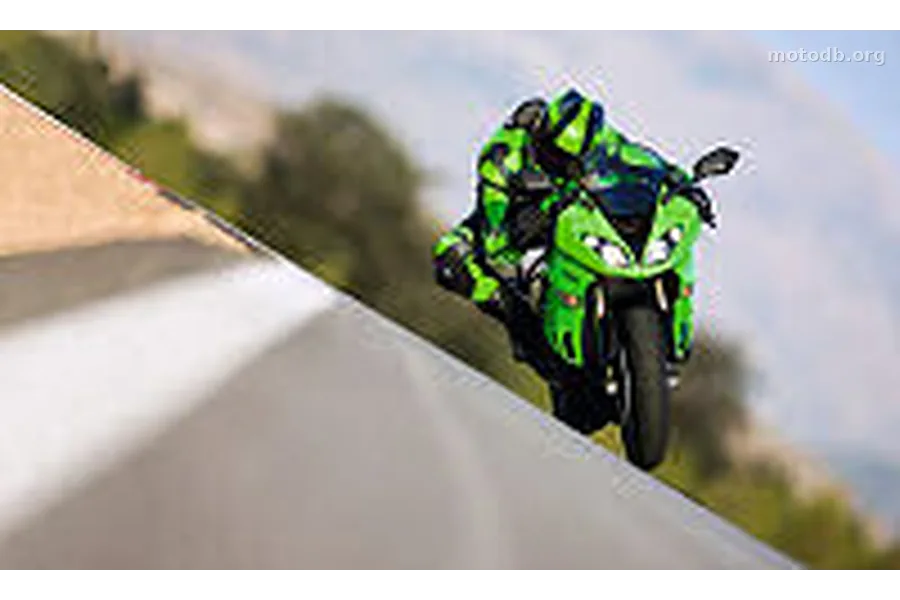
The magic happens once you’re underway. The perimeter aluminum frame and the new 41 mm inverted fork offer surgical precision. The motorcycle leans with a disarming ease, almost too easy, and maintains its line with a stiffness that inspires absolute confidence. The braking, with its radial four-piston calipers biting on 280 mm discs, is of impeccable power and feel. At 191 kg fully fueled, it disappears, transforming each corner into a simple and quick equation to solve.
But this sporting perfection has a cost, and not just its launch price of 10,699 euros. It has lost its soul of an accessible sportbike, that slightly raw but versatile charm that made the Ninja a success. The 825 mm seat, the 18-liter tank, everything is designed for extreme performance, at the expense of comfort and everyday suppleness. Faced with competitors such as the Honda CBR600RR or the Yamaha YZF-R6 of the time, it clearly chooses the camp of radicalism.
Who is it for? For the pure and hard track rider, the one who seeks the sharpest, most direct machine for the track, and who will accept its demanding manners on the road as a secondary concern. It is a precision weapon, brilliant, formidable, but which requires an already experienced rider not to be overwhelmed by its character. Kawasaki did not make a motorcycle to please everyone; they manufactured a circuit weapon, end of story. And on that terrain, it was, and remains, absolutely terrifying.
Practical info
- La moto est accessible aux permis : A
Indicators & positioning
Similar bikes
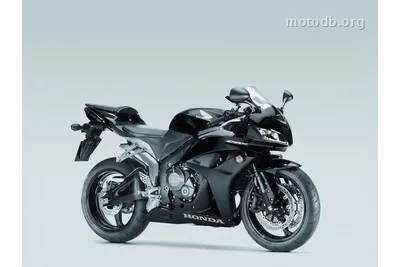
CBR 600 RR édition HANNspree Ten Kate
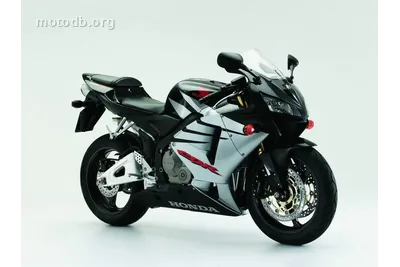
CBR 600 RR Replica MOVISTAR
Reviews & comments
No reviews yet. Be the first to share your opinion!