Key performance
Technical specifications
Engine
- Displacement
- 599 cc
- Power
- 128.0 ch @ 14000 tr/min (94.1 kW)
- Torque
- 66.7 Nm @ 11800 tr/min
- Engine type
- 4 cylindres en ligne, 4 temps
- Cooling
- liquide
- Compression ratio
- 13.3:1
- Bore × stroke
- 67 x 42.5 mm
- Valves/cylinder
- 4
- Camshafts
- 2 ACT
- Fuel system
- Injection Ø 38 mm
Chassis
- Frame
- périmétrique en aluminium embouti
- Gearbox
- boîte à 6 rapports
- Final drive
- Chaîne
- Front suspension
- Fourche téléhydraulique inversée Ø 41 mm, déb : 120 mm
- Rear suspension
- Monoamortisseur à gaz, système UniTrak, déb : 134 mm
Brakes
- Front brakes
- Freinage 2 disques en pétale Ø 300 mm, étrier 4 pistons
- Rear brakes
- Freinage 1 disque en pétale Ø 220 mm, étrier simple piston
- Front tyre
- 120/70-17
- Rear tyre
- 180/55-17
Dimensions
- Seat height
- 815.00 mm
- Fuel capacity
- 17.00 L
- Weight
- 191.00 kg
- Dry weight
- 157.00 kg
- New price
- 11 099 €
Overview
In 2009, Kawasaki didn’t make minor adjustments; they performed a complete identity transplant. Who would have thought a 600 would adopt the aggressive silhouette of the ZX-10R with such arrogance? This Ninja doesn’t smile at you; it challenges you with its gaze before swallowing you whole. It’s a visual declaration of war, a marketing move as brilliant as it is effective, because behind this supercar bodywork lies a machine that had a serious score to settle with the scales.
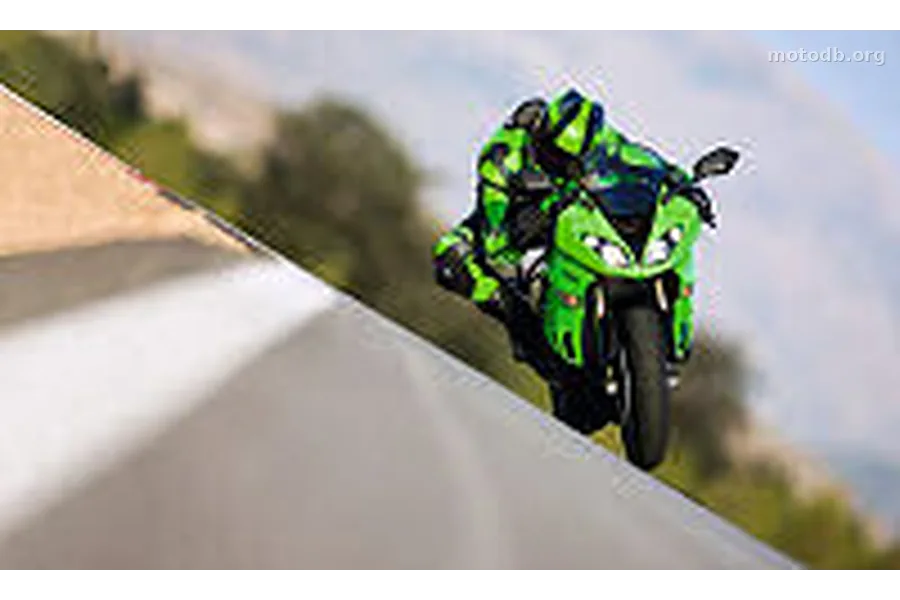
The Achilles' heel of previous versions was known to all: a weight that made it buckle in the face of the competition. Akashi’s response is a masterpiece of weight-loss surgery. Nearly ten kilograms have disappeared, a feat that brings it closer to the mythical featherweight of the Honda CBR600RR. This hunt for grams is a lesson in obsession: magnesium cases, special alloy camshafts, removal of an oxygen sensor, refined gears… Every component has been put under the scalpel. The result is a dry weight of 157 kg, a physical liberation that changes everything on the track.
This rediscovered agility is enhanced by reworked geometry for the racer. The engine is tilted further forward, the center of gravity rises, the steering column gains height, and the rake tightens by one degree. Kawasaki even abandons the under-seat silencer, a symbol of an era, for a lateral exhaust that recenters the masses. The rider’s position has also been redesigned: a more compact riding triangle, a thinner fuel tank, a lower and narrower seat. Everything is orchestrated so that the rider’s body merges with the machine, to feel every millimeter of rubber and every variation in grip. It’s a motorcycle that no longer tolerates distance; it demands intimacy.
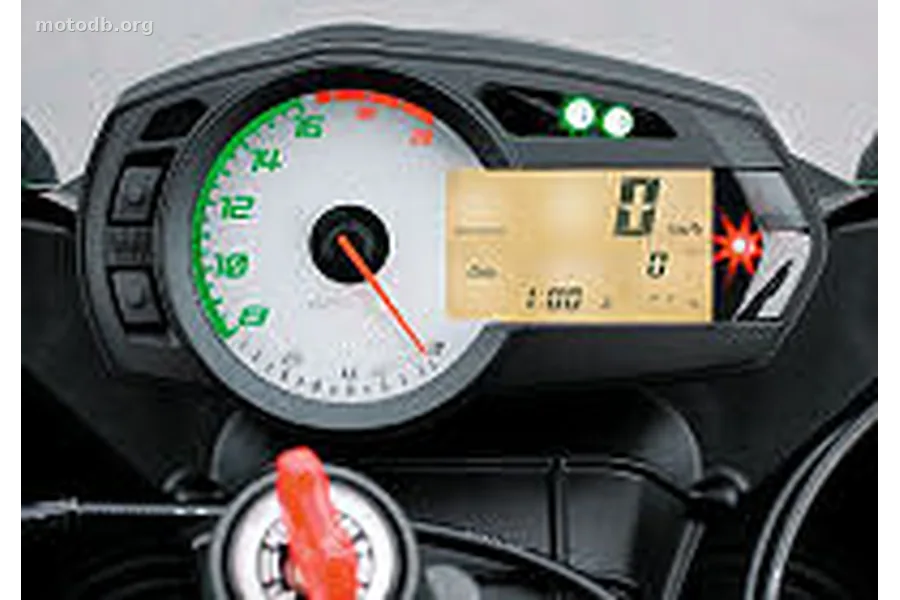
The front receives the key technical component: the adoption of BPF fork technology, already proven on the Suzuki GSX-R 1000. Its principle? A larger diameter piston for an oil action surface almost quadrupled. This translates to more progressive damping at the beginning of the stroke and reinforced stability when entering corners, especially under violent braking. Coupled with an Öhlins steering damper and a radial monoblock braking system, the front end provides absolute confidence when attacking the apexes. The engine has been reworked to gain responsiveness in the mid-range. With 128 horsepower at 14,000 rpm and a better-distributed torque curve, it offers progressivity that serves precision rather than explosive character. It’s a more calculating approach, designed for the lap record.
The 2009 ZX-6RR is therefore much more than a facelift. It’s a reinvention that targets the demanding track rider, the one for whom every tenth of a second per lap depends on a perfect connection with his machine. By offering the design of a 1000 and the agility of a lightweight 600, Kawasaki has created a precision weapon that has forced respect from Yamaha and Honda. It proves that in sportbikes, style can be a preview of performance.
Practical info
- La moto est accessible aux permis : A
Indicators & positioning
Similar bikes
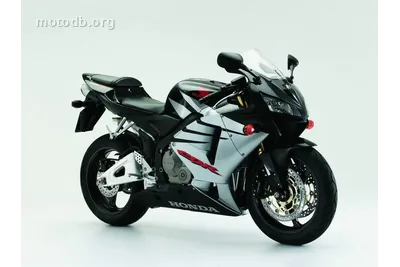
CBR 600 RR Replica MOVISTAR
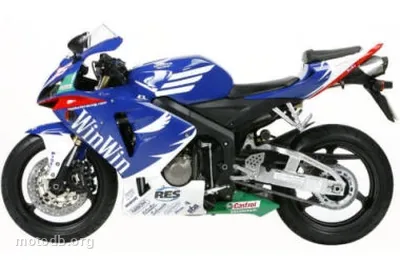
CBR 600 RR Replica WIN WIN Sébastien Charpentier
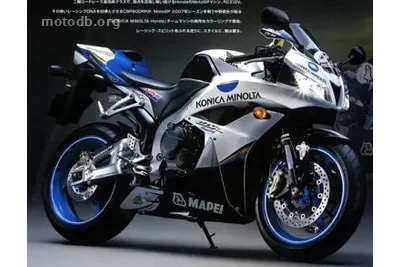
CBR 600 RR Konica Minolta Replica
Reviews & comments
No reviews yet. Be the first to share your opinion!