Key performance
Technical specifications
- Power
- 60.0 ch @ 9500 tr/min (44.1 kW) → —
- Compression ratio
- 12.8:1 → 12.5:1
- Fuel system
- Injection. DFI® w/43mm Keihin throttle body → Injection. DFI with 43mm Keihin throttle body
- Lubrication
- Forced lubrication, semi and #8209;dry sump → —
- Starter
- Kick → —
- Frame
- Perimeter, aluminium → périmétrique en aluminium
- Clutch
- Wet multi-disc → —
- Front suspension
- Inverted Showa SFF-Air TAC fork with Triple Air Chamber, DLC coated sliders, 22-position compression and 20-position rebound damping adjustment → 48mm inverted, Kayaba PSF with DLC coated sliders, 22-position compression and 20-position rebound dampening adjustment / 12.4 in.
- Rear suspension
- Uni-Trak® linkage system and Showa shock, 19-position low-speed and 4-turns high-speed compression damping, 22-position rebound damping and fully adjustable spring preload → UNI-TRAK linkage system and Kayaba shock with 50mm piston, 22-position low-speed and stepless high-speed compression dampening, 33-position rebound dampening and fully adjustable spring preload / 12.4 in.
- Front wheel travel
- 305 mm (12.0 inches) → —
- Rear wheel travel
- 305 mm (12.0 inches) → —
- Seat height
- 950.00 mm → 955.00 mm
- Wheelbase
- 1495.00 mm → 1481.00 mm
- Ground clearance
- 335.00 mm → 330.00 mm
- Length
- 2195.00 mm → 2179.00 mm
- Height
- 1280.00 mm → 1275.00 mm
- Weight
- 108.80 kg → 112.50 kg
- New price
- 8 899 € → 8 699 €
Engine
- Displacement
- 449 cc
- Engine type
- Single cylinder, four-stroke
- Cooling
- Liquid
- Compression ratio
- 12.5:1
- Bore × stroke
- 96.0 x 62.1 mm (3.8 x 2.4 inches)
- Valves/cylinder
- 4
- Camshafts
- 2 ACT
- Fuel system
- Injection. DFI with 43mm Keihin throttle body
- Valve timing
- Double Overhead Cams/Twin Cam (DOHC)
- Ignition
- Digital DC-CDI
Chassis
- Frame
- périmétrique en aluminium
- Gearbox
- 5-speed
- Final drive
- Chain (final drive)
- Front suspension
- 48mm inverted, Kayaba PSF with DLC coated sliders, 22-position compression and 20-position rebound dampening adjustment / 12.4 in.
- Rear suspension
- UNI-TRAK linkage system and Kayaba shock with 50mm piston, 22-position low-speed and stepless high-speed compression dampening, 33-position rebound dampening and fully adjustable spring preload / 12.4 in.
Brakes
- Front brakes
- Single disc. Petal disc with 2-piston caliper
- Rear brakes
- Single disc. Petal disc with single-piston caliper
- Front tyre
- 80/100-21
- Rear tyre
- 120/80-19
Dimensions
- Seat height
- 955.00 mm
- Wheelbase
- 1481.00 mm
- Ground clearance
- 330.00 mm
- Length
- 2179.00 mm
- Width
- 820.00 mm
- Height
- 1275.00 mm
- Fuel capacity
- 6.21 L
- Weight
- 112.50 kg
- New price
- 8 699 €
Overview
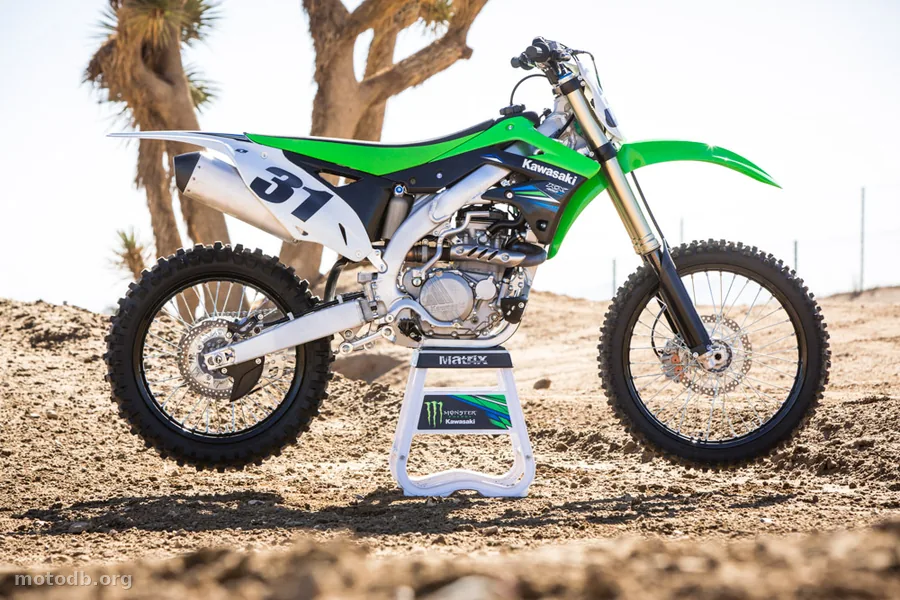
So, the 2014 Kawasaki KX 450F. We’re talking about a no-compromise machine, a true competition weapon straight from the crate. At €8699, it’s not aimed at the beginner looking for a bike for Sunday trail rides, but at the serious motocross rider, the one who aims for the starting line and the front ranks. Its objective is simple, brutal: to dominate.
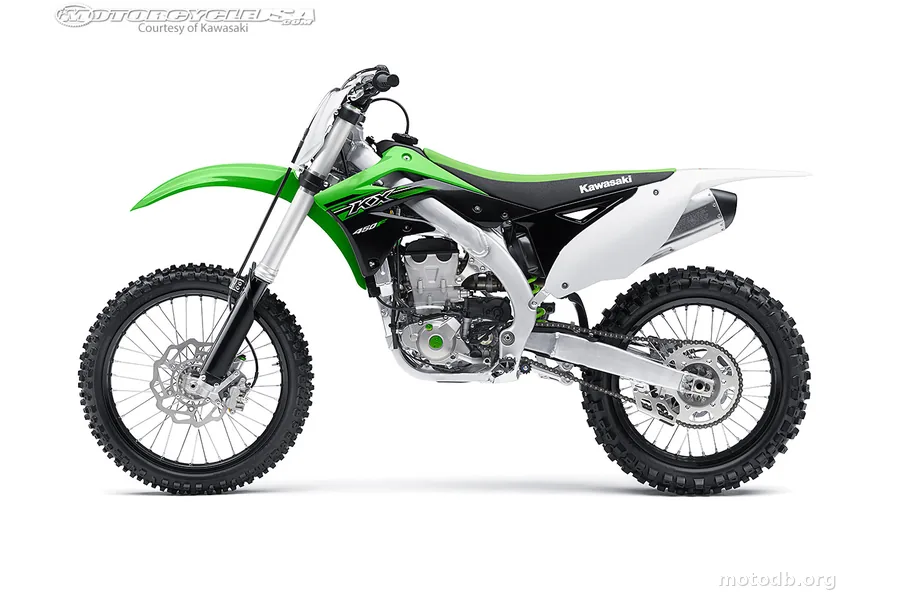
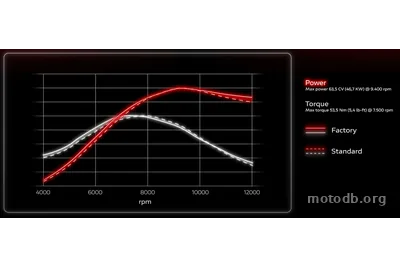
Its heart is a 449 cm3 four-stroke single-cylinder engine, a block built for combat. A compression ratio of 12.5:1, four valves, and direct injection give it instantaneous throttle response, with torque seemingly available as soon as the twist grip turns. It’s not an engine that requires you to seek it out; it’s there, present, lively, and delivers its power across the entire range. Kawasaki has even integrated a three-engine mapping system – Standard, Hard, Soft – allowing you to adapt the bike's character to the terrain with a simple plug change. For those who want to go further, an injection calibration kit, identical to that used by the factory teams, is available as an option. It’s the gateway to ultra-personalized settings. And for starts, there’s Launch Control, a button that modifies the mapping to maximize the chances of a clean start on a slippery surface. It’s technology directly inspired by factory bikes.
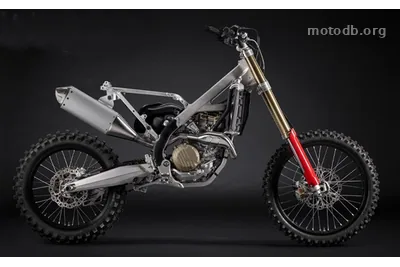
Where this Kawasaki KX 450F really makes a difference is in its chassis and suspension. The aluminum perimeter frame, narrower between the beams than previous models, offers a more direct interface with the rider. The bike seems to position itself naturally. The suspension is a festival of technology. At the front, the 48mm PSF pneumatic fork, with its DLC-treated sliders to reduce friction, replaces traditional springs with pressurized air. The gain is reduced weight and a very wide range of compression and rebound settings. At the rear, the Uni-Trak system with its Kayaba shock benefits from a double compression adjustment and Kashima treatment on the cartridge. All supported by 5mm adjustable footrests to fine-tune the position and confidence. With a declared weight of 112.5 kg fully fueled and a tank of only 6.21 liters, it is a light and agile athlete. The brakes, front and rear petal discs, ensure effective braking and contribute to reducing unsprung mass.
Its equipment and ergonomics are designed for the rider in action. The handlebar offers four adjustment positions via its upper clamp, allowing you to adjust the posture for more control or more aggression. The style is clearly “factory” oriented: specific front fender, white rear fender, black rims, black fork protectors, and blue aluminum details. It’s an aesthetic that announces performance. The tires, a 80/100-21 front and a 120/80-19 rear, are the standards of serious motocross. The transmission is a five-speed gearbox, simple and efficient.
In conclusion, this 2014 Kawasaki KX 450F is not a leisure bike. It’s a specialist, a pure competitor. Its price and technical specifications are aimed at the regular motocross rider, the one who understands and exploits the subtleties of suspension settings, engine mappings, and fine ergonomics. It does not have a declared top speed, because its sole purpose is performance on a circuit, between the flags. Faced with its competitors of the time, it stands out for its level of electronic equipment and adjustability, offering a tangible bridge between the production machine and the factory bike. Its strengths are its responsive engine, precise chassis, and arsenal of settings. Its weakness? Its exclusive character and reduced tank, which strictly limit it to competition or intensive sessions on prepared terrain. For the touring rider or the simple enthusiast, it would be too radical a tool. But for those looking for the most refined instrument to attack a motocross lap, it was, at the time, a very serious proposition.
Indicators & positioning
Similar bikes
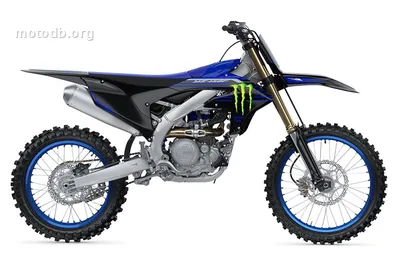
YZ450F Monster Energy
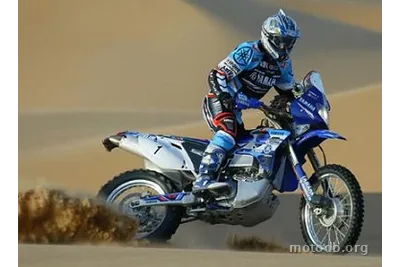
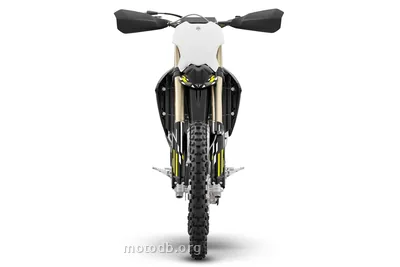
TF 450-C
Reviews & comments
No reviews yet. Be the first to share your opinion!