Key performance
Technical specifications
Engine
- Displacement
- 449 cc
- Power
- 63.0 ch (46.3 kW)
- Engine type
- Monocylindre, 4 temps
- Cooling
- liquide
- Compression ratio
- 12.5 : 1
- Bore × stroke
- 96 x 62.1 mm
- Valves/cylinder
- 4
- Camshafts
- 2 ACT
- Fuel system
- Injection Ø 44 mm
Chassis
- Frame
- périmétrique en aluminium
- Gearbox
- boîte à 5 rapports
- Final drive
- Chaîne
- Front suspension
- Fourche téléhydraulique inversée Ø 49 mm, déb : 305 mm
- Rear suspension
- Mono-amortisseur, déb : 307 mm
Brakes
- Front brakes
- Freinage 1 disque Ø 270 mm, étrier 2 pistons
- Rear brakes
- Freinage 1 disque Ø 240 mm, étrier simple piston
- Front tyre
- 80/100-21
- Front tyre pressure
- 1.00 bar
- Rear tyre
- 120/80-19
- Rear tyre pressure
- 1.00 bar
Dimensions
- Seat height
- 960.00 mm
- Fuel capacity
- 6.20 L
- Weight
- 112.60 kg
- New price
- 10 749 €
Overview
Fifty years. Half a century of mud, jumps, and podiums for a lineage that forged Kawasaki's green identity on every motocross circuit on the planet. In 1974, when the KX designation first appeared, no one could yet measure what those two letters would come to represent in the history of off-road riding. Today, 63 AMA American championships and 720 race victories later, Kawasaki releases an anniversary edition that pays tribute to this saga with a livery directly inspired by the 1990s.
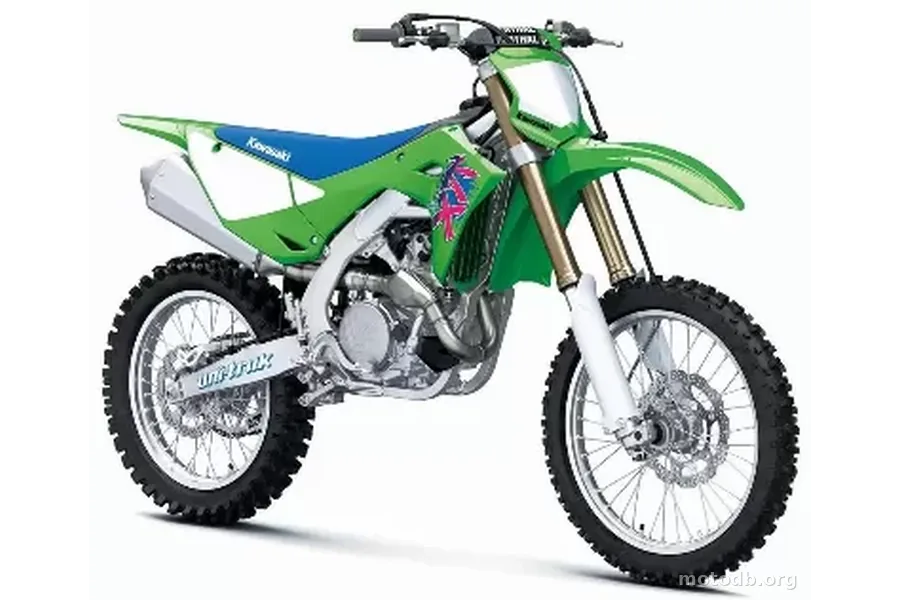
The list of riders who have pinned a number on this machine is staggering. Stefan Everts, Ricky Carmichael, James Stewart, Ryan Villopoto, Eli Tomac, and a good dozen other names etched in the marble of world motocross have trusted the KX's aluminum perimeter frame to chase down titles. This 50th anniversary edition doesn't simply slap commemorative stickers on a production bike: it plays the visual nostalgia card with typography and color schemes that evoke the FM chart hits of the era, blue seat included. The "Uni-Trak" sticker on the swingarm is no coincidence — it's a nod to the rear suspension system Kawasaki invented in 1979, which remains, in its principle, a technical benchmark.
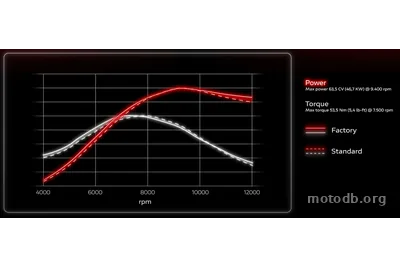
Beneath the vintage bodywork, the mechanics remain those of the contemporary KX 450, with no special preparation or factory kit slipped into the crate. The 449 cc single-cylinder delivers 63 horsepower with a 96 mm bore and 62.1 mm stroke, all compressed at 12.5:1. This four-valve-per-cylinder engine is renowned for its usable character, more tractable in practice than some competitors that dump all their horsepower in a single hit at high rpm. Compared to a Honda CRF 450R or a Yamaha YZ 450F playing in the same price and technical bracket, the KX distinguishes itself through this progressive power delivery, appreciated by leisure riders and amateur motocross club racers alike. At 112.6 kg fully fueled, with a seat height of 960 mm, it is a physically demanding machine, though not out of reach for anyone past the beginner stage.
The 49 mm inverted fork offers 305 mm of travel, the rear monoshock delivers 307 mm — values at the upper end of the segment norm. The 270 mm front brake with dual-piston caliper does its job, as does the 240 mm unit at the rear. Nothing revolutionary, but a coherent package designed to absorb repeated jump landings without flinching. The 6.2-liter tank, standard for motocross, makes no claim to turning this machine into a long-distance enduro tool.
At €10,749, this anniversary edition sits at the top of the segment price range, with an aesthetic premium that Kawasaki has not oversold: race number plates are in place, the machine is ready to compete in a championship straight off the truck. For anyone who dreamed of a KX in a period livery without sacrificing current technology, it is a compelling argument. For everyone else, the standard KX 450 will do exactly the same job, a few hundred euros less.
Standard equipment
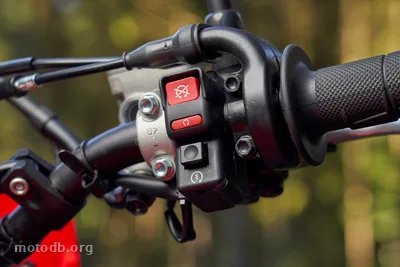
- Nombre de mode de conduite : 2
- Aide au départ arrêté (Launch Control)
- Contrôle de traction
Indicators & positioning
Similar bikes
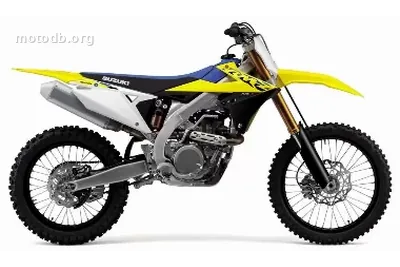
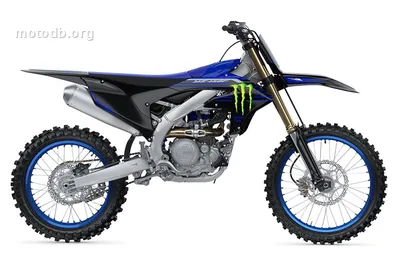
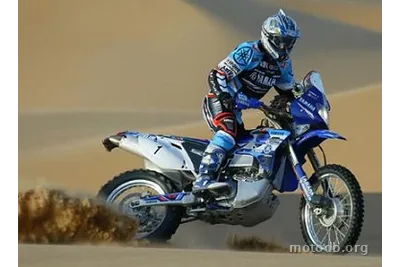
YZ450F Monster Energy
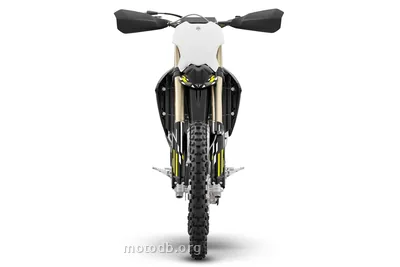
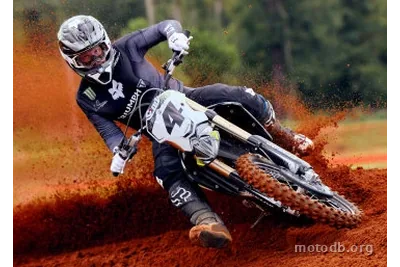
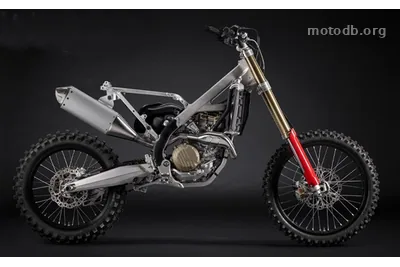
TF 450-C
Reviews & comments
No reviews yet. Be the first to share your opinion!