Key performance
Technical specifications
Engine
- Displacement
- 996 cc
- Power
- 106.0 ch @ 9000 tr/min (78.0 kW)
- Torque
- 92.2 Nm @ 7000 tr/min
- Engine type
- Bicylindre en L à 90°, 4 temps
- Cooling
- liquide
- Compression ratio
- 9.4:1
- Bore × stroke
- 98 x 66 mm
- Valves/cylinder
- 4
- Camshafts
- 2 ACT
Chassis
- Frame
- Double poutre alu
- Gearbox
- boîte à 6 rapports
- Final drive
- Chaîne
- Front suspension
- Fourche téléhydraulique Ø 41 mm, déb : 109 mm
- Rear suspension
- Mono-amortisseur, déb : 120 mm
Brakes
- Front brakes
- Freinage 2 disques Ø 296 mm, étrier 4 pistons
- Rear brakes
- Freinage 1 disque Ø 256 mm, étrier 2 pistons
- Front tyre
- 120/70-17
- Front tyre pressure
- 2.50 bar
- Rear tyre
- 180/55-17
- Rear tyre pressure
- 2.90 bar
Dimensions
- Seat height
- 815.00 mm
- Fuel capacity
- 19.00 L
- Weight
- 221.00 kg
- Dry weight
- 193.00 kg
- New price
- 9 900 €
Overview
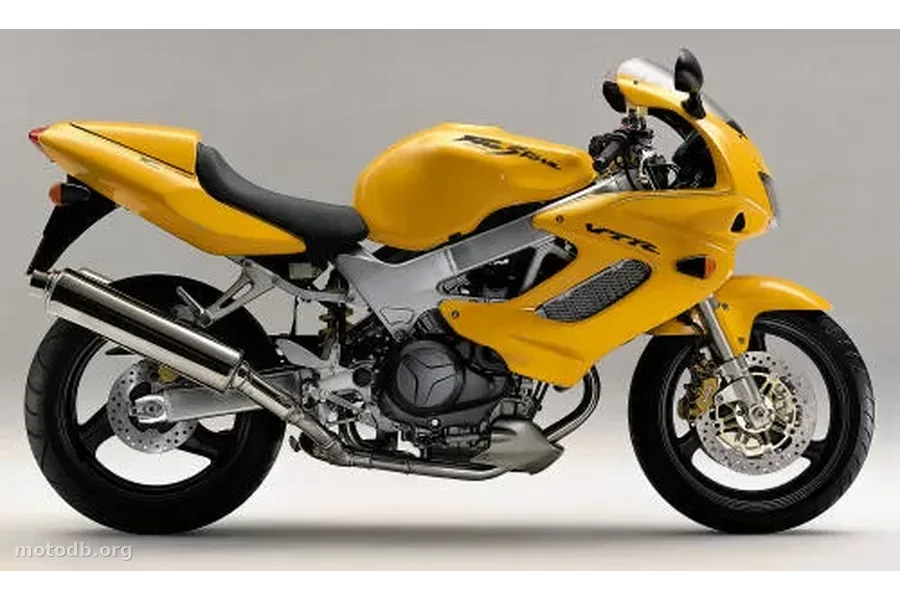
Are you looking for a sportbike that will thrill you without demanding the skill of a factory rider? Forget for a moment the Italian bikes with their strong personalities and take a look at this Japanese machine that has managed to create its own revolution. In 2004, the Honda VTR 1000 F FireStorm remains a bold gamble from the Tokyo giant: a large 90° V-twin, a rugged temperament, and a resolutely non-conformist philosophy in a catalog often too smoothed out. It's not a lukewarm bike; it's a statement of intent on two wheels.
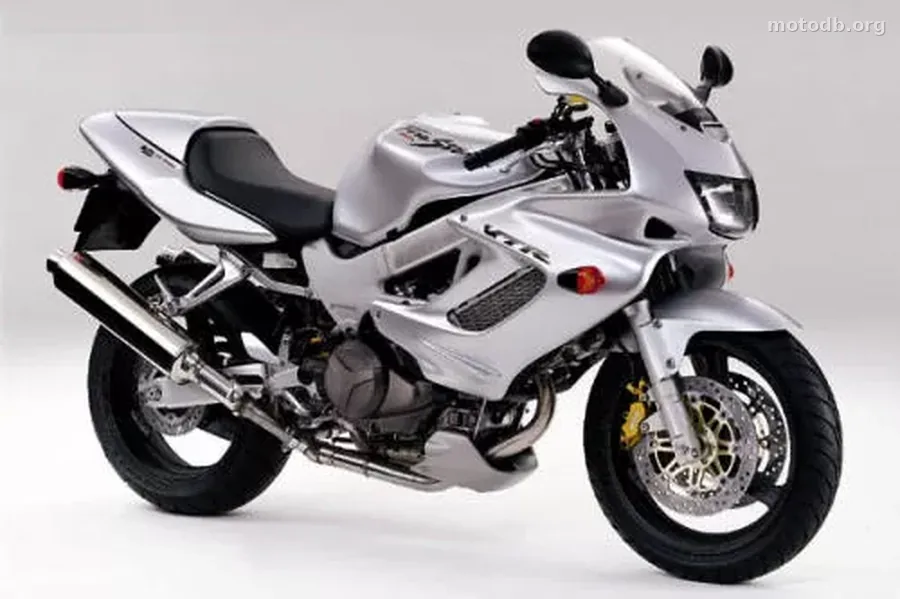
Its heart beats with the 996 cm3 of a twin that smells of pure mechanics, far from the current electronic sterility. Fueled by enormous carburetors, it delivers 106 horsepower that feels more powerful than the numbers on paper suggest, thanks to a monstrous torque of 92 Nm available from the mid-range. That's where its character lies: it pulls like a donkey as soon as you touch the throttle, with a generosity that brings a smile and easily lifts the front wheel. Compared to the four-cylinder engines of the time, which were sharper and more buzzing, the Firestorm prioritizes back-end thrust over a screaming rev range. It's a bit linear, certainly, but with remarkable efficiency on winding roads where you rarely use the last thousand RPM.
This temperament requires a frame to match, and the aluminum twin-spar chassis does a pretty good job. With a wet weight of 221 kilos, it's not a featherweight, but its low center of gravity and geometry give it surprising agility. The 41 mm fork and rear shock offer a good compromise, firm and precise, as long as the asphalt remains decent. On the other hand, pushed to its limits, it reveals its weaknesses: the front becomes a little too light and communicative at high speed, and the braking, although solid with its two 296 mm discs at the front, can show signs of weakness during truly intense use. It's an accessible sportbike, but not a pure track weapon.
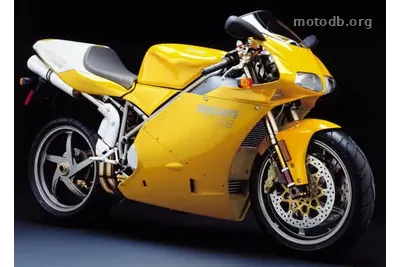
And that may be its biggest flaw, more than its braking: its range. Even with the fuel tank increased to 19 liters in 2001, the large twin is a guzzler. Plan on gas stations every 200 kilometers if you go with a heavy hand, which is tempting. At 9900 euros new at the time, it positioned itself as a more affordable and everyday alternative to a Ducati 998, but less radical. Its big sister, the SP-1 with a WSBK pedigree, gave it letters of nobility, but the Firestorm clearly targeted the sport-tourer looking for thrills without hardship.
So, what are your thoughts on the Honda VTR 1000 F FireStorm? For me, it's a love-at-first-sight bike, imperfect and endearing. It doesn't seek to be the finest or the fastest; it just wants to please you with every acceleration. It's aimed at the rider who prefers the sensation of brutal torque to a tachometer spinning at 15,000 RPM, and who accepts its small flaws in exchange for an authentic character. A Japanese fire-breather that managed, for a generation, to shake up the codes with panache.
Practical info
- La moto est accessible aux permis : A
Reviews & comments
No reviews yet. Be the first to share your opinion!