Key performance
Technical specifications
Engine
- Displacement
- 996 cc
- Power
- 123.0 ch @ 9750 tr/min (90.5 kW)
- Torque
- 97.1 Nm @ 8000 tr/min
- Engine type
- Bicylindre en L à 90°, 4 temps
- Cooling
- liquide
- Compression ratio
- 11.5:1
- Bore × stroke
- 100 x 63.5 mm
- Valves/cylinder
- 4
- Fuel system
- Injection Ø 54 mm
Chassis
- Frame
- treillis tubulaire en tube d\'acier
- Gearbox
- boîte à 6 rapports
- Final drive
- Chaîne
- Front suspension
- Fourche téléhydraulique inversée Ø 43 mm, déb : 127 mm
- Rear suspension
- Mono-amortisseur, déb : 130 mm
Brakes
- Front brakes
- Freinage 2 disques Ø 320 mm, étrier 4 pistons
- Rear brakes
- Freinage 1 disque Ø 220 mm, étrier 2 pistons
- Front tyre
- 120/70-17
- Rear tyre
- 190/50-17
Dimensions
- Seat height
- 790.00 mm
- Fuel capacity
- 17.00 L
- Weight
- 217.00 kg
- Dry weight
- 198.00 kg
- New price
- 16 000 €
Overview
Who remembers Trinity launching her Ducati through the streets of San Francisco, weaving against traffic in a scene that became an iconic moment in action cinema? In 2004, Bologna saw the perfect marketing opportunity. In partnership with Warner Bros, Ducati released a special edition of its 998 bearing the branding of the Wachowski film. The Ducati 998 Matrix, limited to 250 units, is not a movie prop. It's a collector's motorcycle born from the movies.
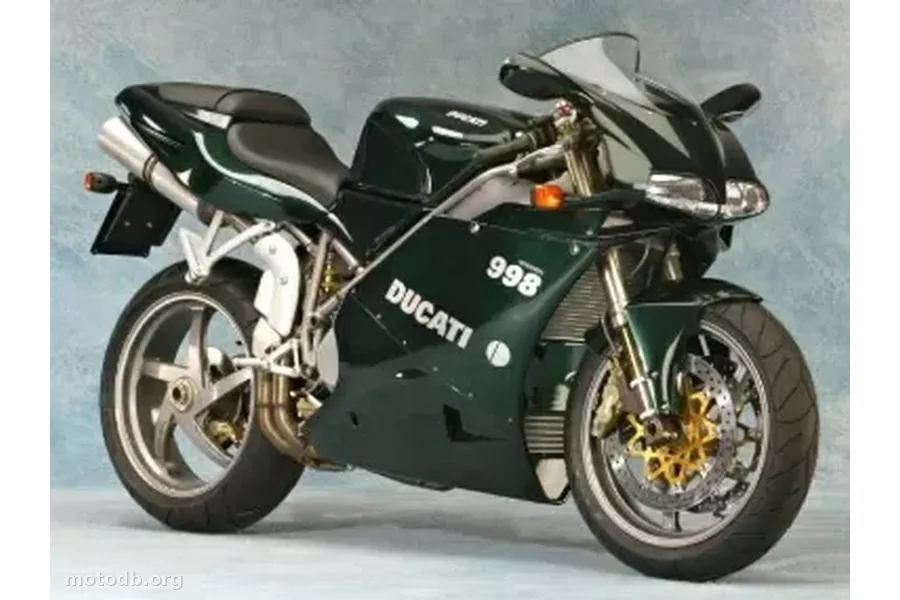
Beneath the dark green bodywork reminiscent of the lines of code cascading down screens throughout the trilogy lies the unchanged mechanicals of the 998. The 90° L-twin displacing 996 cc produces 123 horsepower at 9,750 rpm and 97 Nm of torque at 8,000 rpm. Figures that, in 2004, placed the beast at the top of the Italian superbike hierarchy. The 11.5:1 compression ratio, the oversquare 100 x 63.5 mm bore and stroke: everything about this architecture exudes the fierce, explosive character unique to Ducati twins. Against a Honda CBR 954 RR or a Kawasaki ZX-9R of the same era, the 998 gave away a few horsepower but made up for it with a personality that Japanese four-cylinders simply couldn't replicate.
The chassis is unchanged down to the last millimeter compared to the standard 998. The tubular steel trellis frame, a house signature since the 916, hosts a 43 mm Showa inverted fork and an Öhlins rear shock. Braking relies on twin 320 mm front discs clamped by four-piston calipers; at the rear, a 220 mm disc handles the job. Shod with 120/70-17 and 190/50-17 tires, the machine weighs 198 kg dry and 217 kg wet, including the 17-liter fuel tank. The 790 mm seat height remains accessible, even though the track-oriented riding position is unforgiving on long rides. Ducati claims a 270 km/h top speed. On track, it's the steering precision and chassis rigidity that truly make the difference.
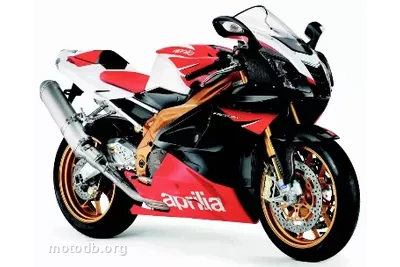
Everything that sets this edition apart comes down to its livery. Matrix green covers every fairing panel, with the film's logo applied to the sides of the rear tail section. Understated, effective, instantly recognizable. No gimmicks, no technical modifications: Ducati had the good sense not to tamper with an already accomplished platform. The launch price of 16,000 euros reflected its status as a collector's item as much as a sportbike. Today, finding a used Ducati 998 Matrix is like a treasure hunt. The 250 units produced change hands among enthusiasts at prices that keep climbing, driven by the dual sentimental value of both the model and the film.
The 998 was living its final hours when this special series came out. The 999 was already taking over with a new-generation engine and a Pierre Terblanche design that still divides opinion. But the 916-996-998 lineage remains etched in stone as one of Ducati's greatest aesthetic and sporting achievements. The Matrix edition adds a layer of pop culture that makes it unique in the brand's catalog. For anyone looking for a Ducati 998 Matrix for sale, the advice is simple: don't haggle too long. This kind of piece never stays available for very long.
Practical info
- La moto est accessible aux permis : A
Indicators & positioning
Similar bikes
SB8K édition Gobert
Reviews & comments
No reviews yet. Be the first to share your opinion!