Key performance
Technical specifications
Engine
- Displacement
- 937 cc
- Power
- 110.0 ch @ 9000 tr/min (80.9 kW)
- Torque
- 93.2 Nm @ 6500 tr/min
- Engine type
- Bicylindre en L à 90°, 4 temps
- Cooling
- liquide
- Compression ratio
- 12.6 : 1
- Bore × stroke
- 94 x 67.5 mm
- Valves/cylinder
- 4
- Camshafts
- 2 ACT
- Fuel system
- Injection Ø 53 mm
Chassis
- Frame
- Treillis en tubes d'acier
- Gearbox
- boîte à 6 rapports
- Final drive
- Chaîne
- Front suspension
- Fourche téléhydraulique inversée Ø 43 mm, déb : 130 mm
- Rear suspension
- Mono-amortisseur et monobras, déb : 144 mm
Brakes
- Front brakes
- Freinage 2 disques Brembo Ø 320 mm, étrier 4 pistons
- Rear brakes
- Freinage 1 disque Ø 245 mm, étrier 2 pistons
- Front tyre
- 120/70-17
- Front tyre pressure
- 2.50 bar
- Rear tyre
- 180/55-17
- Rear tyre pressure
- 2.50 bar
Dimensions
- Seat height
- 810.00 mm
- Fuel capacity
- 16.00 L
- Weight
- 210.00 kg
- Dry weight
- 184.00 kg
- New price
- 15 990 €
Overview
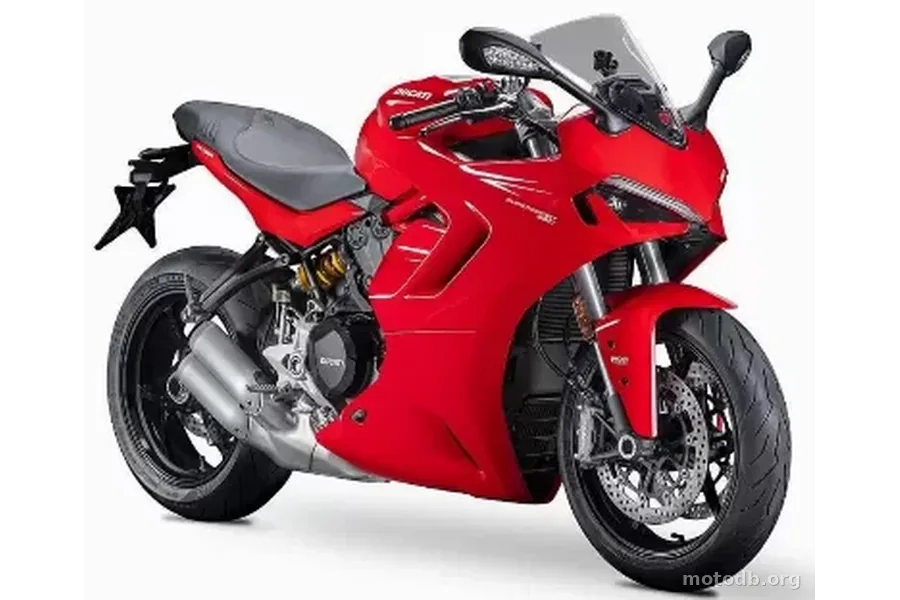
Saying that sport is a tradition at Ducati is an understatement. While the manufacturer has a range extending far beyond this intrinsic concept, most models still claim a well-honed dynamism.
The SuperSport embodies this, with its delicate balance between tradition, sportiness, and the pride of exclusivity. It is a sportbike for the road, far from the radicality of Bologna’s Superbike models. When the 939 arrived, we immediately sensed that it was not a reincarnation of the SS (620, 750, 900, 1000, and others) but a modern sport-tourer. Becoming the 950, has the SuperSport evolved in personality or simply had a makeover?
The visual discovery partially answers: with its bright eyebrows and recessed eyes within the orbits, the machine wants to show a look very close to the Panigale V4. The whole appears much “lighter” than the imposing previous optical unit. The ventilation gills also appear more aggressive, giving the front end a look that is both more chic and slightly mean. The front, yes; because for the rear, it’s the same design as the 939.
Similarities will continue as you settle on board. For those initiated who knew the old model, they will instantly find their bearings. The height of the handlebars, the saddle position, the footpeg placement – the ergonomic triangle has not changed. As for those discovering the SuperSport, they will not be disappointed by a riding position halfway between sport and comfort. An attitude tending towards belligerence but without breaking your back or wrists. To relieve wind pressure, the bubble remains adjustable, on two positions with 50 mm of difference.
Once on the saddle, whose padding has been revised, the eye can appreciate the new TFT instrumentation. It’s beautiful, it’s more readable, the graphics are worked, the digital inspiration comes from the Panigale V4. And if you find it has a familiar air, that’s normal. The 4.3-inch screen is the same as on the Monster.
Normal, the 950 SuperSport shares a certain consanguinity with the roadster. You can hardly see it, except if you obscure the engine. The engine is common, with a displacement of 937 cm3. Oh yes, it’s not a 950 as the name suggests. But it’s not the first time Ducati has done this (the 999 never made 999 cm3; same for the 959 Panigale, the 797 Monster, etc.). This twin is taken from the previous generation, with a small batch of evolutions. Euro5 compliance first, thanks to interventions on the exhaust and engine electronics. Then a new automatic purge pump for the clutch (anti-dribble). According to standards or technical specifications, the power of the 939 SuperSport was rated at 113 or 110 hp. Respecting the latter value, we see that the 950 develops exactly the same watts. 110 horsepower at 9000 rpm, accompanied by a peak torque of 9.5 mkg at 6500 rpm. Within its internals move 4 valves per cylinder, 53 mm injection bodies, and the desmodromic system (whew, a Ducati enthusiast).
Whew, the trellis frame is still there. It is, however, tending to disappear. The manufacturer has banned it on the latest generations of Monster, Panigale, Multistrada, and Streetfighter. From 939 to 950, the SuperSport retains the same frame. Composed of a steel skeleton resting on the engine, a sensible wheelbase of 1478 mm, a 43 mm Marzocchi inverted fork, a Sachs shock absorber, a still-charming swingarm, and Brembo radial monoblock M4.32 calipers. The discs measure 320 mm at the front and 245 mm at the rear. The suspensions are adjustable in preload and rebound, with compression supplement for the fork. They will support the 210 kilograms of the bike, the same weight as before. For a superior road feel, the S version makes a show with its Öhlins components.
On the electronics front, the SuperSport has been a little enriched. With the dashboard as previously mentioned, as well as an Up&Down shifter now standard and the grafting of an IMU inertial unit. With its measurement axes, it detects all the movements of the bike... But what interests us is the result: the addition of Cornering function for ABS, increased precision for traction control, and anti-wheeling becoming wheelie control. Let’s take this opportunity to review the situation. The Ducati 950 SuperSport now includes: - a 4.3-inch color TFT screen - 3 Riding Modes (Sport – Touring – Urban) - 3 injection mappings - The Up&Down shifter - 8-level traction control - Wheelie control - ABS active in corners with anti-stoppie function and possibility to deactivate the rear - full LED headlights - daytime visual signature - as an option, the multimedia system to pilot your smartphone - for young license holders, there is an A2 version to be able to restrict it to 35 kW / 47.5 horsepower.
The same, but better. Too easy a phrase! Yet perfect to summarize the evolution of the SuperSport. Ducati has refined its sport-tourer without taking risks; rather with a certain sensuality. It is now the best candidate to take over the torch from the VFR.
M.B - Images manufacturer
The Riding Modes of the Ducati 950 SuperSport:
-The “Sport” mode allows the bike to express its full potential on the road. The engine delivers 110 hp with a direct response to throttle opening, a low intervention of the DTC system at level 3, Bosch ABS at level 2, with a medium rear lift command.
-The “Touring” mode offers the best balance between performance and comfort. The engine provides full power (110 hp), with progressive Ride-by-Wire response to throttle opening, medium intervention of the DTC system (level 4) and Bosch ABS at level 3 to guarantee maximum braking control and stability.
-The “Urban” mode is designed for surfaces with low grip. Power is limited to 75 hp with progressive Ride-by-Wire response when the throttle is opened, the DTC has even more constant intervention (level 6) while Bosch ABS maintains setting 3.
Standard equipment
- Assistance au freinage : ABS en curvas
- Nombre de mode de conduite : 3
- Taille de l'écran TFT couleur : 10,92 cm / 4.3 pouces
- Shifter
- Indicateur de vitesse engagée
- Contrôle de traction
- Pare brise réglable
- Contrôle anti wheeling
- Embrayage anti-dribble
Practical info
- Véhicule accessible au permis A2 ou bridable à 47.5ch / 35 Kw
- La moto est accessible aux permis : A, A2
Indicators & positioning
Similar bikes
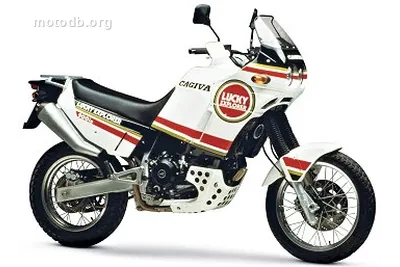
Lucky Explorer Project 9.5
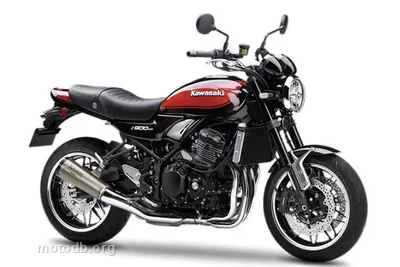
Z 900 RS Performance
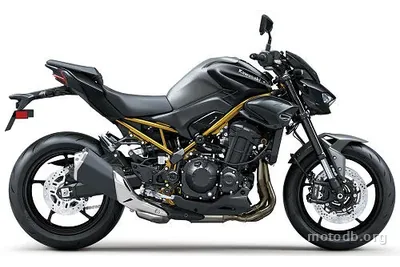
900 Tornado Limited Edition
Tornado 900 RS
Reviews & comments
No reviews yet. Be the first to share your opinion!