Key performance
Technical specifications
Engine
- Displacement
- 992 cc
- Power
- 86.0 ch @ 9500 tr/min (68.4 kW)
- Torque
- 97.0 Nm @ 5750 tr/min
- Engine type
- V2, four-stroke
- Cooling
- par air
- Compression ratio
- 10.0:1
- Bore × stroke
- 94.0 x 71.5 mm (3.7 x 2.8 inches)
- Valves/cylinder
- 2
- Camshafts
- 1 ACT
- Fuel system
- Injection. Marelli electronic fuel injection, 45 mm throttle body
- Valve timing
- Desmodromic valve control
- Starter
- Electric
Chassis
- Frame
- Tubular steel trellis
- Gearbox
- 6-speed
- Final drive
- Chain (final drive)
- Clutch
- Dry multiplate with hydraulic control
- Front suspension
- Showa 43 mm upside-down fully adjustable lightweight fork
- Rear suspension
- Progressive cantilever linkage with fully adjustable Öhlins monoshock with length adjustment. Aluminium swingarm
- Front wheel travel
- 130 mm (5.1 inches)
- Rear wheel travel
- 148 mm (5.8 inches)
Brakes
- Front brakes
- Double disc
- Rear brakes
- Single disc
- Front tyre
- 120/70-ZR17
- Rear tyre
- 180/55-ZR17
Dimensions
- Seat height
- 820.00 mm
- Wheelbase
- 1395.00 mm
- Fuel capacity
- 16.00 L
- Weight
- 188.30 kg
- Dry weight
- 179.40 kg
- New price
- 10 795 €
Overview
Do you dream of a Ducati, but the bikes in the 9XX series intimidate you with their pure aggression? In 2005, the Bologna-based manufacturer had an answer for those who want to taste sporty essence without committing to the madness of homologated superbikes: the Supersport 1000 DS. This machine is not a radical novelty; it belongs to a lineage that has forged Ducati’s image for years. It presents itself as an accessible alternative, a gateway to the world of character twins, without the extreme demands of a 999.
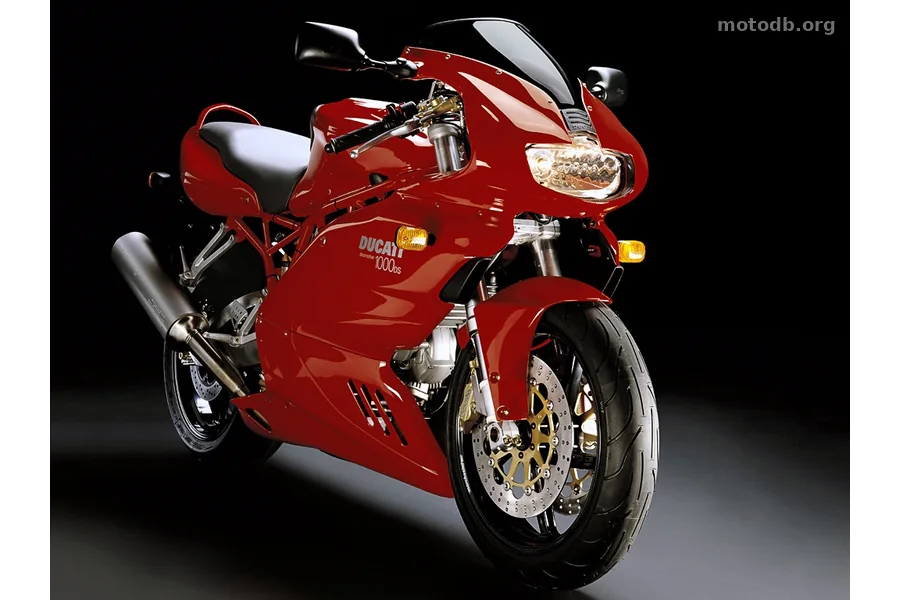
The heart of this SS 1000 is its two-valve V2 engine, air-cooled, a 992 cc block that shares its genetics with the Monster 1000 and the Multistrada of the time. With 86 horsepower at 9500 rpm and a torque of 97 Nm already available at 5750 rpm, it does not rival the explosive delivery of contemporary Japanese four-cylinder engines. Its strength lies in a broad, almost meaty propulsion, which pulls with constant authority from the mid-range. We are not talking about electric liveliness here, but of a robust push, accompanied by a deep sound that knots the intestines with each throttle opening. It is a mechanical experience more than a numerical one, an engine that dialogues with the rider rather than delivering uppercuts.
The chassis, derived from the previous 900, rests on a steel tubular trellis frame, a classic architecture at Ducati. The suspension is serious: a 43 mm fully adjustable inverted Showa fork at the front, and a fully adjustable mono Öhlins shock at the rear, on an aluminum swingarm. The announced weight, 188 kg fully fueled, is not light for the category, but the mass is well contained by a wheelbase of 1395 mm. The riding position, however, is uncompromising: 820 mm seat height, body projected onto the clip-on handlebars, wrists in constant tension. It is not a comfort bike; it is a machine that engages you physically. Steering requires effort, piloting demands conviction to place the bike in the curve. But this rigor is rewarded by precision and stability that allow you to exploit the potential with a certain confidence.
Compared to a Suzuki SV 1000 from the same period, the difference in approach is radical. The Suzuki offers easier power, a more relaxed ergonomics, versatile but sometimes anonymous efficiency. The Ducati Supersport 1000 DS is its opposite: it is demanding, fatiguing in the long run, but it exudes an intense mechanical personality, an emotional connection that transcends its figures. For 10795 € at the time, it was aimed at the sporty touring rider seeking an authentic experience, at the one who seeks in a motorcycle a temperamental partner rather than an aseptic performance tool. It does not run at 300 km/h, its maximum speed is around 220 km/h, but each kilometer traveled with it imprints a sensation, a memory. It is a motorcycle that is not measured only by the stopwatch or the specifications table, but by the density of the memory it leaves after each ride.
Practical info
- La moto est accessible aux permis : A
Indicators & positioning
Similar bikes
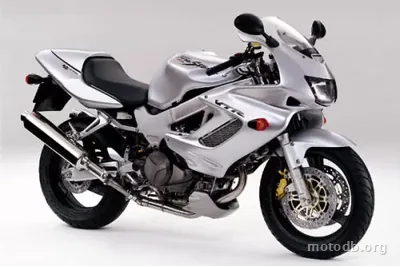
VTR 1000 F FireStorm
Reviews & comments
No reviews yet. Be the first to share your opinion!