Key performance
Technical specifications
- Fuel system
- Injection. Marelli electronic fuel injection, 50mm throttle body → Injection. Marelli electronic fuel injection, 50mm throttle body
Engine
- Displacement
- 998 cc
- Power
- 130.0 ch @ 9500 tr/min (93.7 kW)
- Torque
- 103.9 Nm @ 10600 tr/min
- Engine type
- V2, four-stroke
- Cooling
- Liquid
- Compression ratio
- 11.4:1
- Bore × stroke
- 100.0 x 63.5 mm (3.9 x 2.5 inches)
- Valves/cylinder
- 4
- Camshafts
- 2 ACT
- Fuel system
- Injection. Marelli electronic fuel injection, 50mm throttle body
- Valve timing
- Desmodromic valve control
- Starter
- Electric
Chassis
- Frame
- Tubular steel trellis frame
- Gearbox
- 6-speed
- Final drive
- Chain (final drive)
- Clutch
- Dry multiplate with hydraulic control
- Front suspension
- Showa 43 mm fully adjustable upside-down fork
- Rear suspension
- Progressive linkage with fully adjustable Sachs monoshock. Aluminium single-sided swingarm
- Front wheel travel
- 130 mm (5.1 inches)
- Rear wheel travel
- 148 mm (5.8 inches)
Brakes
- Front brakes
- Double disc
- Rear brakes
- Single disc
- Front tyre
- 120/70-ZR17
- Rear tyre
- 180/55-ZR17
Dimensions
- Seat height
- 800.00 mm
- Wheelbase
- 1440.00 mm
- Fuel capacity
- 14.00 L
- Dry weight
- 177.00 kg
- New price
- 12 595 €
Overview
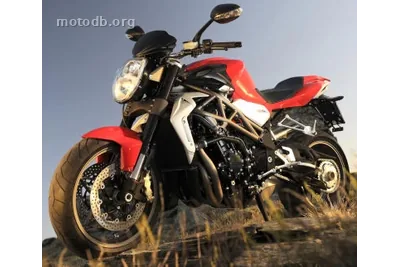
Imagine a brute of nearly 130 horsepower, crammed into a trellis frame as light as a spiderweb, with a monopod swingarm that gives the impression that the rear wheel is suspended in the void. That’s the S4R from 2008, the ultimate evolution of the Monster before it started to become too polished. Ducati dropped the 998 cm3 Testastretta engine, the one that powered the 999, into this naked bike. Result: 130 hp at 9500 rpm and a torque of nearly 104 Nm that arrives high, at 10600 rpm. It’s an engine that doesn’t purr, it demands to be pushed, but the reward is a deep howl and explosive propulsion.
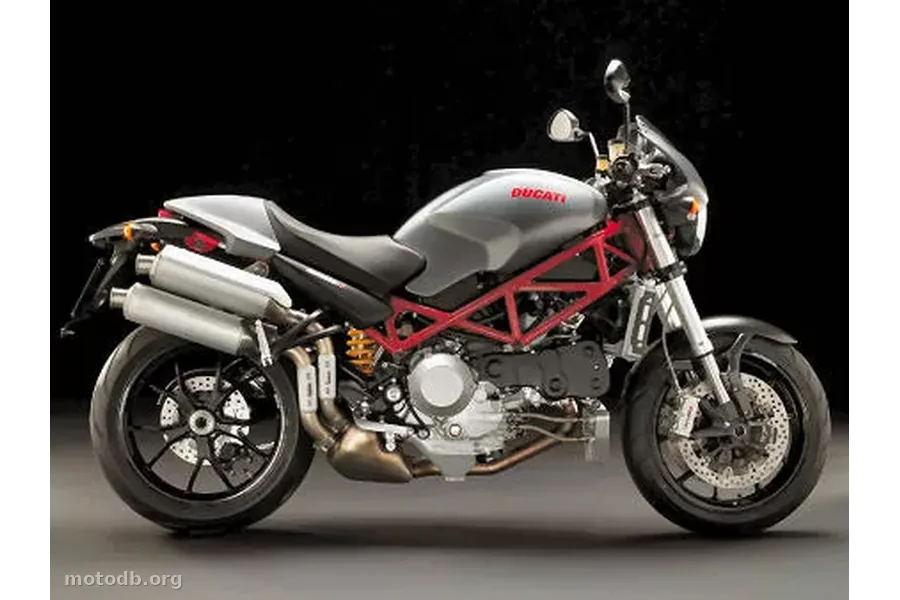
At the time, the competition, like the Honda CB1000R or the Yamaha FZ1, often offered more versatility and suppleness, but none had this Italian theatricality. With a dry weight of 177 kg, the S4R is agile, almost fragile in appearance, but its trellis frame made of steel tubes is a structural work of art. The 43 mm Showa inverted fork and the Sachs shock absorber are fully adjustable, a serious argument for track riders who want to refine their machine without going for the full Öhlins of the S4Rs.
The braking, with its radial calipers, is direct and powerful, but it’s the overall package that impresses. A 800 mm seat can intimidate the shorter riders, but the position is committed, sporty, far from modern naked bikes that are too accommodating. The 14-liter tank is a weak point, a concession to aesthetics that limits long rides. You are here on a machine for short, intense journeys, or to dominate an urban ring road with royal authority.
Its price of €12,595 at the time was a significant investment. But it placed the S4R in a particular niche: that of the enthusiast who wants the heart of a superbike in a stripped-down format, without the carbon extras and high-end suspensions of the S4Rs. It’s the version for those who believe that the essence of the Monster lies in its engine and its frame, not in its badges. It remains today a collector's item, a witness to the era when Ducati still made machines that roared before they spoke.
Practical info
- La moto est accessible aux permis : A
Reviews & comments
No reviews yet. Be the first to share your opinion!