Key performance
Technical specifications
- Displacement
- 955 cc → 1285 cc
- Power
- 157.0 ch @ 10500 tr/min (109.5 kW) → 157.0 ch @ 10500 tr/min (149.6 kW)
- Torque
- 102.0 Nm @ 9000 tr/min → 144.6 Nm @ 8750 tr/min
- Compression ratio
- 12.5:1 → 12.6:1
- Bore × stroke
- 100.0 x 60.8 mm (3.9 x 2.4 inches) → 116.0 x 60.8 mm (4.6 x 2.4 inches)
- Wheelbase
- 1431.00 mm → 1437.00 mm
- Weight
- 200.00 kg → 190.00 kg
- Dry weight
- 176.00 kg → 166.50 kg
Engine
- Displacement
- 1285 cc
- Power
- 157.0 ch @ 10500 tr/min (149.6 kW)
- Torque
- 144.6 Nm @ 8750 tr/min
- Engine type
- V2, four-stroke
- Cooling
- Liquid
- Compression ratio
- 12.6:1
- Bore × stroke
- 116.0 x 60.8 mm (4.6 x 2.4 inches)
- Valves/cylinder
- 4
- Camshafts
- 2 ACT
- Fuel system
- Injection. Twin injectors per cylinder. Full ride-by-wire elliptical throttle bodies.
- Valve timing
- Desmodromic valve control
- Starter
- Electric
Chassis
- Frame
- Monocoque Aluminium
- Gearbox
- 6-speed
- Final drive
- Chain (final drive)
- Clutch
- Slipper and self-servo wet multiplate clutch with hydraulic control
- Front suspension
- Öhlins NIX30 43mm fully adjustable USD fork with TiN treatment. Electronic compression and rebound damping adjustment with semi-active mode
- Rear suspension
- Fully adjustable Ohlins TTX36 unit. Electronic compression and rebound damping adjustment with semi-active mode. Adjustable linkage: Progressive/flat. Aluminium single-sided swingarm
- Front wheel travel
- 120 mm (4.7 inches)
- Rear wheel travel
- 130 mm (5.1 inches)
Brakes
- Front brakes
- Double disc. ABS. Floating discs. Four-piston calipers. Radially mounted.
- Rear brakes
- Single disc. ABS. Two-piston calipers.
- Front tyre
- 120/70-ZR17
- Front tyre pressure
- 2.50 bar
- Rear tyre
- 200/55-ZR17
- Rear tyre pressure
- 2.50 bar
Dimensions
- Seat height
- 830.00 mm
- Wheelbase
- 1437.00 mm
- Length
- 2070.00 mm
- Width
- 745.00 mm
- Height
- 1105.00 mm
- Fuel capacity
- 17.00 L
- Weight
- 190.00 kg
- Dry weight
- 166.50 kg
- New price
- 16 990 €
Overview
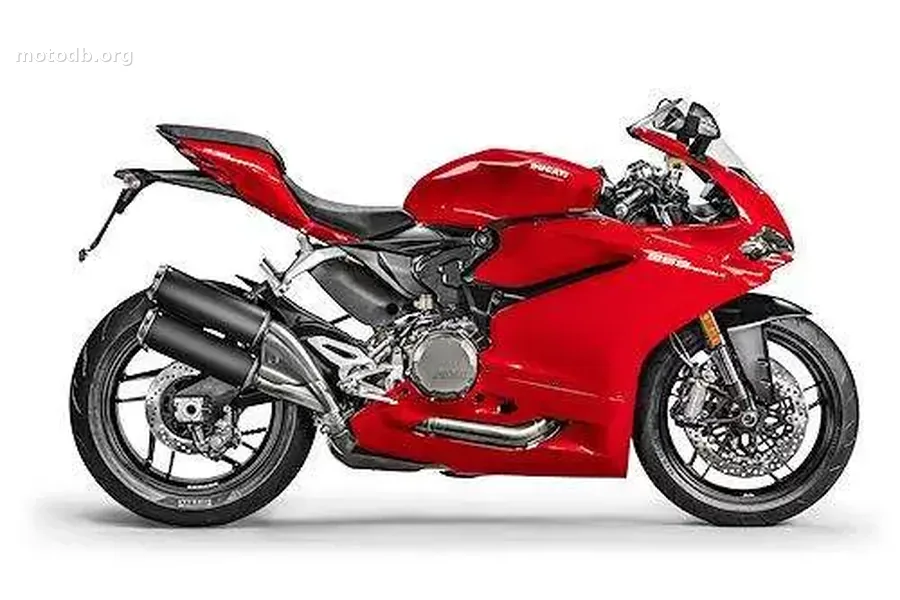
Can we really call it the "small" Panigale when it puts down 157 horsepower and tops out at 270 km/h? The 2017 Ducati 959 Panigale blurs the boundaries. Heir to a lineage that has seen the 748, 848, and 899 come and go, it pushes the envelope even further with a Superquadro V-twin bored out to 955 cc. Nine more horsepower than its predecessor, torque raised to 144.6 Nm at 8,750 rpm, all housed in an aluminum monocoque chassis of almost absurd compactness. One wonders how Bologna manages to pack so much machinery into so little space. The answer comes down to one word: obsession. The bore remains generous at 116 mm, the stroke climbs to 60.8 mm, and the 12.6:1 compression ratio confirms that nobody tried to cut corners beneath the Desmodromic valve train.
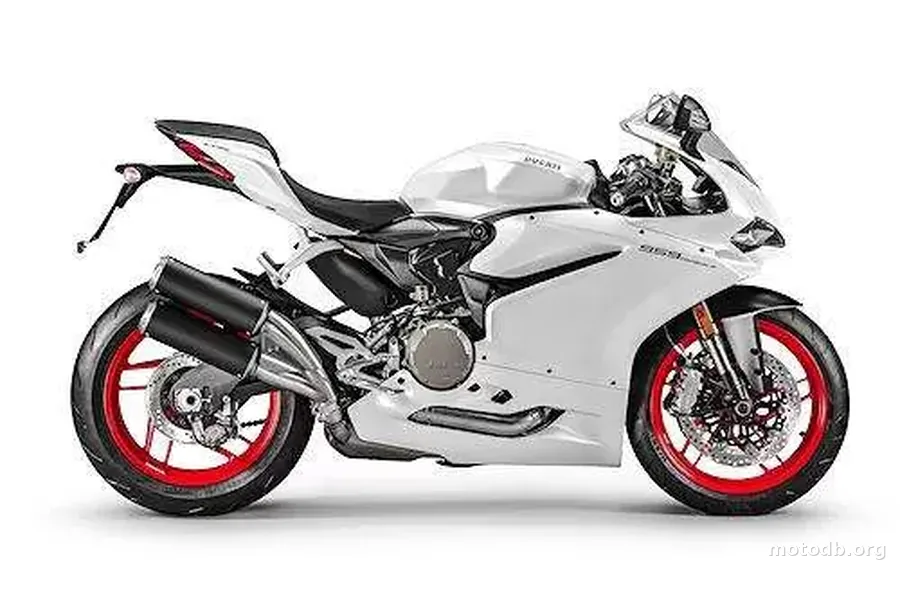
The flip side has a name: Euro4. To meet the standard, Ducati grafted on two side-exit exhaust outlets that seriously compromise the purity of the lines. Where the 899 displayed a clean profile, the 959 Panigale carries these two appendages like a sin of compliance. You never get used to it. The double-sided swingarm rather than a single-sided unit is a debatable choice too, especially when the 1299 gets that luxury. But the trade-off is financial: at €16,990 new, the 959 remains accessible in the Ducati universe. Nearly €5,000 less than its big sister. And for anyone looking for a used Ducati 959 Panigale, prices become even more tempting a few years after its release.
On the electronics front, the package is serious without being excessive. Three riding modes — Race, Sport, and Wet — govern a full arsenal: 8-level DTC traction control, 3-level EBC engine braking control, and configurable Bosch 9MP ABS. In Wet mode, power drops to 115 horsepower, enough to ride in the rain without breaking into a cold sweat. The DQS quickshifter is present but limited to upshifts only. No bidirectional shifter, no IMU inertial platform, no color TFT dashboard. Those exclusives remain reserved for the 1299 and the future Ducati 959 Panigale Corse that appeared in 2018. The six-speed gearbox gets the job done, and the slipper and self-servo clutch handles aggressive downshifts without complaint.
The chassis relies on a 43 mm inverted fork and a lateral shock absorber, both fully adjustable. Braking duties fall to Brembo M4.32 four-piston calipers on 320 mm discs, and they do the job with conviction, even if they sit a notch below the M50 units found on higher-spec versions. At 190 kg wet, the 959 has gained weight over the 899 — seven kilos largely attributable to the dual silencer. It's not a deal-breaker, but in a category where every gram counts, track-focused riders will look into a racing exhaust to reclaim the lines and shed a few kilos. The 1,437 mm wheelbase and 830 mm seat height define a compact, physically demanding machine, built for the rider who likes to feel the bike working beneath them.
The Ducati 959 Panigale positions itself as the gateway to the Panigale world for those who want Italian sport without the brutality of a literbike. Against a Yamaha R6 or a Honda CBR600RR, it plays in a different league in terms of displacement and engine character, with that angry V-twin singing from the midrange onward. Against the 1299, it owns its compromises and turns them into selling points: less radical, more usable, it lets you ride hard on track and road alike without being constantly overwhelmed by sheer power. Produced until 2019 before giving way to the Panigale V2, it remains a solid bet on the used market. Those searching for a characterful sportbike at a reasonable price, with the mechanical nobility of a Desmo and the prestige of the Borgo Panigale badge, will be hard-pressed to find better in this segment.
Standard equipment
- Assistance au freinage : ABS de série
Practical info
- La moto est accessible aux permis : A
Reviews & comments
No reviews yet. Be the first to share your opinion!