Key performance
Technical specifications
Engine
- Displacement
- 898 cc
- Power
- 148.0 ch @ 10750 tr/min (106.7 kW)
- Torque
- 99.0 Nm @ 9000 tr/min
- Engine type
- V2, four-stroke
- Cooling
- Liquid
- Compression ratio
- 12.5:1
- Bore × stroke
- 100.0 x 57.2 mm (3.9 x 2.3 inches)
- Valves/cylinder
- 4
- Camshafts
- 2 ACT
- Fuel system
- Injection. Electronic fuel injection system. Single injector per cylinder. Full ride-by-wire elliptical throttle bodies.
- Valve timing
- Desmodromic valve control
- Starter
- Electric
Chassis
- Frame
- Monocoque Aluminium
- Gearbox
- 6-speed
- Final drive
- Chain (final drive)
- Clutch
- Wet multiplate clutch with hydraulic control
- Front suspension
- Fully adjustable BPF forks. 43 mm chromed inner tubes
- Rear suspension
- Fully adjustable unit. Aluminum double-sided swingarm
Brakes
- Front brakes
- Double disc. ABS. Floating discs. Four-piston calipers. Radially mounted.
- Rear brakes
- Single disc. ABS. Two-piston calipers.
- Front tyre
- 120/70-ZR17
- Rear tyre
- 180/60-ZR17
Dimensions
- Seat height
- 830.00 mm
- Wheelbase
- 1426.00 mm
- Fuel capacity
- 17.00 L
- Weight
- 193.00 kg
- Dry weight
- 169.00 kg
- New price
- 15 790 €
Overview
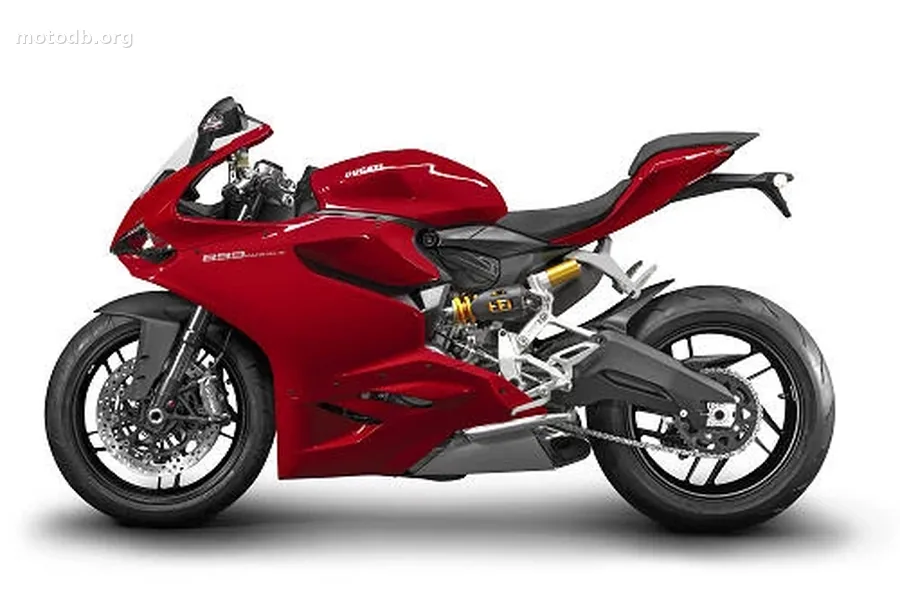
Who remembers the 848, that gateway into Bologna's Superbike universe? The 2014 Ducati 899 Panigale succeeds it with a clear ambition: to democratize the Panigale lineage without diluting it. Where the 1199 reigns as the undisputed queen of the Superbike range, the 899 positions itself as the accessible sportbike in the catalog. Accessible, yes. Soft, certainly not. Its 898 cc Superquadro V-twin produces 148 horsepower at 10,750 rpm and 99 Nm of torque at 9,000 rpm. For a twin-cylinder under the 900 cc mark, that's a performance figure that would put more than a few Japanese four-cylinders of the same era to shame. The oversquare dimensions of 100 mm bore by 57.2 mm stroke betray a temperament geared toward high revs, with a 12.5:1 compression ratio that tolerates no compromises on fuel quality.
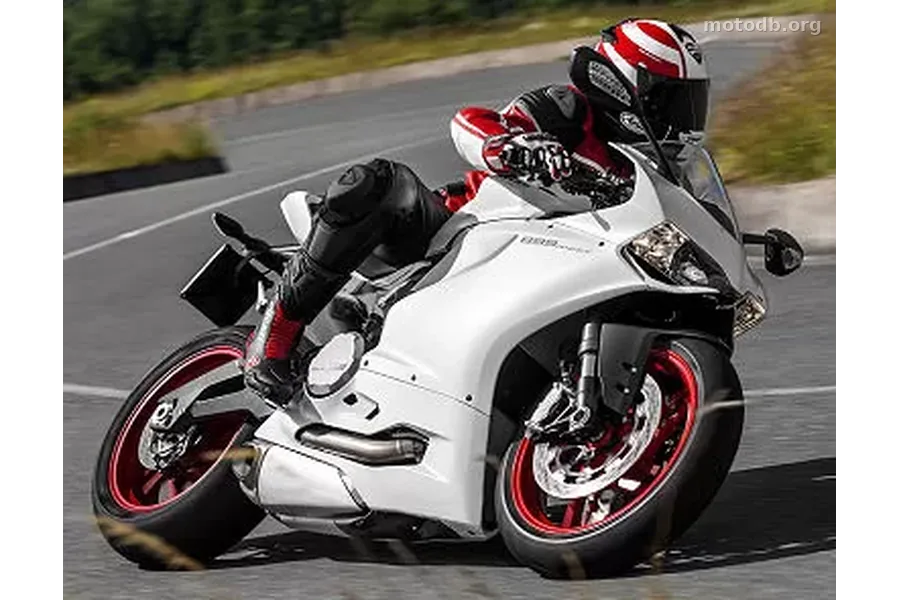
On the road, the Ducati 899 Panigale displays a more versatile character than its big sister. Its slightly thicker seat, recalibrated final drive, and 193 kg wet weight make it viable for daily use. This is a sportbike that accepts city riding without turning every red light into a wrist-torture session. But make no mistake: with a claimed top speed of 270 km/h and an aluminum monocoque chassis inherited from the 1199, it remains a machine built for the track. The weight distribution, 52% front and 48% rear, is rigorously identical to the Superbike model. The frame integrates with the engine cases, an architecture that centralizes mass and lowers the center of gravity.
On the suspension front, Ducati made pragmatic choices. The 43 mm Showa BPF fork replaces the 50 mm Marzocchi unit from the 1199. The lateral rear shock remains a fully adjustable Sachs, visually striking in its offset mounting. Braking duties fall to Brembo radial-mount monobloc M4-32 calipers, a step below the M50s on the elder sibling, but paired with a three-level programmable Bosch ABS and EBC engine brake control. The first ABS mode acts only on the front for track use, the second adds rear anti-wheelie intervention, and the third maximizes stability. Three riding modes complete the electronic arsenal: Race unleashes all 148 horsepower with direct throttle response; Sport retains full power but softens the throttle; Wet limits the engine to 110 horsepower with maximum traction control intervention. A quickshifter rounds out the equipment list, rather generous for the era.
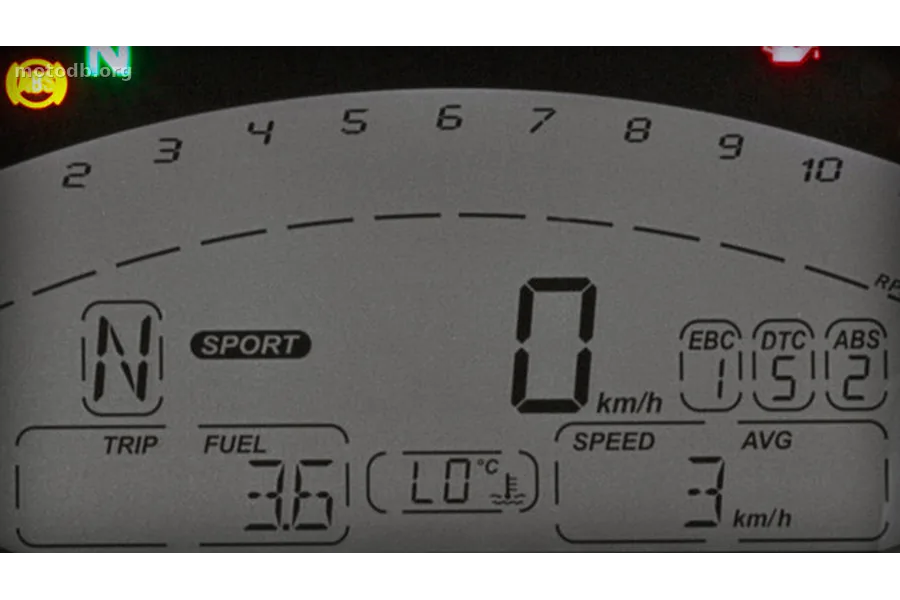
The main regret on the Ducati 899 Panigale's spec sheet concerns the swingarm. Gone is the signature single-sided unit that makes the 1199 so striking, replaced by a conventional aluminum double-sided swingarm. The profile loses some personality. The same applies to the dashboard: instead of the sumptuous TFT screen from the larger Panigale, Ducati opted for a bargraph LCD inherited from the 1198 and 848. These are hard savings to swallow when the direct competition—Triumph Daytona 675R or MV Agusta F3 800—paid closer attention to such details in this price segment. The Ducati 899 Panigale's reliability nonetheless proved decent for a desmo twin, provided maintenance intervals are respected.
At €15,790 in 2014, the Ducati 899 Panigale's price represented a significant outlay, roughly €1,000 more than the 848 it replaced, but over €3,000 below the 1199. Today, a used Ducati 899 Panigale trades at prices that make it one of the best thrills-per-euro propositions on the supersport market. For the rider seeking a thoroughbred Italian without the budget or uncompromising nature of a Superbike, the 899 remains a relevant choice. It lacks the mechanical nobility of its big sister and the refinement of the Panigale 959 that would succeed it, but it deserves credit for making the Panigale dream tangible for a wider audience. Weekend track riders, demanding road warriors, lovers of fine Italian engineering: this one's for you.
Standard equipment
- Assistance au freinage : ABS de série
Practical info
- La moto est accessible aux permis : A
Reviews & comments
No reviews yet. Be the first to share your opinion!