Key performance
Technical specifications
Engine
- Displacement
- 745 cc
- Power
- 27.0 ch @ 5000 tr/min (19.7 kW)
- Engine type
- Two cylinder boxer, four-stroke
- Cooling
- Air
- Compression ratio
- 7.0:1
- Bore × stroke
- 78.0 x 78.0 mm (3.1 x 3.1 inches)
- Valves/cylinder
- 2
- Valve timing
- Overhead Valves (OHV)
Chassis
- Gearbox
- 4-speed with reverse
- Final drive
- Shaft drive (cardan) (final drive)
Brakes
- Front brakes
- Expanding brake
- Rear brakes
- Expanding brake
- Front tyre
- 3.75-19
- Rear tyre
- 3.75-19
Dimensions
- Fuel capacity
- 24.00 L
- Weight
- 370.00 kg
Overview
Amid the frenzy of 1990s Japanese sportbikes, the Chang-Jiang 750 FY with its sidecar offered a journey back in time, a rolling anachronism that cared nothing for performance. This machine, a Chinese copy of the pre-war BMW R71, was less a means of transport than a political statement on wheels, frozen in a 1930s design. Its 745 cc flat-twin engine, with a square bore and stroke of 78 mm, produced a laughable 27 horsepower, barely enough to move its 370 kg fully equipped. A compression ratio of 7:1 speaks for itself: this is primitive mechanics, designed to survive on the poorest fuel and minimal maintenance.
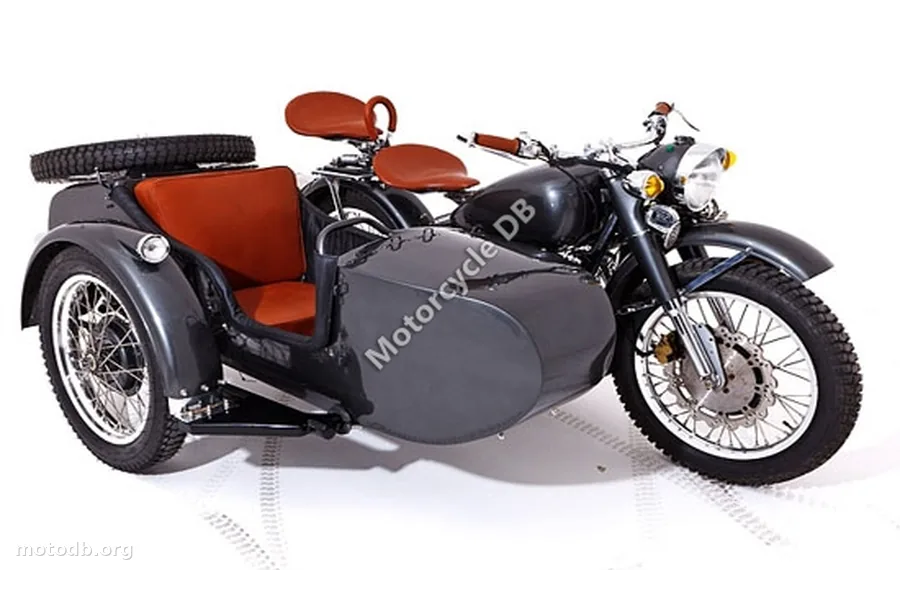
The technical specifications are an inventory in the style of Prévert of obsolescence. Drum brakes on the three wheels, a shaft drive with a four-speed gearbox including reverse gear, and 3.75-19 tires that seem to have come from a tractor. The 24-liter tank was a necessity, given that the best friend of this motorcycle sidecar was undoubtedly the gas station, with a top speed peaking around 110 km/h. One can imagine the rider, not leaning into corners, but struggling against the overturning torque and planning overtaking maneuvers several days in advance.
Comparing this Chang-Jiang to anything contemporary, a Honda CB750 or a BMW K75, would be an insult… to the Japanese and the Bavarian. It does not belong to the same universe. Its value lay entirely in its image and indestructible utilitarian function. It was the mount of rural militias, officers of the People's Army, and anyone who needed an off-road vehicle that could be repaired with a hammer and pliers.
Riding this motorcycle sidecar today has nothing to do with piloting. It is an archaeological experience, a lesson in old-fashioned mechanics, and an exercise in absolute patience. It is only intended for the passionate collector of industrial history or the filmmaker seeking a perfectly authentic period accessory. For the globetrotter or the epicure of the road, it is a punishment. But as a relic of a bygone era and a symbol of a certain idea of robustness, it possesses a brutal and undeniable charm, provided you are never in a hurry.
Indicators & positioning
Similar bikes
750 Spezial A (with sidecar)
750 Octobre rouge II - KRASNYJ OKTJABR II
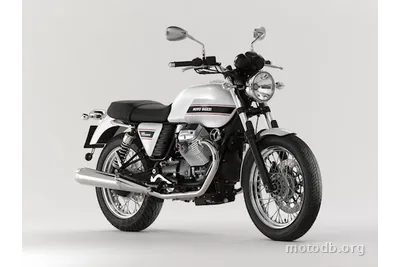
V7 750 Classic
Reviews & comments
No reviews yet. Be the first to share your opinion!