Key performance
Technical specifications
Engine
- Displacement
- 1170 cc
- Power
- 109.0 ch @ 7250 tr/min (80.2 kW)
- Torque
- 116.0 Nm @ 6000 tr/min
- Engine type
- Bicylindre à plat, 4 temps
- Cooling
- Oil & air
- Compression ratio
- 12.0:1
- Bore × stroke
- 101.0 x 73.0 mm (4.0 x 2.9 inches)
- Valves/cylinder
- 4
- Camshafts
- 2 ACT
- Fuel system
- Injection. Electronic port fuel injection
- Valve timing
- Double Overhead Cams/Twin Cam (DOHC)
- Starter
- Electric
Chassis
- Frame
- Three-section frame consisting of one front and three rear sections, load-bearing engine-gearbox unit, removable pillion frame for single ride use
- Gearbox
- 6-speed
- Final drive
- Shaft drive (cardan) (final drive)
- Clutch
- Single dry plate clutch, hydraulically operated
- Front suspension
- Telescopic forks with 43 mm fixed-tube diameter
- Rear suspension
- Cast aluminium single swinging arm with BMW Motorrad Paralever; central spring strut, spring preload steplessly adjustable by hook wrench, rebound-stage damping adjustable
- Front wheel travel
- 125 mm (4.9 inches)
- Rear wheel travel
- 140 mm (5.5 inches)
Brakes
- Front brakes
- Double disc. ABS. 4-piston calipers.
- Rear brakes
- Single disc. ABS. double-piston floating caliper.
- Front tyre
- 120/70-R19
- Front tyre pressure
- 2.50 bar
- Rear tyre
- 170/60-R17
- Rear tyre pressure
- 2.90 bar
Dimensions
- Seat height
- 820.00 mm
- Wheelbase
- 1527.00 mm
- Length
- 2175.00 mm
- Width
- 865.00 mm
- Height
- 1330.00 mm
- Fuel capacity
- 17.00 L
- Weight
- 223.00 kg
- Dry weight
- 223.20 kg
- New price
- 15 790 €
Overview
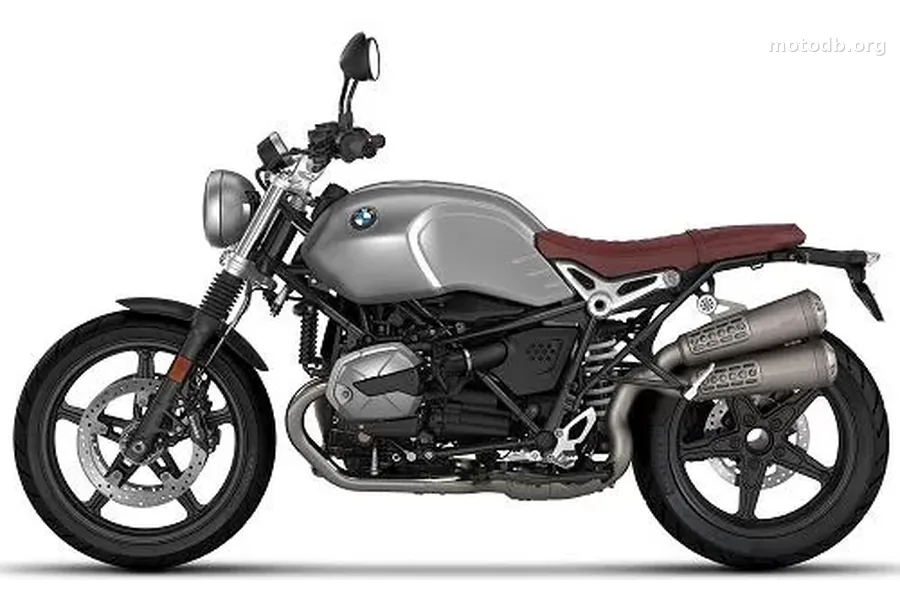
Second in the Heritage lineup, the Scrambler has regularly benefited from improvements to the NineT family. 5021 marked certainly the most significant, with a harvest of electronics and a revised engine.
The twin engine has weathered the years rather well, but Euro5 won’t be kind to it. Therefore, BMW revises the cylinder heads and intake manifold to meet this standard. Horsepower is only slightly affected, with a maximum of 109 hp available a bit earlier, at 7250 rpm. With 11.8 ft-lbs, peak torque remains unchanged. But more important than one less horsepower or redesigned valve covers, the power and torque curves are boosted at mid-range for improved responsiveness.
This responsiveness will now be subject to the driving Modes. 'Rain' and 'Road' modes are standard; a third named 'Dirt' can join the club as an option. It offers a more dynamic behavior.
The NineT Scrambler retains its rustic style. It’s only been dusted with a new LED headlight, upgradable with a cornering light system. The turn signals are also LED, the instrument panel has been refined, and a USB socket is included.
In 2020, traction control ASC was integrated into the equipment – in 2019, it was the Dynamic Brake Light. Now, safety is also under the supervision of ABS Pro, which is angle-sensitive. The 'Pro Riding Modes' option allows for recovery of traction control DCT and engine braking management MSR.
BMW’s popularity remains strong. It’s fair to say that the brand has something to satisfy all categories of riders. High-dose sport? The S 1000 RR transfers adrenaline without the need for an IV. High-voltage road riding? The S 1000 R tears up the asphalt. Adventure with the R 1250 GS, Grand Touring with the R 1250 RT or K 1600 GTL, urban and trendy with the C 650 scooters; in short, BMW is essential. And it’s not stopping with the development of the Heritage lineup. The first milestone of this chapter, the 1200 Nine-T, had a stumbling start and intensified the enthusiasm for neo-retro. In less time than it takes to weld a frame, BMW transforms the experiment, teases the custom builds, courts the nostalgics, and releases the Scrambler version. A more pronounced sense of freedom, a welcome nonchalance, a rustic touch that catches the eye of the uninitiated: it wants to please in the nice neighborhoods.
The Scrambler. It’s the machine that preceded the trail bike. It allowed you to go everywhere, it had a unique look, and it was the beginning of the adventure. With this version of the 1200 Nine-T, we believe in it, and we want it. It’s calibrated precisely to add spice and a hint of hazelnut to the Boxer engine. But don’t be mistaken: it remains a roadster with modifications that place it between a custom build and a machine for cruising on the road and at the edge of trails; not a bike ready to tackle rocky terrain. Regardless, the effect is there, captivating, sharp, powerful, and almost light. But has BMW simply added raised exhausts and spoked wheels to make the NineT a scrambler? Not at all; it goes much further. First, let’s clarify that spoked wheels are an option. It’s better to get them right away because the original stick wheels aren’t the top choice for capturing the spirit of this machine.
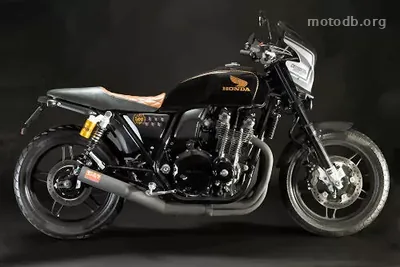
It’s first the silhouette that seizes you. A moment of hesitation, located between the workshop, the dealership, and the song of a farm lost in tobacco fields. Less muscular than the Nine-T, perhaps less premium but no less interesting, the Scrambler shares many elements with its sister and defends its specificities. First, this chestnut-colored seat, which catches your eye and invites you to stroll to the next cigar roller. Then, the exhausts grab your attention as they reveal the rear rim. Then, the front end is noticeably less sporty. The inverted fork from the S 1000 RR and the 17-inch wheel are abandoned in favor of a classic 43 mm fork (without the Telelever system) fitted with protective gaiters. A few radially mounted brake calipers, a 19-inch front wheel, no adjustment; this takes us into a very classic, almost basic dimension. And a good way to lower the price, because the Scrambler should be displayed at a price more contained, more reasonable, than that of the NineT.
Once captivated, let’s remain lucid and examine what the machine offers. What will define its identity? There’s no doubt. BMW has planned for this with a rear subframe that can be removed along with an electrical harness compatible with various "trendy" accessories. The onboard network allows preparers to get excited without altering the management of the bike. The evening offers multiple ideas in the garage. The next day, impatience will be law. Once synchronized with the rider's look (or vice versa), the true meaning takes shape only when the heart starts beating. The engine is still relatively new to the Bavarian story, but remains sufficiently "classic" to match the spirit of the NineT. Pipes, coolant, water-cooled, that would be inappropriate. The air-cooled flat twin continues its career here. In every respect similar to that of the neo-retro roadster, always ready to lift you up with enthusiasm.
At first, it smells of steel; for its tubular frame. The function is there, with the seriousness of a Bavarian chassis. For its 17-liter fuel tank as well, just to save a little more. Aluminum is noble, it’s more expensive, and it’s for the container of the younger sister. Still in this dictate of privileges, the brake calipers will be a little less efficient than those of the Nine-T. A pity? Trappers won’t find the high level that a S 1000 R can offer; but must a Scrambler necessarily tear up the road at every stop? A little less bite won’t be a bad thing depending on the terrain. Usage will be the judge. Later, subtly, aluminum returns. For the fork legs, the handlebar, the air intake cover, the seat pan, the tank, and the engine. Then, it smells of comfort. Almost of obligingness. The atmosphere is more relaxed. To do this, the handlebar is higher and closer to the rider. The seat being less padded, the saddle is less high. The feet descend, retract a little, participate in the sympathy of the domain. Once installed, the rider is in a more relaxed, natural, upright position, as if time were for pleasure. Finally, before leaving, we finish realizing the simplicity expressed with this instrumentation. The essentials, with a single circular dial, and the company of a needle to indicate your speed (because it’s mandatory). No tachometer, no need; as if the important thing was to ride without worrying about speed, relying on the twin's life to know how to lead it. However, we are not in the 1960s, and digital technology always manages to creep in somewhere. See the improvements of recent years.
In the race for technology, BMW is not the last. Browsing the brand's catalog, you're find an abundance of electronics: semi-active suspension, hill start assist, traction control, riding modes, keyless locks and starting, adaptive cornering headlight, quickshifter... etc. Enough to put a Microsoft programmer into a trance. Except that the Nine-T Scrambler doesn’t want so much and slowly succumbs; because, like its sisters, there must also be premium beyond the connecting rods. Its thing is rather emotion and a finger to the race for armaments.
Announced by the Path 22 concept-bike, the BMW 1200 R Scrambler continues the offensive initiated by the NineT. The look is instantly striking, for a more affordable price and a more lively desire to roam. To truly enjoy yourself and completely forge your leitmotif, a little trip to the options box is almost essential: Here are some elements that BMW should have installed as standard: spoked wheels, off-road tires, headlight grille and engine guard. Result, the tradition is respected and it will be necessary to cash out more than expected at the dealer. With this machine, the brand follows and even impeccably feeds the trend. The 1200 Scrambler will be a bike of choice to offer its sensations. But isn’t its clientele looking for something above all to make a statement!?
M.B - Photos manufacturer
Standard equipment
- Assistance au freinage : ABS de série
Practical info
- La moto est accessible aux permis : A
Indicators & positioning
Similar bikes
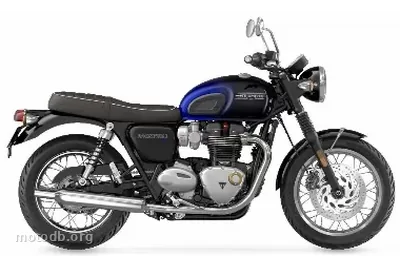
Bonneville T120 Black
Scrambler 1200 XE
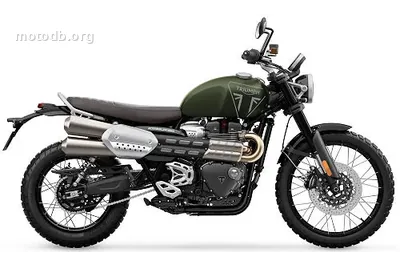
Scrambler 1200 X
Reviews & comments
No reviews yet. Be the first to share your opinion!