Key performance
Technical specifications
Engine
- Displacement
- 848 cc
- Power
- 70.0 ch @ 7500 tr/min (51.1 kW)
- Torque
- 77.0 Nm @ 5000 tr/min
- Engine type
- Two cylinder boxer, four-stroke
- Cooling
- combiné air / huile
- Compression ratio
- 10.3 : 1
- Bore × stroke
- 87.5 x 70.5 mm
- Valves/cylinder
- 4
- Camshafts
- 1 ACT
- Fuel system
- Injection
- Starter
- Electric
Chassis
- Frame
- bâti avant en alu coulé, bâti arrière en acier
- Gearbox
- 5-speed
- Final drive
- Cardan
- Front suspension
- Fourche téléhydraulique Telelever Ø nc, déb : 190 mm
- Rear suspension
- Mono-amortisseur et monobras Paralever, déb : 200 mm
Brakes
- Front brakes
- Dual disc
- Rear brakes
- Freinage 1 disque Ø 276 mm, étrier 2 pistons
- Front tyre
- 110/80-19
- Front tyre pressure
- 2.20 bar
- Rear tyre
- 150/70-17
- Rear tyre pressure
- 2.50 bar
Dimensions
- Seat height
- 840.00 mm
- Fuel capacity
- 24.00 L
- Weight
- 243.00 kg
- Dry weight
- 218.00 kg
- New price
- 10 570 €
Overview
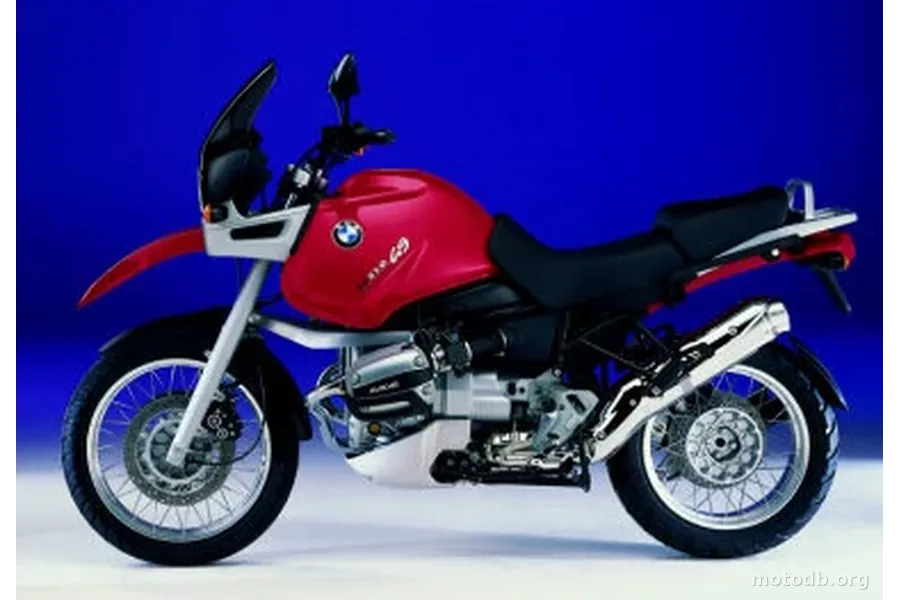
Picture the scene. The year is 2000, the road-oriented adventure segment is booming in Europe, and BMW has been honing its expertise for a quarter of a century in this niche that it largely helped create. The propeller brand then decides to spin off its big GS into a more accessible version, just to avoid leaving the field wide open to its Japanese rivals. That's why the BMW R 850 GS lands with the exact silhouette of its big sister 1150, to the point that an untrained eye will have a hard time telling them apart in a dealership parking lot.
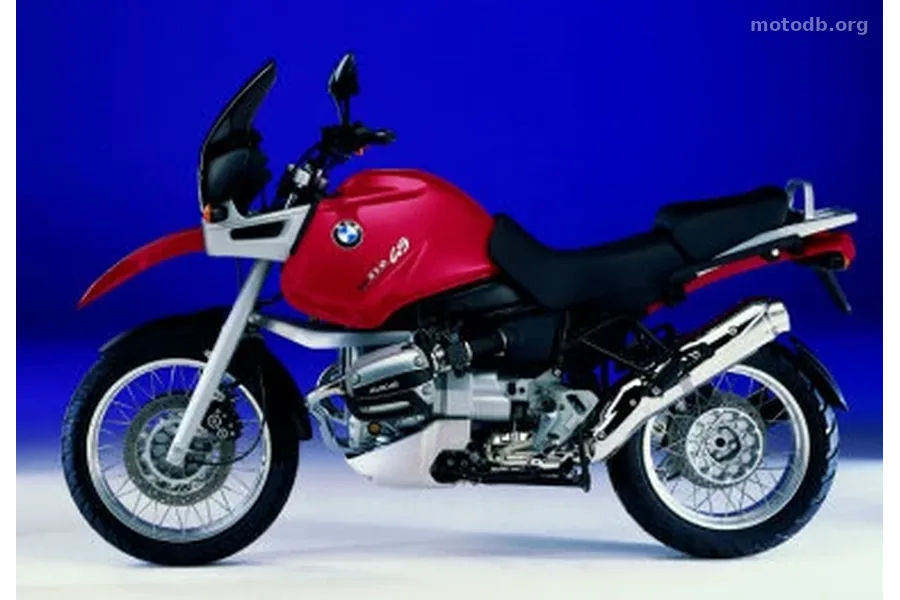
The commercial sleight of hand has its limits. Beneath the identical bodywork, the air-cooled flat-twin has been downsized to 848 cc, with an 87.5 mm bore and a 70.5 mm stroke for a compression ratio of 10.3 to 1. The penalty lands on the horsepower scale, since the boxer twin makes do with 70 hp at 7500 rpm and 77 Nm of torque delivered at 5000 rpm. It's honest, nothing more, especially when it has to lug around the 243 kg of the machine fully fueled. Fuel injection saves the day by offering constant flexibility, but don't expect to get your wrists yanked off. Top speed caps out at 185 kph, which places the beast a notch below a period Triumph Tiger 900 or a Cagiva Gran Canyon, two rivals far more greedy on the decibel front.
The chassis, on the other hand, deserves a closer look and alone justifies a good part of the 10,570 euros asked at the time. The cast aluminum front frame houses a Telelever fork whose 190 mm of travel filters out bumps without diving under braking, while the rear Paralever, combined with the single-sided swingarm and shaft drive, cancels out the torque effect that traditionally plagues this type of transmission. Braking remains adequate without shining, with a twin 276 mm front disc pinched by two-piston calipers. The whole thing makes up a predictable, reassuring chassis, built to swallow kilometers without tiring its rider. The BMW R 850 GS spec sheet indeed betrays this assumed road-going vocation, with a seat perched at 840 mm and dual-purpose tires in 110/80-19 at the front and 150/70-17 at the rear, which loudly proclaim their preference for tarmac far more than for mud.
Make no mistake, the enduro category printed on the registration has more to do with marketing than with temperament. Try your luck on a stony trail, and the 218 kg dry will immediately remind you that a GS of this generation prefers a winding back road to single-track. The 24-liter tank invites grand touring, which remains logical for a machine capable of stringing together 400 kilometers without refueling. The only downside, the limited aerodynamic protection discourages you from staying too long on the motorway. Owners' opinions, even today, point to this same observation on forums dedicated to the used bmw r 850 gs.
So what are we to take away from this Bavarian little sister? An honest BMW R 850 GS review would have to say that the machine suffers from its positioning. For a few hundred euros more, the 1150 offered a surplus of torque that fully justified the investment, and the public didn't get it wrong. Still, on the used market, the 2000 model year makes sense for the novice touring rider who wants to sample the charm of the flat-twin without breaking the bank, or for the tinkerer tempted by a sound base to transform into a scrambler or a café racer. At that price, with the legendary reliability of the boxer and the minimal upkeep of the shaft drive, the little GS still holds its own in the vintage adventure landscape.
Practical info
- Moto bridable à 34 ch pour l'ancien permis A MTT1 - pas garanti pour le permis A2
- La moto est accessible aux permis : A, A (MTT1)
Indicators & positioning
Similar bikes
V85 TT Centenario
Reviews & comments
No reviews yet. Be the first to share your opinion!