Key performance
Technical specifications
Engine
- Displacement
- 1300 cc
- Power
- 145.0 ch @ 7750 tr/min (106.6 kW)
- Torque
- 149.0 Nm @ 6500 tr/min
- Engine type
- Bicylindre à plat, 4 temps
- Cooling
- liquide
- Compression ratio
- 13.3 : 1
- Bore × stroke
- 106.5 x 73 mm
- Valves/cylinder
- 4
- Camshafts
- 2 ACT
- Fuel system
- Injection Ø 52 mm
- Starter
- électrique
- Euro standard
- Euro 5+
Chassis
- Frame
- Structure en profilés d'acier
- Gearbox
- boîte à 6 rapports
- Final drive
- Cardan
- Front suspension
- Fourche téléhydraulique inversée Ø 47 mm, déb : 140 mm
- Rear suspension
- Mono-amortisseur et monobras EVO Paralever, déb : 130 mm
Brakes
- Front brakes
- Freinage 2 disques Ø 310 mm, fixation radiale, étrier 4 pistons
- Rear brakes
- Freinage 1 disque Ø 285 mm, étrier 2 pistons
- Front tyre
- 120/70-17
- Rear tyre
- 190/55-17
Dimensions
- Seat height
- 790.00 mm
- Seat type
- Selle biplaces
- Fuel capacity
- 17.00 L
- Weight
- 245.00 kg
- New price
- 17 500 €
Overview
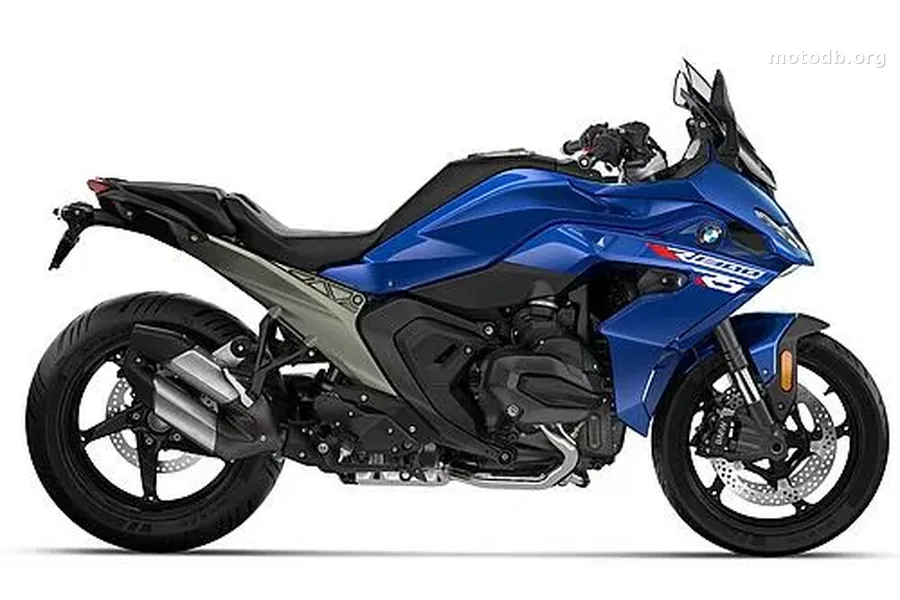
After the announcement of the R 1300 R, we were awaiting the RT and RS models. I must admit I wasn’t overly enthusiastic about the pure touring roadster, which, despite its qualities, seems a little too car-like these days… However, I’ve always had a soft spot for the RS models, a machine as “fun” in its rigorous German version as it is capable of riding fast, far, and long.
This R 1300 RS, the 2025-2026 version, refines the concept more with a thorough revision of its technical base than with a stylistic rupture.
“With the new BMW R 1300 RS, we have taken our sport touring motorcycle with a boxer engine to a whole new level. The motorcycle was designed consistently with a dynamic riding feel in mind. Thanks to a completely new engine, a completely new chassis, and a completely new aerodynamic concept, this model offers an even sportier riding experience than previous generations. At the same time, it remains the ideal companion for comfortable journeys and long-distance travel.” Hauke Glässing, BMW R 1300 RS project manager.
While the appearance of the R 1300 R heralded a new era for the roadster, for this RS version, we remain within the same DNA. At first glance, you can identify the model that doesn’t deliver a slap to its predecessor but forms a more modern extension. The front end collapses onto itself, becomes more pointed, and integrates the same style of headlight, but the double headlight is also more stylized, smaller. The shape of the bubble also contributes to the feeling of having a more sporty machine in front of you. It is smaller, more curved. It’s no longer the feeling of a flat half-windscreen. For the rear of the motorcycle, we are in the same spirit as the roadster, as it uses the same parts. The duo will be perfect with the two-stage seat. In fact, in terms of style, BMW has done a lot of work on the riding position, according to the press release provided by the Germans.
The ergonomic triangle formed by the handlebars, footrests, and seat of the R 1300 RS has been designed to position the rider further forward on the machine. The footrests are slightly recessed, and the handlebars are flatter. This is a position that translates the new philosophy of the model: no longer perched on the machine but becoming one with it. For a more touring-oriented riding position, a comfort handlebar is also available as an option. You can also choose from the options catalog for the comfort of your seat with several saddles offered. Luggage is not forgotten with a new tank bag that attaches to the fuel cap or even side cases of 26 and 29 liters. A sacrilege on a Sport-GT in my opinion, but we can still fit a 39 L top case… Cases and top case benefit from electric and centralized opening and closing. Inside the Top Case, you will even find lighting and a USB socket.
To see clearly at night, the R 1300 RS is equipped as standard with a new LED headlight. The lighting unit consists of two LED elements for low beam and two additional LED elements positioned separately for high beam. Two other LED units are provided for the daytime running light and the lateral light. The rear light is also LED.
With the optional adaptive cornering light, the low beam headlights of the standard full LED headlight are optimized for curves, depending on the inclination position, by activating additional LED elements. This way, the curve is almost entirely illuminated as the light moves to where the motorcycle is heading. By optimizing the light pattern, the low beam headlights provide an even wider and more even illumination of the road.
If electronics sometimes play a role in riding, BMW does not forget that on a Sport-GT, safety is also an argument. Thus, the R 1300 RS is equipped with an active speed control assistant (ACC), front collision warning (FCW), lane change warning (SWW), and rear collision warning (RECW). If, with all this, you have an accident you are responsible for, you won’t come and say you weren’t warned!
The dashboard consists of a 6.5-inch color TFT screen. A very complete configuration where you will have all the useful information. It is piloted from the handlebar controls, it is easy to synchronize a device via Bluetooth, and you can go even further with the BMW Motorrad Connected app.
In addition to this screen, BMW offers a support for a remote device (such as a GPS or phone). For the first time, this support now has an electric lock to secure the navigation device (or a smartphone).
The boxer engine of the BMW R 1300 RS has a displacement of 1,300 cm³ (bore and stroke ratio 106.5 to 73 mm). This increase in displacement comes from a widened cylinder bore and a new reduced-stroke crankshaft. The engine develops a power of 107 kW (145 hp) (previous generation: 100 kW (136 hp)), still at 7,750 rpm, and develops a maximum torque of 149 Nm at 6,500 rpm (predecessor: 143 Nm at 6,250 rpm). Its maximum engine speed is 9,000 rpm.
Three riding modes are included as standard, allowing the motorcycle to adapt to your desires or the road conditions encountered. Professional riding modes with the additional modes “Dynamic” and “Dynamic Pro,” as well as the preset riding mode are available as an option. In standard version, the new R 1300 RS has three riding modes “Rain”, “Road” and “Eco”.
Engine torque control (MSR) is a standard feature. It’s a bit like a super anti-wheelie married to a traction control. This control ensures that the rear wheel is not locked / spun by the effects of engine torque. In these cases, the MSR instantly opens the throttles so that the torque is smoothed out to facilitate riding.
An option that will delight “commuters,” those who travel from the outskirts of cities to the city center in the morning, the automated gear change assistant (ASA) is available as an option. The automatic gearbox has been a talking point among motorcycle manufacturers lately. An arlesienne that returns regularly to try to convince motorcyclists...
The chassis of the BMW R 1300 RS is of course the near twin of the R 1300 R. The frame, completely redesigned, is made of steel. It is more compact and more rigid than the previous generation. During the overhaul, the rear frame was also completely redesigned. Instead of the previous steel tube construction, the R 1300 RS now has a die-cast aluminum rear frame loop.
In combination with a now much more compact drive unit, the chassis design has made it possible to achieve a significant concentration of mass. BMW promises more agility and more stability, enough to increase the pace at your handlebars in complete peace of mind. The suspensions consist of an inverted telescopic fork with a diameter of 47 mm. The Evo Paralever rear suspension also evolves with a stiffer attachment point in the frame. The R 1300 RS is also equipped with new hollow-spoke cast aluminum wheels of 17 inches. In total, they weigh more than 1.4 kg less than the previous wheels. The reduction in rotating masses translates into both improved acceleration and improved braking response, as well as optimized handling characteristics.
This chassis benefits as standard from dynamic damper adjustment by the Dynamic ESA system. Dynamic Suspension Adjustment (DSA) goes even further by combining the dynamic adjustment of the front and rear dampers with a corresponding adjustment of the spring stiffness (“spring rate”) – depending on the selected riding mode, driving conditions, and maneuvers. Following the new R 1300 R presented a few weeks ago, the BMW R 1300 RS is the second series motorcycle with an inverted telescopic fork that allows adjustment of the spring rate. Automatic load compensation is ensured by the adjustable spring support.
The R 1300 RS is equipped as standard with a double disc brake with four-piston fixed calipers mounted with radial fixings at the front and a single disc brake with a floating two-piston caliper at the rear, in combination with BMW Motorrad IntegralABSPro. It can be equipped with the optional sport braking system.
In an ideal garage, you would need a traveler for vacations, a cool dragster for going to work, and sometimes when you feel like disengaging a bit, something fun to drive.
This R 1300 RS is a bit of all of that and that’s what’s good! Above all, by offering it a touch of soul, BMW will try to get it out of the shadows, which would be deserved. Its qualities are undeniable but they will not be within everyone's reach, alas...
Vincent Beaucousin - Photos manufacturer
The main features of the BMW R 1300 RS:
Standard equipment
- Assistance au freinage : ABS
- Nombre de mode de conduite : 3
- Taille de l'écran TFT couleur : 16,51 cm / 6.5 pouces
- ABS Cornering
- Indicateur de vitesse engagée
- Régulateur de vitesse
- Bluetooth
- Prise USB
- Démarrage sans clé
- Contrôle de traction
- ABS déconnectable
- Embrayage anti-dribble
- Contrôle du frein moteur
- Surveillance de la pression des pneus
Practical info
- La moto est accessible aux permis : A
- Pays de fabrication : Allemagne
Indicators & positioning
Similar bikes
CB 1300 S Fairing C-ABS
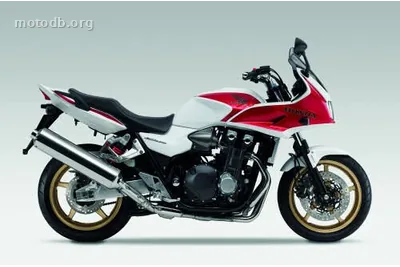
CB 1300 S Fairing ABS
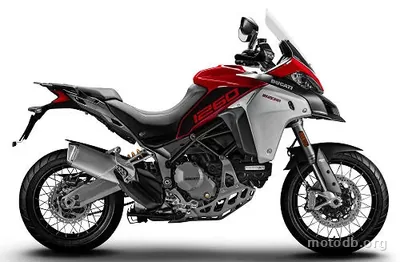
Multistrada 1260 Enduro
Reviews & comments
No reviews yet. Be the first to share your opinion!