Key performance
Technical specifications
Engine
- Displacement
- 1262 cc
- Power
- 158.0 ch @ 9500 tr/min (115.3 kW)
- Torque
- 128.0 Nm @ 7500 tr/min
- Engine type
- V2, four-stroke
- Cooling
- Liquid
- Compression ratio
- 13.0:1
- Bore × stroke
- 106.0 x 71.5 mm (4.2 x 2.8 inches)
- Valves/cylinder
- 4
- Fuel system
- Injection. Bosch electronic fuel injection system, elliptical throttle bodies with Ride-by-Wire, equivalent diameter 56 mm
- Valve timing
- Desmodromic valve control
- Ignition
- Dual Spark
- Starter
- Electric
Chassis
- Frame
- Tubular steel Trellis
- Gearbox
- 6-speed
- Final drive
- Chain (final drive)
- Clutch
- Light action, wet, multiplate slipper clutch with hydraulic control. Self-servo action on drive, slipper action on over-run
- Front suspension
- 48mm fully adjustable usd forks.
- Rear suspension
- Fully adjustable Sachs unit. Remote spring preload adjustment. Aluminium single-sided swingarm
- Front wheel travel
- 185 mm (7.3 inches)
- Rear wheel travel
- 185 mm (7.3 inches)
Brakes
- Front brakes
- Double disc. ABS. Floating discs. Four-piston calipers. Radially mounted.
- Rear brakes
- Single disc. ABS. Two-piston calipers.
- Front tyre
- 120/70-ZR17
- Rear tyre
- 170/60-ZR17
Dimensions
- Seat height
- 840.00 mm
- Wheelbase
- 1592.00 mm
- Fuel capacity
- 30.00 L
- Weight
- 254.00 kg
- Dry weight
- 225.00 kg
Overview
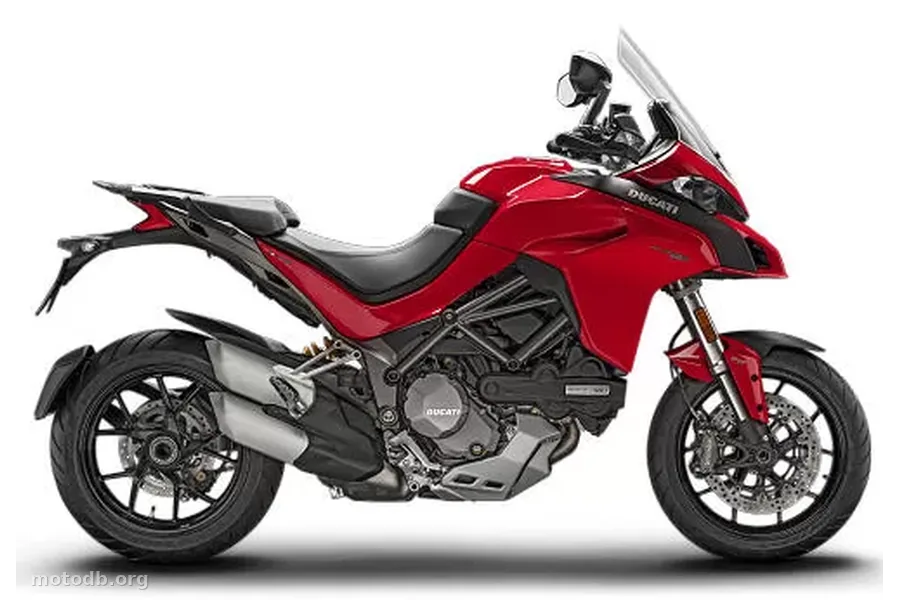
Four bikes in one – that’s the promise Ducati has kept with its Multistrada for years. With the Ducati Multistrada 1260, the Bologna-based manufacturer moves up a gear in terms of displacement and ambition. The Testastretta twin goes from 1198 to 1262 cc thanks to a 71.5 mm increase in stroke, allowing it to reach 158 horsepower at 9500 rpm and a torque of 129.5 Nm available at 7500 rpm. Even better, 85% of this torque is accessible from 3500 rpm, which radically changes real-world behavior. On a national road, exiting a village, it pulls without you having to fight with the gearbox.
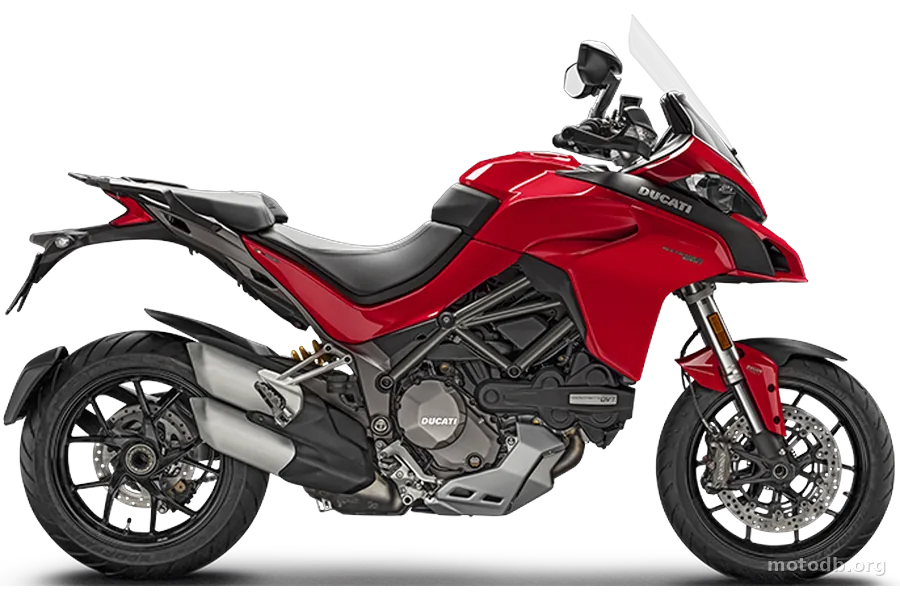
A word about the confusion surrounding power figures. The previous 1200 DVT displayed 160 horsepower, measured on a dynamometer according to a method that Ducati has since abandoned. With a static dynamometer, the same engine fell to 152 horsepower. The 1262 cc measured according to the new standard gives 158 hp, which is actually more than its predecessor, but direct comparisons are misleading if one is unaware of this context. On the Ducati Multistrada 1260 official technical specification sheet, focus on the torque and its availability at low rpm, which are much more revealing of everyday usability. For the rest, the mechanics have been completely revised in depth, including cylinders, connecting rods and crankshaft, with new intakes and a redesigned exhaust system from the pipe to the silencer.
The steel trellis frame receives subtle but sensible revisions. The steering head angle gains one degree, the swingarm lengthens by 48 mm, the wheelbase progresses by 55 mm to reach 1585 mm. These modifications are not immediately apparent but improve stability in curves, a historical weakness of the sporty trail format with a short wheelbase. The 48 mm inverted fork, fully adjustable, and the Sachs rear shock with offset preload are part of the standard equipment. The Brembo braking system with radial four-piston calipers on two 320 mm front discs is up to the challenge of a 232 kg machine fully fueled. The seat height at 825 mm is a real selection criterion; those with modest builds should look at the Ducati Multistrada 1260 S grand tour for low-seat options.
The onboard electronics deserve attention. The Bosch 9.1 ME Cornering ABS no longer simply monitors wheel lockup; it modulates intervention based on the motorcycle’s lean angle via an inertial unit. Four riding modes, Sport, Touring, Urban and Enduro, redistribute the cards for each use. In Sport mode, the 158 horsepower are available unfiltered, the traction control and anti-wheelie disappear in favor of reactivity. In Urban or Enduro mode, power is limited to 100 horsepower, which transforms the machine into an accessible tool for less experienced riders or for degraded surfaces. Eight levels of traction control, as many for anti-wheelie, three ABS maps, Vehicle Hold Control for hill starts. It’s dense. Too much, say some purists; exactly what is needed, respond touring riders covering 20,000 km per year.
At €18,590 in standard version, the Ducati Multistrada 1260 positions itself against serious rivals. The BMW R 1250 GS offers comparable versatility with a flat-twin known for its smoothness, the KTM 1290 Super Adventure S plays more the sporty card, the Honda Africa Twin Adventure Sports focuses on accessibility and reliability. The Ducati, on the other hand, assumes a more assertive character, more physically demanding on long journeys loaded, but frankly rewarding when the roads twist. The Ducati Multistrada 1260 S, the Pikes Peak or the Grand Tour enrich the range upwards with electronic refinement and traveler equipment. For those looking for a used Ducati Multistrada 1260, the 2019-2020 model years constitute a rational purchase, the engine being mature and the childhood problems behind it. It is a rider’s bike that travels, not a traveler’s bike that occasionally rides.
Indicators & positioning
Similar bikes
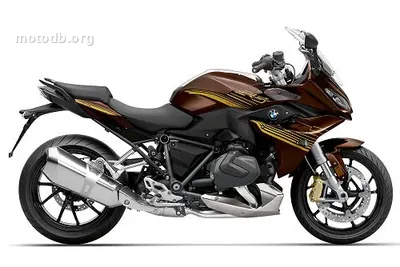
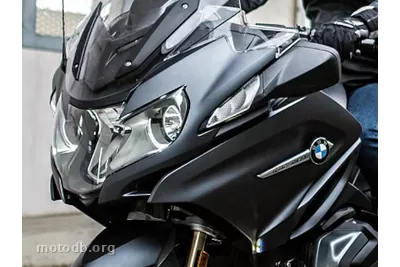
R 1250 RT Exclusive
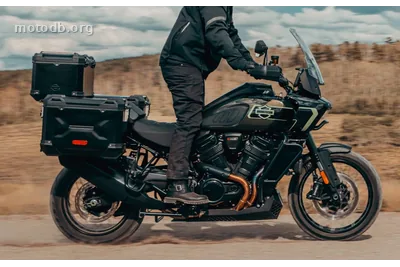
Pan America Limited 1250
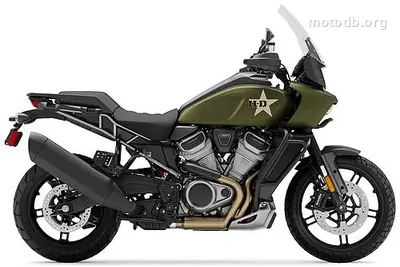
Pan America 1250 Special G.I.
Reviews & comments
No reviews yet. Be the first to share your opinion!