Key performance
Technical specifications
Engine
- Displacement
- 1170 cc
- Power
- 109.0 ch @ 7000 tr/min (80.2 kW)
- Torque
- 109.8 Nm @ 6500 tr/min
- Engine type
- Bicylindre à plat, 4 temps
- Cooling
- Oil & air
- Compression ratio
- 12.0:1
- Bore × stroke
- 101.0 x 73.0 mm (4.0 x 2.9 inches)
- Valves/cylinder
- 4
- Camshafts
- 2 ACT
- Fuel system
- Injection
- Valve timing
- Double Overhead Cams/Twin Cam (DOHC)
- Lubrication
- Dry sump
- Starter
- Electric
Chassis
- Frame
- Tubular space
- Gearbox
- 6-speed
- Final drive
- Shaft drive (cardan) (final drive)
- Clutch
- Single-disc dry clutch, hydraulically operated
- Front suspension
- Upside-down telescopic fork, diameter 45 mm
- Rear suspension
- Cast aluminum single-sided swing arm with Paralever brace, central progressive spring strut, spring pre-load adjustable, rebound damping adjustable
- Front wheel travel
- 119 mm (4.7 inches)
- Rear wheel travel
- 119 mm (4.7 inches)
Brakes
- Front brakes
- Double disc. ABS. Four-piston calipers.
- Rear brakes
- Single disc. ABS. Floating calipers. Two-piston.
- Front tyre
- 120/70-17
- Rear tyre
- 180/55-R17
Dimensions
- Seat height
- 795.00 mm
- Wheelbase
- 1519.00 mm
- Length
- 2129.00 mm
- Width
- 1070.00 mm
- Height
- 871.00 mm
- Fuel capacity
- 15.90 L
- Weight
- 220.00 kg
- New price
- 22 000 €
Overview
Imagine encountering this machine one spring morning on a mountain road. The orange bursts forth even before the sound arrives, an orange that sears the retina as only the 1975 Daytona Orange knew how to do on the flanks of an R 90 S. BMW hasn't produced a simple homage from the archives, one of those soft commemorations that manufacturers favor when inspiration runs short. The BMW R 12 S 2025 embraces a direct, almost impertinent, lineage with the grandmother that won the first AMA Superbike championship in history with Reg Pridmore at the controls, and also triumphed at the Tour de France Moto and the 1976 Tourist Trophy. That is the pedigree that Munich is selling with its €22,000 entry ticket.
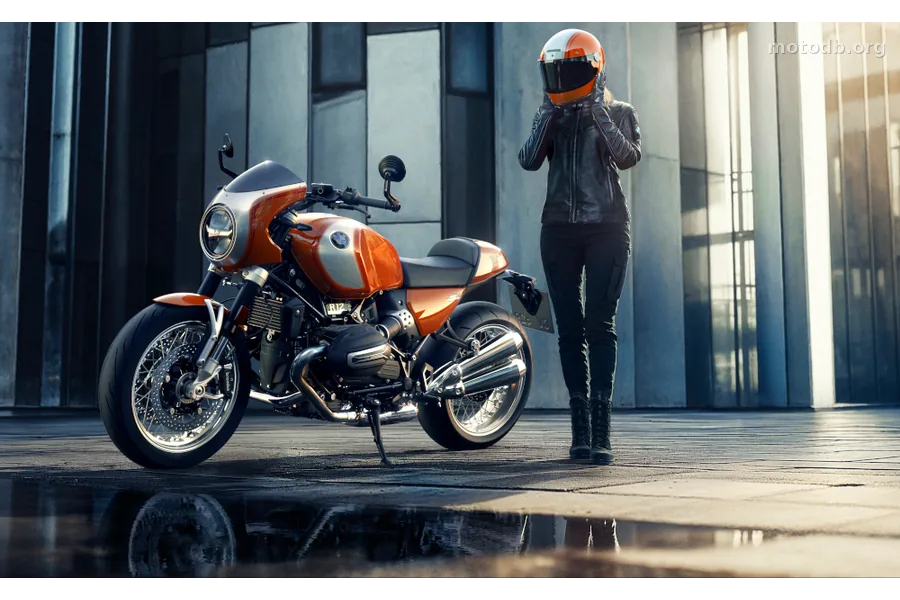
The Lava Orange Metallic color is not simply a RAL code chosen by a designer lacking inspiration. The tank receives a clear coat that reveals the brushed aluminum surfaces beneath, a craftsman’s work that recalls the finishes of competition motorcycles from another era. The rest of the bodywork follows the same logic of meticulous attention to detail, with a retro mini fork head and a matching seat cowl, saddle stitching in the tone of the paintwork. BMW avoided the trap of a caricatural café-racer in which the NineT Racer had somewhat entangled its wheels with a disappointing commercial success. The R 12 S chooses the register of an elegant and subtly sporty roadster, what the Italians would call "sportivo-customized" without too much hesitation.
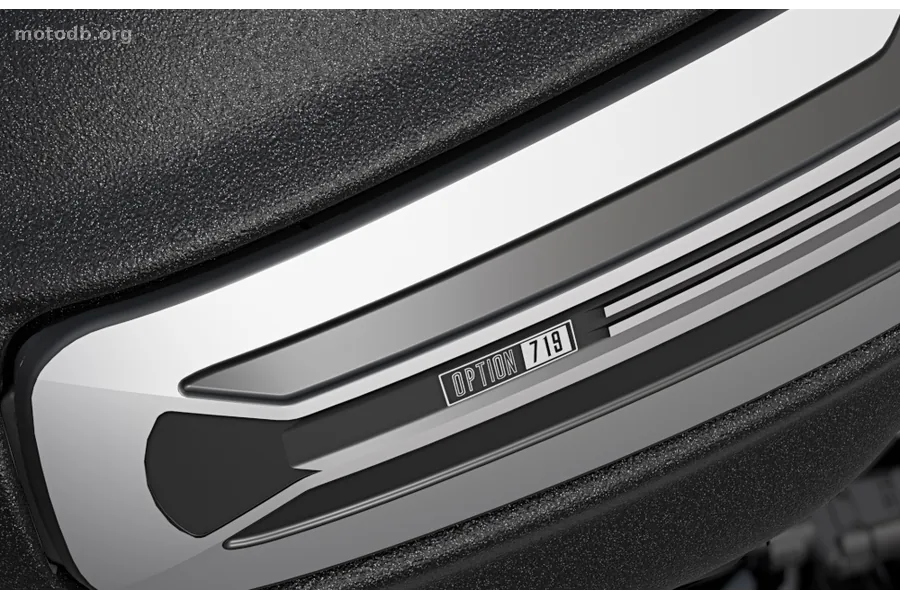
The 719 series components deserve attention, because they truly change the texture of the machine. Classic II spoked wheels, cylinder head covers, levers, controls, passenger footrests, integrated handlebar-end mirrors—everything is machined aluminum. This is not supermarket chrome; it is precision-machined parts that give the whole a coherence that factory-customized motorcycles do not always achieve. The Comfort package completes the picture with heated grips, cruise control, an up-and-down quickshifter, and cornering adaptive lighting. For a real-world BMW R 12 S test ride, this standard equipment changes the game on long journeys.
At the heart of it all, the 1,170 cm3 air-cooled boxer. While the 1,300 ultra-modern engine colonizes the rest of the range, the R 12 NineT from which this S derives turns its back with a certain nobility. The flat-twin develops 109 horsepower at 7,000 rpm and 109.8 Nm of torque at 6,500 rpm for 220 kg fully fueled. This is not a lightweight motorcycle in the sporting sense; a Triumph Speed Twin 900 or a Ducati Scrambler weigh less, but the R 12 S does not play in the same category of ambition. This engine has a personality that recent blocks, too smooth and too linear, have often lost. It growls, it pushes with roundness, it dialogues with the rider. The six-speed gearbox and the Paralever shaft transmission certainly limit the weekend mechanical effect, but ensure reliability and comfort in use that chain-driven motorcycles do not achieve. The announced fuel consumption of 4.96 liters per 100 km remains reasonable for the size, and the 15.9 liters of tank give decent range.
The 45 mm inverted fork, Brembo calipers, cornering ABS, riding modes, and traction control are part of the expected safety equipment at this price. The seat height of 795 mm will remain accessible to most riders. The price of the new BMW R 12 S at €22,000 positions the machine well above a Kawasaki Z900RS or a Yamaha XSR900, but below a Harley-Davidson Sportster S which lacks neither the quality of finish nor the cultural depth of the Bavarian. Those looking for a used BMW R 12 S will probably have to wait, the order books for the first deliveries not leaving many machines readily available on the secondary market.
This motorcycle is aimed at an audience that already has several machines in the garage, that knows its history, and that is willing to pay for a signature rather than for raw performance. This is not a criticism, it is simply a clear positioning. The 1975 R 90 S was not the fastest motorcycle in the world, it was the most desirable. Its granddaughter has understood the lesson.
Standard equipment
- Assistance au freinage : ABS
- Nombre de mode de conduite : 3
- ABS Cornering
- Jantes aluminium
- Jantes à rayon
- Shifter
- Amortisseur de direction
- Indicateur de vitesse engagée
- Régulateur de vitesse
- Prise USB
- Aide au démarrage en côte (Hill Hold Control)
- Démarrage sans clé
- Contrôle de traction
- Poignées chauffantes
- Centrale inertielle
- Phares adaptatifs en virage
- Contrôle du frein moteur
Practical info
- Véhicule accessible au permis A2 ou bridable à 47.5ch / 35 Kw
- La moto est accessible aux permis : A, A2
Reviews & comments
No reviews yet. Be the first to share your opinion!