Key performance
Technical specifications
Engine
- Displacement
- 1157 cc
- Power
- 163.0 ch @ 10250 tr/min (117.5 kW)
- Torque
- 127.0 Nm @ 8250 tr/min
- Engine type
- In-line four, four-stroke
- Cooling
- Liquid
- Compression ratio
- 13.0:1
- Bore × stroke
- 79.0 x 59.0 mm (3.1 x 2.3 inches)
- Valves/cylinder
- 4
- Camshafts
- 2 ACT
- Fuel system
- Injection. Electronic intake pipe injection/digital engine management including knock sensor (BMS-K)
Chassis
- Frame
- Bridge-type frame, cast aluminium, load bearing engine
- Gearbox
- 6-speed
- Final drive
- Shaft drive (cardan) (final drive)
- Clutch
- Multiple-disc clutch in oil bath, hydraulically operated
- Front suspension
- BMW Motorrad Duolever
- Rear suspension
- Cast aluminium single-sided swing arm with BMW Motorrad Paralever
- Front wheel travel
- 115 mm (4.5 inches)
- Rear wheel travel
- 135 mm (5.3 inches)
Brakes
- Front brakes
- Double disc
- Rear brakes
- Single disc
- Front tyre
- 120/70-17
- Front tyre pressure
- 2.50 bar
- Rear tyre
- 180/55-17
- Rear tyre pressure
- 2.90 bar
Dimensions
- Seat height
- 820.00 mm
- Wheelbase
- 1580.00 mm
- Length
- 2182.00 mm
- Fuel capacity
- 19.00 L
- Weight
- 248.00 kg
- Dry weight
- 227.50 kg
- New price
- 14 500 €
Overview
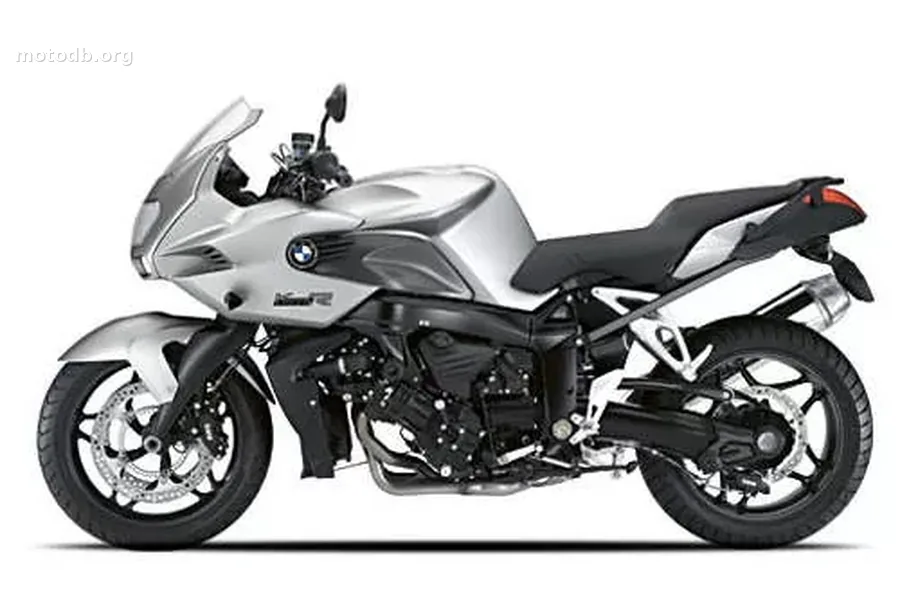
What do you do with a 163-horsepower roadster when you want to devour miles without ending up with wrecked shoulders? At BMW, the answer is called the K 1200 R Sport. Marketed from 2007 and carried over into 2008, this machine occupies a niche that nobody had really asked for, wedged between the fully faired K 1200 S and the naked K 1200 R. A middle ground that, on paper, looks like a marketing exercise. On the road, it's a different story.
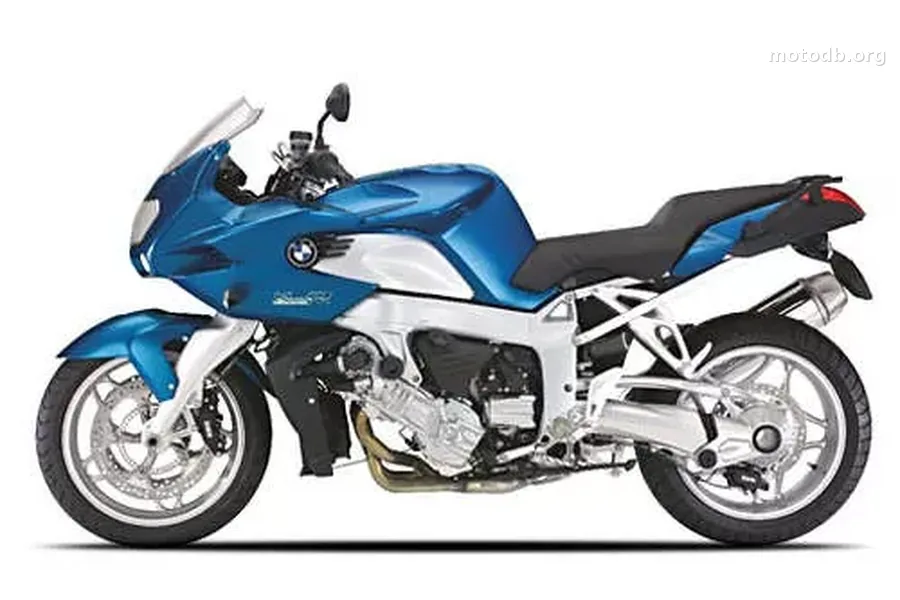
The concept is crystal clear: take the R roadster, graft on a half fairing topped with BMW's famous twin kidney shape, and you get a muscular sport-GT capable of shielding the rider from the wind without sacrificing the upright riding position. The handlebar remains that of the roadster — wide and comfortable. The seat, perched at 820 mm, will suit average builds without causing issues at a standstill thanks to a weight that's contained for the category. Contained, in a manner of speaking: 248 kg wet, including a 19-litre tank, is no featherweight. But the 1,157 cc inline four-cylinder, with its 163 hp at 10,250 rpm and 127 Nm of torque at 8,250 rpm, makes you forget the heft from the very first turn of the wheels. The 13:1 compression ratio and the available horsepower put this BMW K 1200 R Sport on par with the pure sportbikes of the era. For a machine that claims to be versatile, it's almost indecent.
On the chassis side, BMW rolled out its usual heavy artillery. The Duolever replaces the conventional telescopic fork with a dual aluminium arm assembly — a solution that the Japanese competition has never dared to adopt. At the rear, the Paralever with its single-sided aluminium swingarm completes a rigorous package, connected to the road through 120/70-17 and 180/55-17 tyres. Braking duties are handled by dual front discs and a single rear disc. The shaft final drive, a BMW signature, frees the rider from any chain maintenance. As options, the ESA system allows damping adjustment from the handlebar, the RDC sensor monitors tyre pressure, and heated grips serve as a reminder that this bike is also meant for cool autumn mornings. The High Performance Parts catalogue offers a few carbon fibre pieces for those who enjoy customisation.
The real problem with the 2008 BMW K 1200 R Sport is its own family. Compared to the K 1200 S, it gives up 4 hp and full fairing, but gains in riding comfort and accessibility. Compared to the naked R, it provides welcome aerodynamic protection on the motorway and a more assertive look. Its price positioning at €14,500 new at the time placed it in direct competition with well-equipped Japanese GTs. Today, the BMW K 1200 R Sport can be found on the used market for around €3,900, making it an attractive entry point into BMW's four-cylinder world. Watch out for maintenance costs, though: the Duolever and onboard electronics can generate steep bills, a recurring issue on this generation of K. The stated fuel consumption of 4.7 l/100 km remains reasonable for an engine of this displacement, and the theoretical range exceeds 400 km.
This BMW is aimed at the experienced rider who wants a sporty roadster capable of carving corners in the morning and swallowing 500 km of motorway in the afternoon, without switching mounts. Not a pure sportbike, not a purring GT. A test ride on the BMW K 1200 R Sport is enough to understand that it carves its own path, somewhere between roadster brutality and grand touring comfort. A singular proposition, typically Bavarian in its logic, that has never found an equivalent among the competition.
Standard equipment
- Assistance au freinage : ABS intégral Sport en option
Practical info
- La moto est accessible aux permis : A
Indicators & positioning
Similar bikes
CBR 1100 XX Super Blackbird
Reviews & comments
No reviews yet. Be the first to share your opinion!