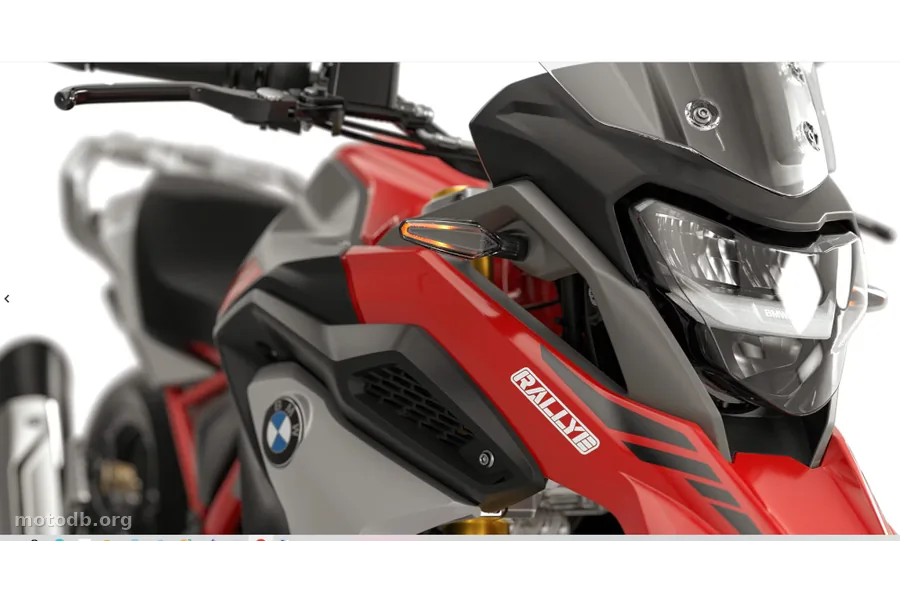
Key performance
Technical specifications
Engine
- Displacement
- 313 cc
- Power
- 34.0 ch @ 9500 tr/min (24.5 kW)
- Torque
- 28.0 Nm @ 7500 tr/min
- Engine type
- Single cylinder, four-stroke
- Cooling
- Liquid
- Compression ratio
- 10.6:1
- Bore × stroke
- 80.0 x 62.1 mm (3.1 x 2.4 inches)
- Valves/cylinder
- 4
- Camshafts
- 2 ACT
- Fuel system
- Injection. Electronic fuel injection, BMS-E2.
- Valve timing
- Double Overhead Cams/Twin Cam (DOHC)
- Lubrication
- Wet sump
- Starter
- Electric
Chassis
- Frame
- Tubular steel frame with bolted rear frame.
- Gearbox
- 6-speed
- Final drive
- Chain (final drive)
- Clutch
- Multiple-disc clutch in oil bath, mechanically operated
- Front suspension
- Upside down fork , 41 mm
- Rear suspension
- Solid die-cast aluminum swingarm, directly hinged monoshock, adjustable preload
- Front wheel travel
- 180 mm (7.1 inches)
- Rear wheel travel
- 180 mm (7.1 inches)
Brakes
- Front brakes
- Single disc. Four-piston calipers. Radially mounted.
- Rear brakes
- Single disc. Floating disc. Single-piston caliper.
- Front tyre
- 110/80-19
- Front tyre pressure
- 1.70 bar
- Rear tyre
- 150/70-17
- Rear tyre pressure
- 1.90 bar
Dimensions
- Seat height
- 835.00 mm
- Wheelbase
- 1420.00 mm
- Length
- 2075.00 mm
- Width
- 880.00 mm
- Height
- 1080.00 mm
- Fuel capacity
- 11.00 L
- Weight
- 169.50 kg
- New price
- 5 900 €
Overview
When Munich decides to enter the small displacement arena, it’s not done without calculation. The GS family has built a worldwide reputation on machines capable of devouring trails as much as highways; it was only a matter of time before the DNA was democratized. This is where the BMW G 310 GS comes in, born from an industrial alliance with TVS in Bangalore, designed to appeal to both emerging markets and European A2 license holders seeking an entry ticket into the brand’s adventure world.
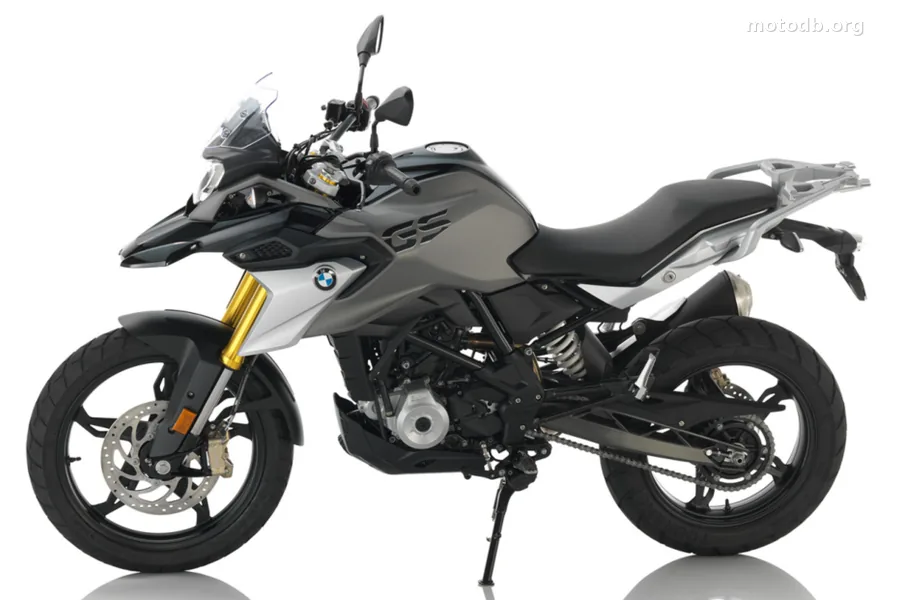
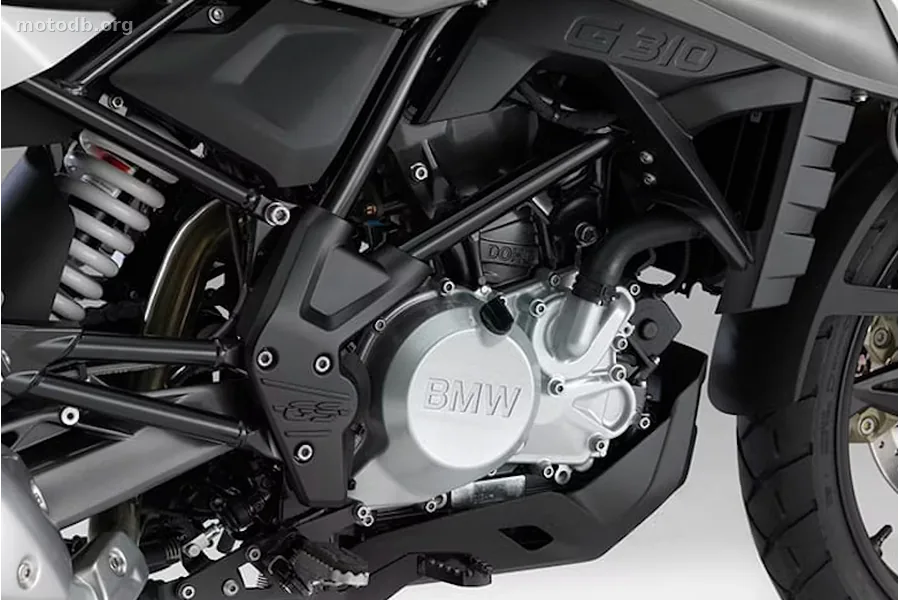
First visual contact: the design is well-executed. The silhouette reprises the codes of the larger GS with disarming fidelity, prominent beak, sculpted flanks, high and dominant riding position. But beyond the mirror effect, the technical reality asserts itself. Beneath the steel tubular trellis frame lies a 313 cm3 single-cylinder engine, liquid-cooled, with four valves and an inverted cylinder head, with the intake on the front side, which lowers the center of gravity and sharpens responsiveness. This engineering choice is not cosmetic: on a winding road, the G 310 GS responds with a liveliness that its 169.5 kg loaded weight doesn’t necessarily suggest. The engine delivers 34 horsepower at 9,500 rpm and 28 Nm of torque at 7,500 rpm, figures consistent with the displacement, sufficient for urban and suburban use, topping out at approximately 143 km/h at maximum speed. It’s not a speed demon, it’s an honest all-rounder.
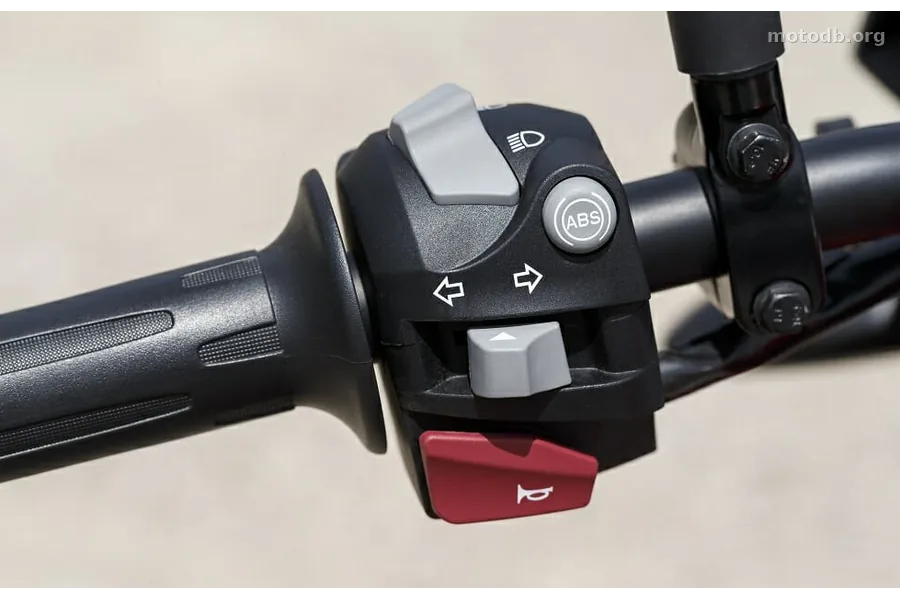
The chassis betrays a direct lineage with the G 310 R, but the trail adaptation is genuine. The 41 mm inverted fork offers 180 mm of travel, as does the adjustable preload rear mono-shock. Result: the seat height climbs to 835 mm, a figure that will naturally filter out shorter riders. The front wheel is 19 inches, a sensible compromise between road handling and the ability to digest a forest track. The wheelbase of 1,420 mm, lengthened compared to the roadster, stabilizes the machine on trajectories. The brakes, a 300 mm front disc with a Bybre four-piston radial caliper, and a 240 mm rear disc, do a clean job. The switchable ABS completes the setup: on gravel, being able to take back control from the electronics is a real freedom, not a gadget.
Facing the Kawasaki Versys-X 300 or the Honda CRF 250 L, the BMW G 310 GS plays in a different price category. Displayed at around 5,900 euros at launch, it requires a more significant financial effort than its Japanese competitors. In return, it offers superior finish, a fully digital dashboard well-stocked with information, and above all a badge that counts in some garages. Today, we find BMW G 310 GS used at much more accessible prices, which strengthens its attractiveness for those who want to join the GS circle without emptying their current account.
The real subject is positioning. This motorcycle is aimed at the city dweller wanting to go off on a dirt track on the weekend, the young A2 license holder attracted to the adventure world without wanting to fight with 250 kg, to the enthusiast of the brand looking for a second, lightweight machine. It doesn’t claim to rival a GS 850 on Mongolian trails, and that’s a good thing. Its ambitions are clearly limited, and within those limits, it fulfills its contract seriously. The "made in India" by TVS has caused ink to flow, but KTM and Harley-Davidson do the same for their small displacement motorcycles; the argument quickly erodes in the face of a global market. What remains is a coherent, well-born machine that carries the GS name without entirely usurping its reputation.
Standard equipment
- Assistance au freinage : ABS désactivable
Practical info
- La moto est accessible aux permis : A
Reviews & comments
No reviews yet. Be the first to share your opinion!