Key performance
Technical specifications
Engine
- Displacement
- 1198 cc
- Power
- 170.0 ch @ 9750 tr/min (125.0 kW)
- Torque
- 126.5 Nm @ 8000 tr/min
- Engine type
- Bicylindre en L à 90°, 4 temps
- Cooling
- liquide
- Compression ratio
- 12.7 : 1
- Bore × stroke
- 106 x 67.9 mm
- Valves/cylinder
- 4
- Camshafts
- 2 ACT
- Fuel system
- Injection
Chassis
- Frame
- treillis tubulaire en tube d'acier relié à des platines en alu
- Gearbox
- boîte à 6 rapports
- Final drive
- Chaîne
- Front suspension
- Fourche téléhydraulique inversée Ø 43 mm, déb : 120 mm
- Rear suspension
- Mono-amortisseur, déb : 120 mm
Brakes
- Front brakes
- Freinage
- Rear brakes
- Freinage 1 disque
- Front tyre
- 120/70-17
- Rear tyre
- 190/55-17
Dimensions
- Fuel capacity
- 18.00 L
- Weight
- 173.50 kg
- Dry weight
- 164.00 kg
- New price
- 26 990 €
Overview
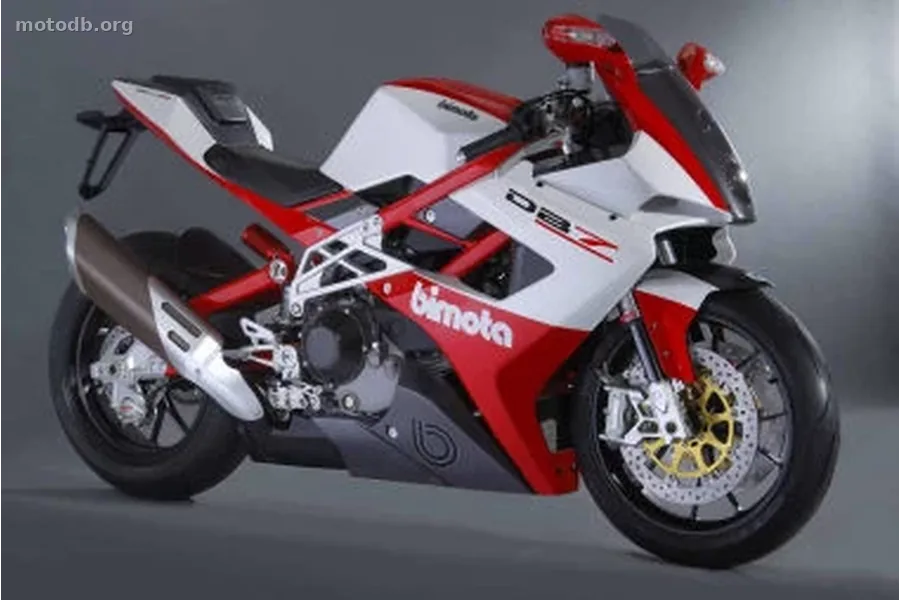
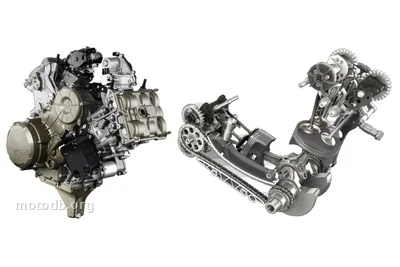
Rimini versus Bologna: when a small Italian manufacturer takes the most celebrated twin of the moment and turns it into something radically different. The DB8 SP is exactly that. Bimota takes the 90° L-twin 1198 cc engine developed by Ducati — the same unit that produces 170 horsepower at 9750 rpm and 126.5 Nm at 8000 rpm in the Borgo Panigale 1198 — and drops it into a chassis designed entirely by its own engineers. The Walbro injection subtly reworks fuel management, while the bespoke Zard titanium exhaust changes the character of the whole package. But that's not where the real difference lies.
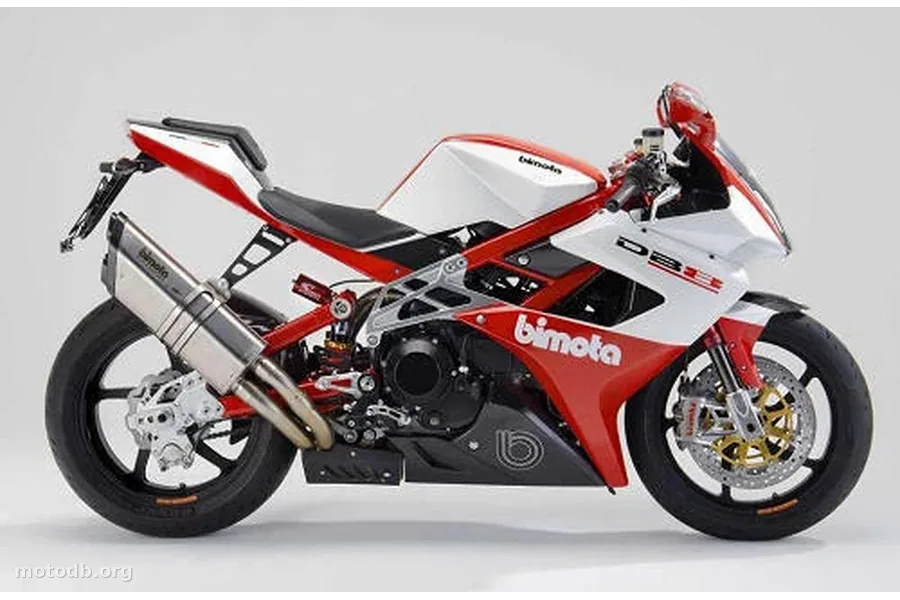
What fundamentally sets the DB8 SP apart from a differently dressed Ducati is the chassis that Bimota has been refining for decades. The steel tubular trellis frame, articulated around solid-machined aluminum plates, is a lesson in mechanical craftsmanship. This principle, introduced as far back as 2005 on the DB5, remains as compelling visually as it is technically. You study this frame the way you study a fine Swiss watch: you look for the flaw, and you don't find one. The swingarm follows the same constructive logic — restrained and precise. At 164 kg dry and 173.5 kg fully fueled, the scales tip clearly toward lightweight for a machine of this displacement.
The SP version adds an additional layer of refinement: carbon bodywork and self-supporting seat, colorways inherited from the DB7, OZ Racing forged aluminum wheels, and Brembo radial monoblock calipers. Every component tells a story of rigorous selection. At €26,990, Öhlins suspension would have been a reasonable expectation. Bimota opted instead for a 43 mm inverted Marzocchi fork and an Extreme Tech shock absorber. These are serious components, but against the Swedish competition that equips many machines at this price level, a sense of questionable compromise lingers.
This kind of machine isn't aimed at the track-day rider looking to post lap times every weekend. It's aimed at the knowledgeable enthusiast — one who knows the history of Rimini, who understands what the Bimota name represents in the hierarchy of artisanal manufacturers, and who finds as much pleasure contemplating their motorcycle in the garage as riding it on the road. With a claimed top speed of 280 km/h and an 18-liter tank, the DB8 SP has the range and the potential for committed outings on mountain roads. But its true territory is that of rare objects chosen with conviction rather than reason.
Practical info
- La moto est accessible aux permis : A
Reviews & comments
No reviews yet. Be the first to share your opinion!