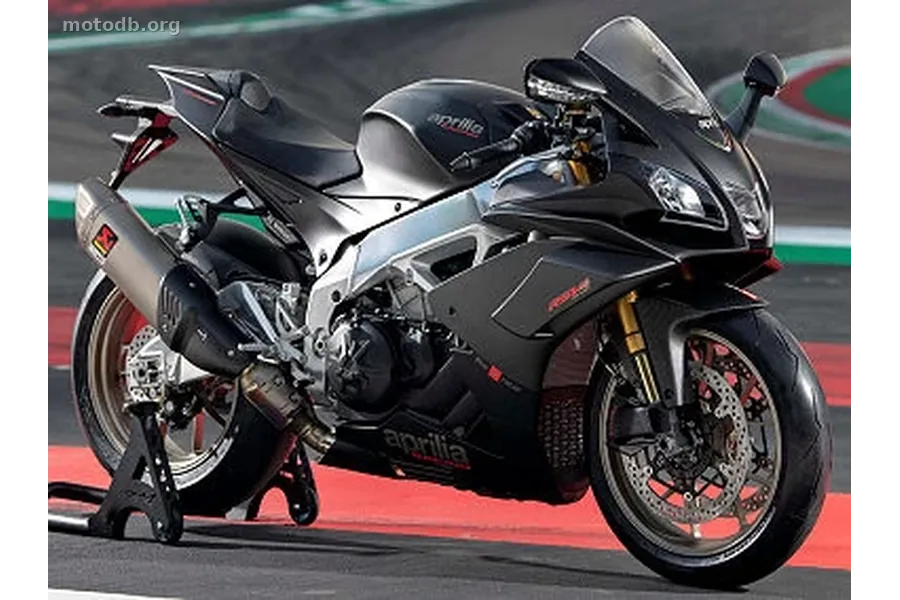
Key performance
Technical specifications
- Displacement
- 1099 cc → 1078 cc
- Power
- 220.0 ch @ 13000 tr/min (161.8 kW) → 217.0 ch @ 13200 tr/min (158.4 kW)
- Torque
- 127.0 Nm @ 10800 tr/min → 122.0 Nm @ 11000 tr/min
- Engine type
- 4 cylindres en V à 65°, 4 temps → V4, four-stroke
- Cooling
- liquide → Liquid
- Compression ratio
- — → 13.6:1
- Bore × stroke
- 81 x 52.32 mm → 81.0 x 52.3 mm (3.2 x 2.1 inches)
- Fuel system
- Injection Ø 52 mm → Injection. Airbox with front dynamic air intakes. 4 Weber-Marelli 48-mm throttle bodies with 4 injectors and latest generation Ride-by-Wire engine management. Choice of three different engine maps selectable by the rider with bike in motion: T (Track), S (Sport), R
- Valve timing
- — → Double Overhead Cams/Twin Cam (DOHC)
- Lubrication
- — → Wet sump lubrication system with oil radiator and two oil pumps (lubrication and cooling)
- Ignition
- — → Magneti Marelli digital electronic ignition system integrated in engine control system, with one spark plug per cylinder and “stick-coil” type coils
- Starter
- électrique → Electric
- Euro standard
- Euro 5+ → —
- Frame
- Double poutre périmétrique en aluminium → Aluminium dual beam chassis with cast and pressed sheet elements. (Sachs steering damper on APRC version)
- Gearbox
- boîte à 6 rapports → 6-speed
- Final drive
- Chaîne → Chain (final drive)
- Clutch
- — → Multiplate wet clutch with mechanical slipper system.
- Front suspension
- Fourche téléhydraulique inversée Öhlins Ø 43 mm Smart EC 2.0, déb : 125 mm → Öhlins fork with TIN surface treatment. Forged aluminium radial calliper mounting bracket. Completely adjustable spring preload and hydraulic compression and rebound damping.
- Rear suspension
- Monobras & mono-amortisseur Öhlins Smart EC 2.0, déb : 115 mm → Double braced aluminium swingarm; mixed low thickness and sheet casting technology. Sachs monoshock with piggy-back, fully adjustable in: spring preload, hydraulics in compression and rebound. APS progressive linkages.
- Front wheel travel
- — → 120 mm (4.7 inches)
- Rear wheel travel
- — → 130 mm (5.1 inches)
- Front brakes
- Freinage 2 disques Brembo Ø 330 mm, fixation radiale, étrier 4 pistons (Hypure monobloc) → Double disc. ABS. Floating stainless steel discs with lightweight stainless steel rotor with 6 studs. Brembo radial callipers with 4 diam. horizontally opposed 32 mm pistons. Sintered pads. Axial pump master cylinder and metal braided brake hoses.
- Rear brakes
- Freinage 1 disque Brembo Ø 220 mm, étrier 2 pistons → Single disc. ABS. Brembo floating calliper.
- Front tyre
- 120/70-17 → 120/70-ZR17
- Front tyre pressure
- — → 2.50 bar
- Rear tyre
- 200/55-17 → 200/55-ZR17
- Rear tyre pressure
- — → 2.90 bar
- Seat height
- 840.00 mm → 851.00 mm
- Wheelbase
- — → 1439.00 mm
- Ground clearance
- — → 125.00 mm
- Length
- — → 2052.00 mm
- Width
- — → 735.00 mm
- Height
- — → 1090.00 mm
- Fuel capacity
- 18.00 L → 18.50 L
- Weight
- 204.00 kg → 199.00 kg
- Dry weight
- — → 177.00 kg
- New price
- 26 999 € → 23 999 €
Engine
- Displacement
- 1078 cc
- Power
- 217.0 ch @ 13200 tr/min (158.4 kW)
- Torque
- 122.0 Nm @ 11000 tr/min
- Engine type
- V4, four-stroke
- Cooling
- Liquid
- Compression ratio
- 13.6:1
- Bore × stroke
- 81.0 x 52.3 mm (3.2 x 2.1 inches)
- Valves/cylinder
- 4
- Camshafts
- 2 ACT
- Fuel system
- Injection. Airbox with front dynamic air intakes. 4 Weber-Marelli 48-mm throttle bodies with 4 injectors and latest generation Ride-by-Wire engine management. Choice of three different engine maps selectable by the rider with bike in motion: T (Track), S (Sport), R
- Valve timing
- Double Overhead Cams/Twin Cam (DOHC)
- Lubrication
- Wet sump lubrication system with oil radiator and two oil pumps (lubrication and cooling)
- Ignition
- Magneti Marelli digital electronic ignition system integrated in engine control system, with one spark plug per cylinder and “stick-coil” type coils
- Starter
- Electric
Chassis
- Frame
- Aluminium dual beam chassis with cast and pressed sheet elements. (Sachs steering damper on APRC version)
- Gearbox
- 6-speed
- Final drive
- Chain (final drive)
- Clutch
- Multiplate wet clutch with mechanical slipper system.
- Front suspension
- Öhlins fork with TIN surface treatment. Forged aluminium radial calliper mounting bracket. Completely adjustable spring preload and hydraulic compression and rebound damping.
- Rear suspension
- Double braced aluminium swingarm; mixed low thickness and sheet casting technology. Sachs monoshock with piggy-back, fully adjustable in: spring preload, hydraulics in compression and rebound. APS progressive linkages.
- Front wheel travel
- 120 mm (4.7 inches)
- Rear wheel travel
- 130 mm (5.1 inches)
Brakes
- Front brakes
- Double disc. ABS. Floating stainless steel discs with lightweight stainless steel rotor with 6 studs. Brembo radial callipers with 4 diam. horizontally opposed 32 mm pistons. Sintered pads. Axial pump master cylinder and metal braided brake hoses.
- Rear brakes
- Single disc. ABS. Brembo floating calliper.
- Front tyre
- 120/70-ZR17
- Front tyre pressure
- 2.50 bar
- Rear tyre
- 200/55-ZR17
- Rear tyre pressure
- 2.90 bar
Dimensions
- Seat height
- 851.00 mm
- Wheelbase
- 1439.00 mm
- Ground clearance
- 125.00 mm
- Length
- 2052.00 mm
- Width
- 735.00 mm
- Height
- 1090.00 mm
- Fuel capacity
- 18.50 L
- Weight
- 199.00 kg
- Dry weight
- 177.00 kg
- New price
- 23 999 €
Overview
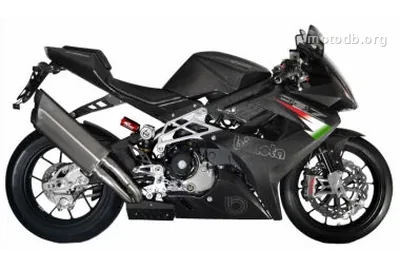
Twenty years after laying the foundations of its legend with the first RSV, Noale has built something that resembles less a road bike and more an industrial argument. The Aprilia RSV4 1100 Factory 2020 doesn’t seek to seduce the average buyer. It addresses those who know how to read a technical specification like a development program, and who accept paying 23,999 euros to access this level of preparation. This price may surprise when compared to a Kawasaki ZX-10R or a Yamaha R1, but it says something precise about what one is buying.
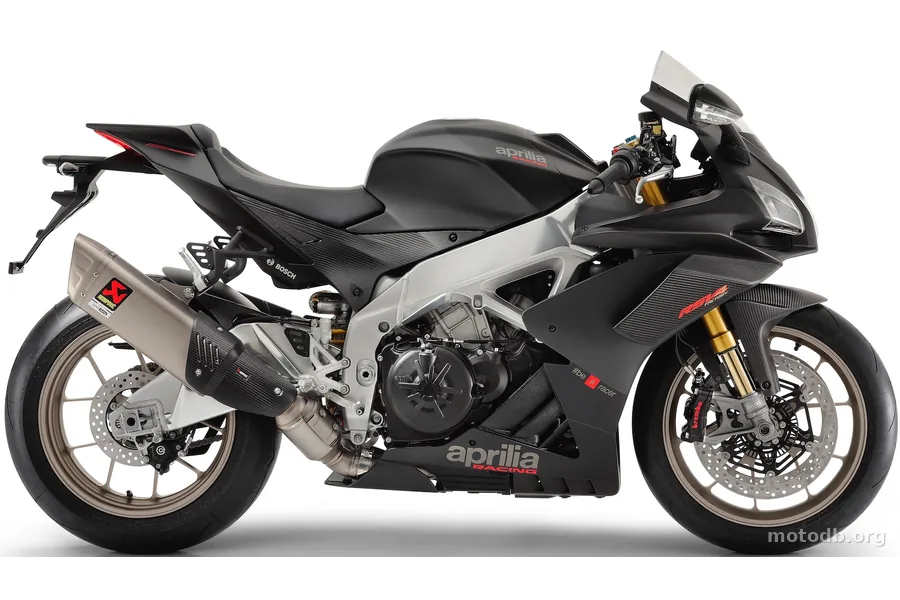
What changes on this model year is first what is not visible. The 65-degree V4 goes to 1078 cm3 by increasing the bore to 81 mm, the stroke remaining at 52.3 mm. This change in displacement is not mere cosmetic work. The result rises to 217 horsepower at 13,200 rpm and 122 Nm of torque at 11,000 rpm. To put things in perspective, the Ducati Panigale V4 S is one horsepower behind, and the BMW M 1000 RR did not yet exist. On the Aprilia RSV4 1100 Factory technical specification, the figures speak clearly, but it is above all the way the power is delivered, spread, filtered by the fourth-generation APRC electronics, that makes the difference between an exploitable machine and a dyno whim. Traction control on 8 levels, wheelie control, launch control, the bidirectional quickshifter, and cornering ABS form a safety net fine enough not to stifle pleasure while keeping the rider on the trajectory.
The real novelty, the one that justifies the move to this generation rather than looking for an Aprilia RSV4 1100 Factory 2019 used at a reduced price, is the adoption of semi-active Öhlins SMART EC 2.0 suspensions. Aprilia resisted this trend longer than its direct rivals, the Yamaha R1-M and the Ducati Panigale V4 S having gained ground in this area. The resistance eventually yielded after two years of joint development with the Swedes. The system offers three automatic regulation modes for clean track, degraded track, and road, plus three manual modes with memorized presets. Aprilia Suspension Control allows refinement of each parameter via a touch interface that replaces the screwdriver on hydraulic adjustments. The announced timekeeping gain approaches half a second per lap, which, at this level of competition, represents an eternity.
The double-beam aluminum chassis remains one of the strengths of the RSV4 since its debut, and the Factory version pushes this advantage by allowing adjustment of the engine position, steering head angle, and swingarm pivot point. The wheelbase of 1439 mm, the four-piston 32 mm Brembo Stylema calipers, and the stainless steel floating discs form a braking-chassis combination at the level of the best machines in the category. The titanium Akrapovic exhaust is standard equipment, which explains in part why the machine tops out at 199 kg fully fueled despite the additional electronics. The wings borrowed from the MotoGP RS-GP generate downforce at high speed, at the cost of a slightly less streamlined silhouette than before.
Looking for an Aprilia RSV4 1100 Factory 2020 for sale today means facing a machine that has not aged in its design. Subsequent evolutions, whether the Aprilia RSV4 1100 Factory 2022 or the Euro 5 version, have not fundamentally called into question the architecture defined here. At 305 km/h at maximum speed, with 200 km/h reached in 7.5 seconds, this motorcycle belongs to a segment that has no vocation to be reasonable. It addresses experienced riders, accustomed to circuits, capable of exploiting what the electronics allow without being dependent on them. For others, the power and the 851 mm seat will quickly remind them that the Aprilia RSV4 1100 Factory was not designed for compromises.
Standard equipment
- Assistance au freinage : ABS Bosch 9MP
- Bluetooth
Practical info
- La moto est accessible aux permis : A
Reviews & comments
No reviews yet. Be the first to share your opinion!