Key performance
Technical specifications
Engine
- Displacement
- 998 cc
- Power
- 138.0 ch @ 9500 tr/min (101.5 kW)
- Torque
- 101.0 Nm @ 8000 tr/min
- Engine type
- Bicylindre en V à 60°, 4 temps
- Cooling
- liquide
- Compression ratio
- 11.8:1
- Bore × stroke
- 97 x 67,5 mm
- Valves/cylinder
- 4
- Camshafts
- 2 ACT
- Fuel system
- Injection Ø 57 mm
Chassis
- Frame
- double poutre en alliage alu
- Gearbox
- boîte à 6 rapports
- Final drive
- Chaîne
- Front suspension
- Fourche téléhydraulique inversée öhlins Ø 43 mm, déb : 120 mm
- Rear suspension
- Mono-amortisseur Öhlins, déb : 133 mm
Brakes
- Front brakes
- Freinage 2 disques Ø 320 mm, fixation radiale, étrier 4 pistons
- Rear brakes
- Freinage 1 disque Ø 220 mm, étrier 2 pistons
- Front tyre
- 120/70-17
- Rear tyre
- 190/50-17
Dimensions
- Seat height
- 810.00 mm
- Fuel capacity
- 18.00 L
- Weight
- 211.00 kg
- Dry weight
- 185.00 kg
- New price
- 17 878 €
Overview
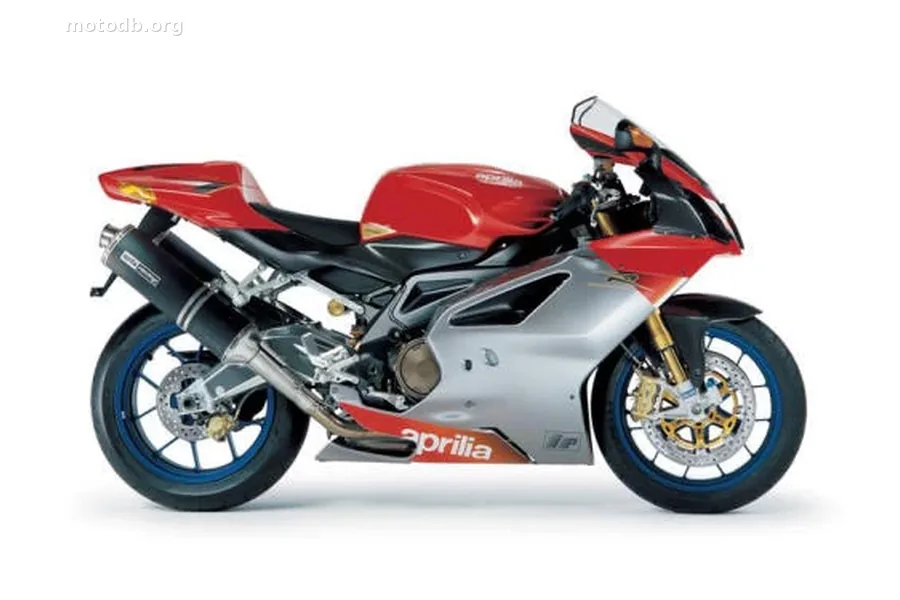
When Aprilia decides to take an already formidable sportbike to its ultimate level of expression, the result is the RSV 1000 Factory. Not a simple marketing exercise, not a carbon kit hastily glued on to justify an inflated price tag. A genuine step up, conceived part by part, transforming an excellent foundation into something altogether more serious.
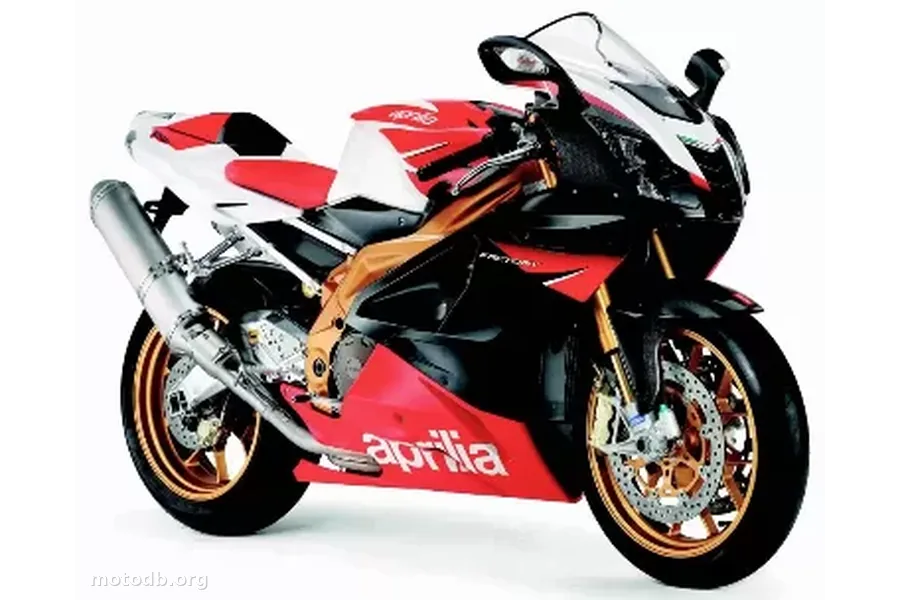
The engine, first. The 60° V-twin of 997 cc goes untouched, and rightly so: its 138 horsepower at 9,500 rpm and 101 Nm of torque at 8,000 rpm already make a compelling case that's hard to argue with. It's in the specification where the Factory clearly distinguishes itself from the standard version. Suspension duties are handed to Öhlins — a 43 mm inverted fork up front, a monoshock at the rear, plus a twin-piston steering damper from the same Swedish manufacturer. The wheels are forged. Carbon fibre components complete the package. The result: 185 kg dry, some 4 kg less than the Ducati 999 S, which cost €3,900 more at the time. At €17,878, the Factory plays in a very exclusive league while delivering more on the technical front.
What this motorcycle does well, it does with disarming precision. The twin-spar aluminium frame, paired with the Öhlins running gear, produces a geometry that responds without ambiguity. The brakes — twin 320 mm radially mounted four-piston discs up front, a 220 mm disc at the rear — handle the rest. The claimed top speed of 280 km/h is no rhetorical flourish. On circuit, lap times fall quickly, and not only in the hands of seasoned riders. This is one of the least expected qualities of this machine: it doesn't reserve its finest hours for experts alone. The intermediate rider who knows how to read a track will also extract something substantial from it.
That said, one must accept the contract as written. The fairing of this generation favours line over protection. Compared to the previous RSV, wind exposure is more pronounced, and high-speed comfort on open roads is less generous. The 810 mm seat height and circuit-oriented riding position make no argument for daily commuting. The 18-litre tank provides acceptable range, nothing more. This Factory is built for sport, and it makes no apologies for it. Removing the indicators and numberplate, as those who tested it at launch were already suggesting, would almost be a formality.
In 2005, the Aprilia RSV 1000 Factory represented the best that the Noale manufacturer knew how to build in the realm of road-legal supersports. It speaks to the rider who knows circuits, who seeks a machine capable of holding its own against semi-professional builds without paying the price of an outright competition bike. Faced with the Ducati 999 S or the Honda RC51 of the era, it stated its case with a clarity of argument rarely so well articulated.
Practical info
- La moto est accessible aux permis : A
Indicators & positioning
Similar bikes
CBR 1000 RR Fireblade Repsol Replica
1000 ZX-10R 30ème anniversaire
Reviews & comments
No reviews yet. Be the first to share your opinion!