Key performance
Technical specifications
Engine
- Displacement
- 600 cc
- Power
- 98.0 ch @ 12000 tr/min (72.1 kW)
- Torque
- 62.8 Nm @ 10000 tr/min
- Engine type
- 4 cylindres en ligne, 4 temps
- Cooling
- liquide
- Compression ratio
- 12.2 : 1
- Bore × stroke
- 65.5 x 44.5 mm
- Valves/cylinder
- 4
- Camshafts
- 2 ACT
- Fuel system
- Injection
Chassis
- Frame
- en alu coulé sous pression
- Gearbox
- boîte à 6 rapports
- Final drive
- Chaîne
- Front suspension
- Fourche téléhydraulique Ø 43 mm, déb : 130 mm
- Rear suspension
- Mono-amortisseur, déb : 130 mm
Brakes
- Front brakes
- Freinage 2 disques Ø 298 mm, étrier 4 pistons
- Rear brakes
- Freinage 1 disque Ø 245 mm, étrier 2 pistons
- Front tyre
- 120/70-17
- Front tyre pressure
- 2.25 bar
- Rear tyre
- 180/55-17
- Rear tyre pressure
- 2.50 bar
Dimensions
- Seat height
- 795.00 mm
- Fuel capacity
- 19.40 L
- Weight
- 207.00 kg
- Dry weight
- 187.00 kg
- New price
- 7 390 €
Overview
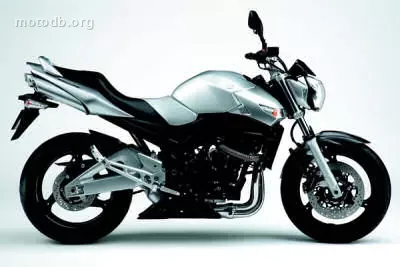
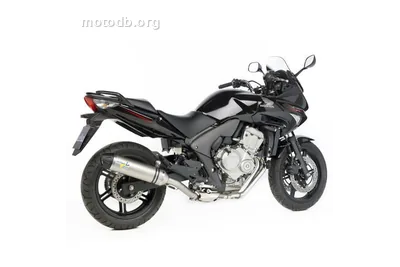
What if versatility was the key? Yamaha seemed to have found the formula with the Fazer, but with this 2005 redesign, it takes a step forward. We’re no longer simply talking about a comfortable motorcycle, but a machine that seriously wants to play in the sportbike arena, without abandoning its touring fundamentals. The heart of this transformation? An engine that is no longer a simple toned-down derivative, but a true adaptation of the R6 block. Yamaha intelligently reworked the camshafts and ducts so that this 600 cm3 four-cylinder engine, developing 98 horsepower at 12,000 rpm, is less voracious at high RPM. The result is an engine that is more docile in the low and mid-range, where the torque of 62.8 Nm at 10,000 rpm becomes accessible, without sacrificing the characteristic fire of the family. It's a mechanical system that knows how to be civil in the city, then unleash its sporty character as soon as the curves come.
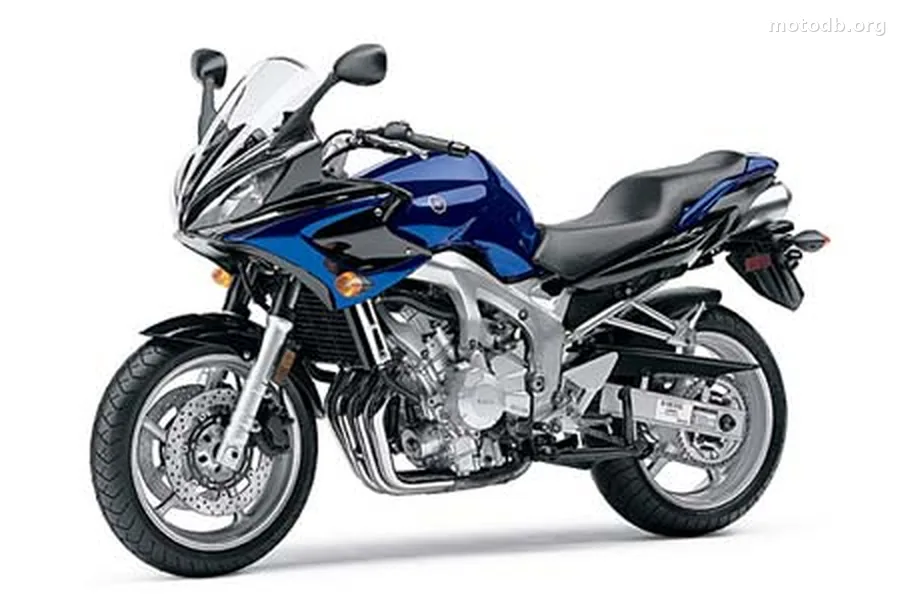
This new Yamaha FZ 6 Fazer doesn't just feature a reworked engine. Its die-cast aluminum frame, a process dear to the brand, is a masterpiece. Without visible welds, it offers valuable rigidity and contributes to this sculpted line, which is much more aggressive than that of the previous generation. Engineers have also redesigned the entire geometry: a longer swingarm, a rake reduced to 25 degrees. These modifications, combined with a wider rear tire (180/55), aim to offer superior handling and traction. Yamaha even promises a 10% gain in the latter. The chassis thus becomes more precise, more engaged, without becoming intimidating. With a declared weight of 207 kg fully fueled, it remains within the limits of an accessible machine.
But this evolution towards sport comes at a price. The tank loses 3 liters, falling to 19.4 liters, a concession to the streamlined look that could worry long-distance riders. The exhaust, catalyzed and located under the seat, contributes to this more tense aesthetics, but the question of range remains open. Injection, new for the Fazer, should help contain consumption. The equipment follows this upgrade: a digital dashboard inspired (perhaps too much) by some competitors, an anti-theft system integrated into the key, and a 43 mm fork derived from the 1000 Fazer. Braking, with its two 298 mm front discs, remains effective without being that of a pure R1.
So, who is the rider of this Yamaha FZ 6 Fazer? It's the one who seeks synthesis. He wants the character and reputation of a sportbike engine, but refuses the demands and uncomfortable posture of a pure R6. He appreciates a seat height of 795 mm which remains reasonable, improved maneuverability for the city or winding roads, and this versatility that allows you to do everything, from the daily commute to the summer vacation. Faced with competitors such as the Honda CBR600F or the Suzuki GSX600F, it positions itself as the most determined to flirt with the world of sportbikes, without completely tipping over into it. It's an intelligent compromise machine, but a compromise that, in 2005, clearly and stylishly leans towards the performance side of the scale.
Practical info
- La moto est accessible aux permis : A
Reviews & comments
No reviews yet. Be the first to share your opinion!