Key performance
Technical specifications
Engine
- Displacement
- 599 cc
- Power
- 102.0 ch @ 12000 tr/min (75.0 kW)
- Torque
- 63.7 Nm @ 10500 tr/min
- Engine type
- 4 cylindres en ligne, 4 temps
- Cooling
- liquide
- Compression ratio
- 12 : 1
- Bore × stroke
- 67 x 42.5 mm
- Valves/cylinder
- 4
- Camshafts
- 2 ACT
- Fuel system
- Injection Ø 36 mm
Chassis
- Frame
- Monobackbone en aluminium moulé
- Gearbox
- boîte à 6 rapports
- Final drive
- Chaîne
- Front suspension
- Fourche téléhydraulique inversée Ø 41 mm, déb : 120 mm
- Rear suspension
- Mono-amortisseur, déb : 128 mm
Brakes
- Front brakes
- Freinage 2 disques Ø 296 mm, étrier 2 pistons
- Rear brakes
- Freinage 1 disque Ø 240 mm, étrier simple piston
- Front tyre
- 120/70-17
- Front tyre pressure
- 2.50 bar
- Rear tyre
- 180/55-17
- Rear tyre pressure
- 2.90 bar
Dimensions
- Seat height
- 800.00 mm
- Fuel capacity
- 19.00 L
- Weight
- 200.00 kg
- Dry weight
- 173.00 kg
- New price
- 6 999 €
Overview
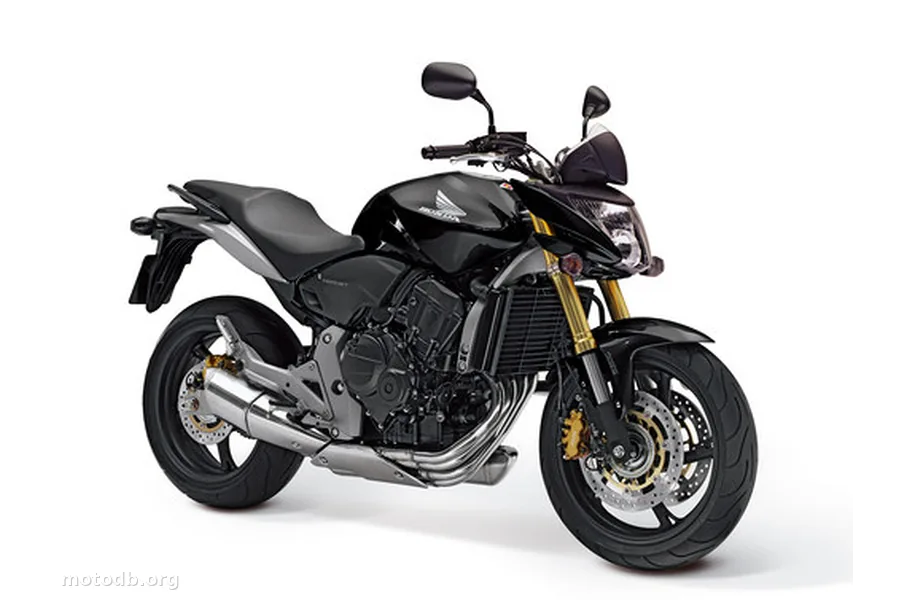
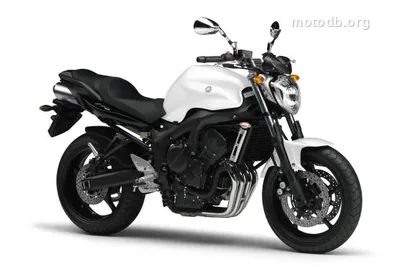
2014 marks the last year of the 600 Hornet’s presence in the Honda catalog... for the few models that remain in stock. This powerhouse is gradually fading away to make way for the new CB 650 F. A shame, because even with a smaller displacement compared to the "800s," the motorcycle remains a thrilling and effective toy.
It took time for the Hornet to find, adopt, integrate its true face; or rather, a front end whose identity truly corresponds to the nickname that Honda gave it. It is undeniable, it is stylish, it is insectivorous, and it stands out. Even those who know nothing about motorcycles express their first impression when seeing the CB 600 F 2011 / 2014: "this motorcycle has the face of a hornet!" And what does Hornet mean in English, mmmmm…?
However, the original idea behind the 2011-2014 Hornet was to reshape its front end to better resemble that of the big brother CB 1000 R. It is true that the inspiration is undeniable as well as subtle, but the designer let his pencil stray slightly so that the front end adopted a more striking design. It only lacks mandibles to eat reckless drivers raw. As long as the CB 1000 R doesn’t object, we’re going to steal a few style ideas from it. So be it, and the dashboard evolves in this spirit, being completely redesigned, with a now entirely digital instrumentation. Highly controversial upon its release, the rear section becomes noticeably more incisive, its stinger ending with a now LED rear light.
Relooked by Boxer Design, Wakisashi version, R version, adoption of an inverted fork in 2005, CBR 600 engine from 2007 during its major evolution the same year, Honda’s favorite roadster has evolved a lot since its birth in 1998. And yet, it remains surprisingly faithful to its original technical principle: a sporty 600 engine highlighted by a backbone-type diamond frame. Let’s relativize: the chosen elements have quite a bit changed, especially in 2007. It is at this time that the frame traded steel for aluminum. The inverted fork had already been there since 2005. Faithful to the CBR’s 4-cylinder, the CB 600 F surprises everyone with this choice. Indeed, stung by the success of the Z 750, all Japanese mid-displacement roadsters moved up to the next cubic displacement level. The Hornet is the only Japanese model to display 600 cm3 without complex. This engine does not disappoint, on the contrary. Lively and eager to rev, this powerhouse delivers all the pep needed for this mid-size streetfighter. But facing it, there’s more torque on the Yamaha FZ8, Kawasaki Z 800 and Suzuki 750 GSR.
Under the more CB-1000-R-like robe, the Hornet renews its confidence in its sure and proven values. Namely, a 102 horsepower engine held by the discreet aluminum frame, two 296 mm brake discs that can be assisted by combined ABS, a 41 mm inverted fork but no radial brake calipers. A list of options allows for a certain level of personalization. The essential thing is more in the ease and first-class comfort of the Hornet.
M.B - Photos constructeur
Standard equipment
- Assistance au freinage : Optional C-ABS
Practical info
- La moto est accessible aux permis : A
Reviews & comments
No reviews yet. Be the first to share your opinion!