Key performance
Technical specifications
Engine
- Displacement
- 660 cc
- Power
- 81.0 ch @ 10250 tr/min (59.6 kW)
- Torque
- 64.0 Nm @ 6250 tr/min
- Engine type
- In-line three, four-stroke
- Cooling
- Liquid
- Compression ratio
- 12.0:1
- Bore × stroke
- 74.0 x 51.1 mm (2.9 x 2.0 inches)
- Valves/cylinder
- 4
- Camshafts
- 2 ACT
- Fuel system
- Injection. Multipoint sequential electronic fuel injection with electronic throttle control
- Valve timing
- Double Overhead Cams/Twin Cam (DOHC)
- Starter
- Electric
Chassis
- Frame
- Tubular steel perimeter
- Gearbox
- 6-speed
- Final drive
- Chain (final drive)
- Clutch
- Wet, multi-plate, slip
- Front suspension
- Showa 41mm upside down separate function cartridge forks
- Rear suspension
- Showa monoshock RSU, with remote hydraulic preload adjustment
- Front wheel travel
- 150 mm (5.9 inches)
- Rear wheel travel
- 150 mm (5.9 inches)
Brakes
- Front brakes
- Double disc. ABS. Floating discs, Nissin 2-piston calipers
- Rear brakes
- Single disc. ABS. Nissin single piston sliding caliper.
- Front tyre
- 120/70-ZR17
- Front tyre pressure
- 2.30 bar
- Rear tyre
- 180/55-ZR17
- Rear tyre pressure
- 2.50 bar
Dimensions
- Seat height
- 835.00 mm
- Wheelbase
- 1418.00 mm
- Width
- 834.00 mm
- Height
- 1398.00 mm
- Fuel capacity
- 17.20 L
- Weight
- 206.80 kg
- New price
- 9 695 €
Overview
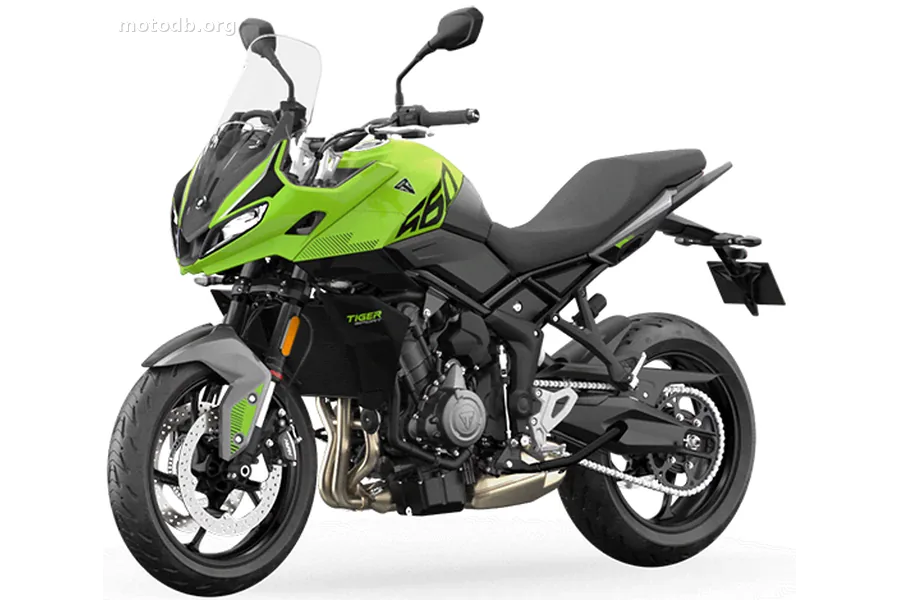
Can you really talk about a "trail" bike when it has 17-inch wheels and sporty fairing? Triumph, with this Tiger Sport 660, plays with words and categories to offer a hybrid that shakes up the usual codes. In the landscape of entry-level machines, the twin reigns supreme in the sport-touring adventure segment. Yamaha with its Tracer 7, Suzuki with the V-Strom 650, Kawasaki with the Versys, all have chosen the simplicity of a twin-cylinder engine. Triumph, by integrating its 660 triple cylinder into this Tiger Sport, throws a stone into the pond. This engine, boasting 81 horsepower, is the most powerful in the group. It also offers 64 Nm of torque, a value that puts it at the top, giving it a more exhilarating character from the first twist of the throttle. This triple architecture gives it a suppleness and linearity that twins, often more rugged, cannot match. It is a significant argument for those seeking a versatile motorcycle but with a real temperament.
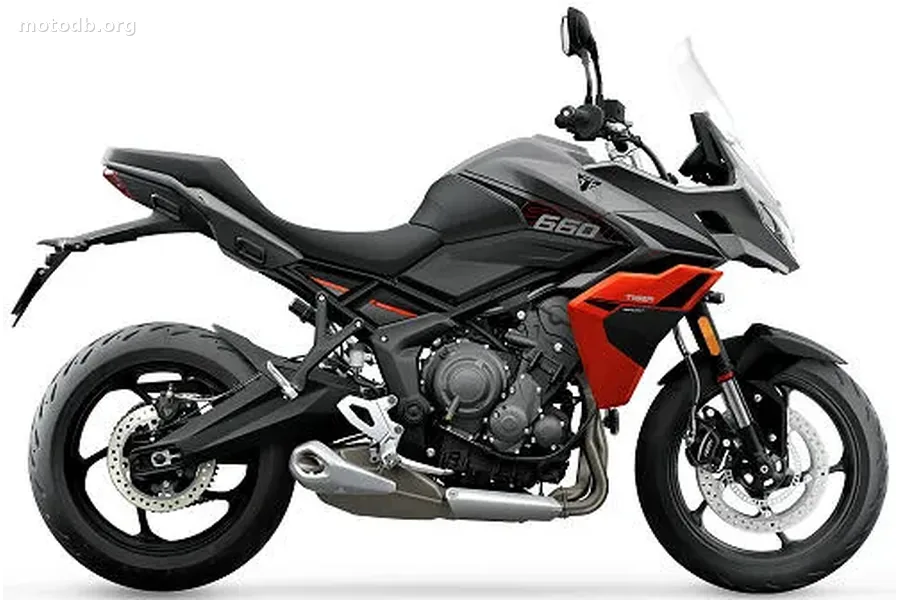
The chassis, for its part, is an intelligent adaptation of the Trident’s. Triumph has increased the ground clearance, with a seat height of 835 mm, and has given the Showa suspension more travel, 150 mm front and rear, to absorb road imperfections without sacrificing road handling. The steel tubular frame and slightly reworked swingarm support a wet weight of 206 kg, quite honorable for this category. You can feel that the goal was to create a comfortable machine for long journeys, with a wider and higher handlebar, better positioned footrests, and a more welcoming seat for the passenger. The manually adjustable screen is a practical detail that makes a difference. However, Triumph seems to have retained some questionable economy habits. Offering USB and 12V sockets as options on a motorcycle designed for escapades is a surprising choice, almost contradictory to its versatility ethos. The same question arises with the choice of rear tire, a 180/55, which seems dictated by looks or industrial logic rather than agility. A 150 would probably have made the machine more lively and less expensive to maintain.
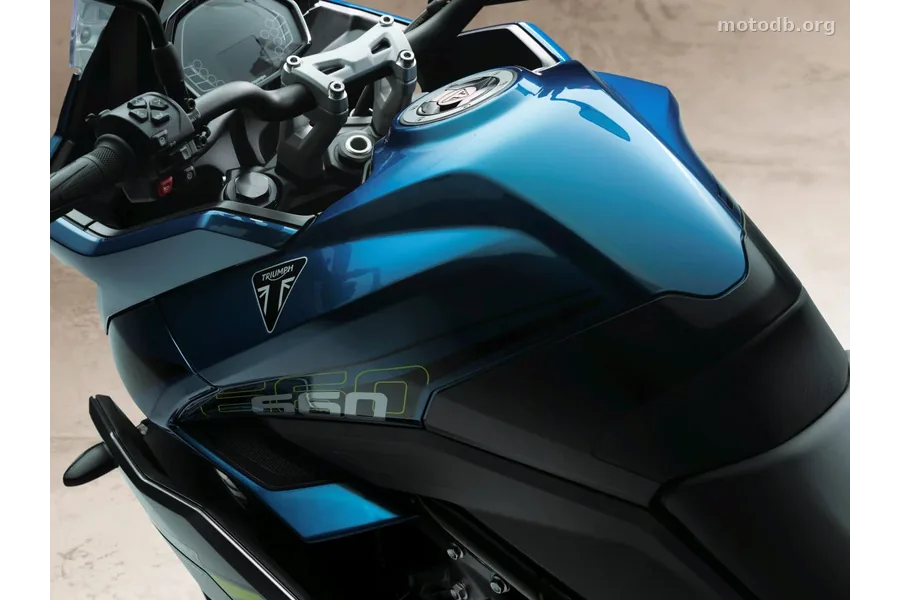
Electronics are another area where the Tiger Sport 660 wants to stand out. It offers two riding modes, Rain and Road, with switchable traction control, a level of equipment that puts pressure on competitors who are often more basic. The color TFT dashboard, borrowed from the Trident but in a redesigned housing, is clear and complete. It also serves as a gateway to Triumph’s connected option, allowing you to manage navigation, music, or calls. It is a strong argument for the modern touring public, who want to stay connected without sacrificing safety. The promised range is interesting, with a consumption of 4.5 liters per 100 km and a 17.2-liter tank. This theoretically allows for long journeys, but with a full load and luggage, this order of magnitude will probably need to be revised. A serious road test of the Triumph Tiger Sport 660 will be needed to verify this data on the road.
Ultimately, what is the target audience for this machine? The ambitious beginner who wants a motorcycle capable of everything without being intimidating, the touring rider looking for a more characterful alternative to Japanese twins, and even the urban rider who will appreciate its maneuverability and sporty looks. Its price, around 9700 euros, is a subject. It is slightly higher than that of its twin-cylinder rivals, but it is justified by the Triumph badge, the sophistication of the triple-cylinder engine, and the electronic equipment. For those considering buying a Triumph Tiger Sport 660, the question will be: is it worth paying a little more for this mechanical originality and versatility tinged with sportiness, or turning to the safe bets, sometimes less exciting, of the twin? Triumph Tiger Sport 660 forums are already debating this. Triumph, with this machine, does not offer a simple adventurer. It offers a unique cocktail, a road bike dressed for adventure, powered by an engine that sings differently. It is a risk, but it is also what could make it a success.
Standard equipment
- Assistance au freinage : ABS
- Nombre de mode de conduite : 2
- Jantes aluminium
- Indicateur de vitesse engagée
- Contrôle de traction
- Embrayage anti-dribble
Practical info
- Véhicule accessible au permis A2 ou bridable à 47.5ch / 35 Kw
- La moto est accessible aux permis : A, A2
Reviews & comments
No reviews yet. Be the first to share your opinion!