Key performance
Technical specifications
Engine
- Displacement
- 675 cc
- Power
- 128.0 ch @ 12500 tr/min (93.4 kW)
- Torque
- 74.0 Nm @ 11900 tr/min
- Engine type
- In-line three, four-stroke
- Cooling
- Liquid
- Compression ratio
- 13.1:1
- Bore × stroke
- 76.0 x 49.6 mm (3.0 x 2.0 inches)
- Valves/cylinder
- 4
- Fuel system
- Injection. Multipoint sequential electronic fuel injection with forced air induction and SAI
- Valve timing
- Double Overhead Cams/Twin Cam (DOHC)
- Ignition
- Digital-inductive type via engine management system
- Starter
- Electric
Chassis
- Frame
- Aluminium beam twin spar. Braced, twin-sided, aluminium alloy with adjustable pivot position swing arm.
- Gearbox
- 6-speed
- Final drive
- Chain (final drive)
- Clutch
- Wet. multi-plate, sipper
- Front suspension
- Öhlins 43mm upside down NIX30 forks with adjustable preload, rebound and compression damping.
- Rear suspension
- Öhlins TTX36 twin tube monoshock with piggy back reservoir, adjustable, rebound and compression damping.
- Front wheel travel
- 120 mm (4.7 inches)
- Rear wheel travel
- 133 mm (5.2 inches)
Brakes
- Front brakes
- Double disc. Brembo 4-piston radial mono-block calipers, switchable ABS.
- Rear brakes
- Single disc. Brembo single piston caliper, switchable ABS.
- Front tyre
- 120/70-ZR17
- Rear tyre
- 180/55-ZR17
Dimensions
- Seat height
- 830.00 mm
- Wheelbase
- 1375.00 mm
- Length
- 2045.00 mm
- Width
- 695.00 mm
- Height
- 1112.00 mm
- Fuel capacity
- 17.40 L
- Weight
- 189.00 kg
- Dry weight
- 167.00 kg
Overview
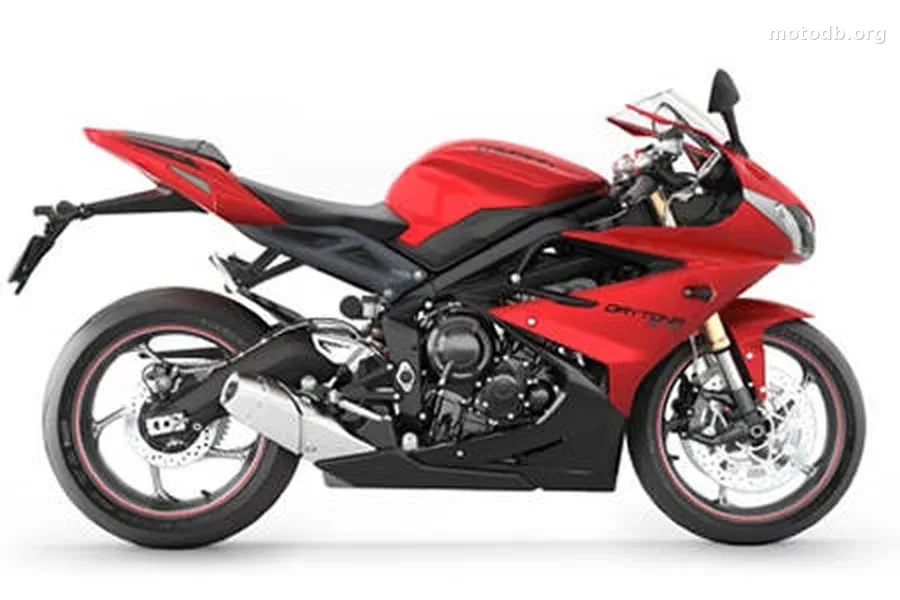
2016. The year the Euro4 regulations signaled the death knell for an entire category. The Triumph Daytona 675 bows out in a supersport market in full decline, and it's a real loss. Not one of those disappearances we greet with indifference—forgive me, that we see pass without a second glance. This one leaves a void that few machines will be able to fill, because it embodied something rare in the aseptic universe of modern sportbikes: a character forged by a three-cylinder engine, an immediately recognizable sonic identity, a British temperament that had nothing to envy from the Japanese four-cylinder engines of the same displacement.
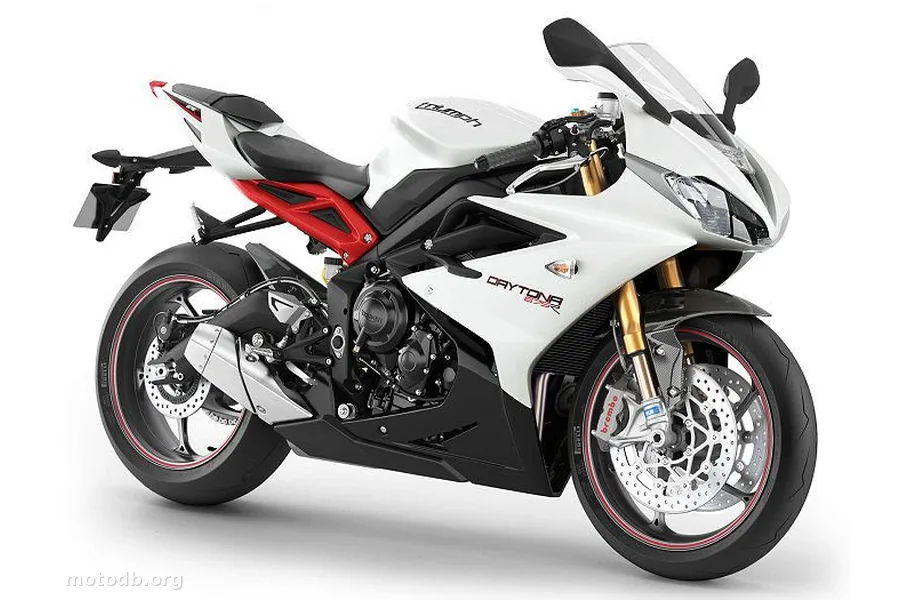
This 2016 model year is the culmination of an evolution that began long ago. Triumph didn't just refresh a few plastics to give itself a clear conscience. The engine has been thoroughly reworked: the bore increases to 76 mm for a reduced stroke of 49.6 mm, which makes the block more square, more responsive to revs. The maximum RPM climbs to 14,400 rpm, the valves switch to titanium, and two injectors per cylinder now feed each combustion chamber with greater precision. The result is 128 horsepower at 12,500 rpm and 74 Nm of torque. On the official Triumph Daytona 675 technical specification sheet, these figures don't tell the whole story. What isn't measured is the way this three-cylinder builds its power, available and meaty well before maximum RPM, where a Yamaha or Honda four-cylinder forces you to keep your right wrist pinned in the redline.
The chassis underwent the same treatment. The aluminum frame goes from eleven to eight sections, the wheels each lose 500 grams, the rake is tightened from 23.9 to 22.9 degrees. The wheelbase is shortened to 1375 mm, the trail reduced to 87.2 mm, an asymmetrical swingarm to accommodate the exhaust repositioned under the engine: all choices that shift the masses towards the center of gravity. Those who lament the disappearance of the under-seat silencer, a historical emblem of the Triumph Daytona 675 from 2006 to the latest versions, must admit that the logic of efficiency prevails over nostalgia. Fully adjustable Kayaba suspension, with separate low and high-speed compression adjustment, complements a chassis that the Triumph Daytona 675 R pushes even further into the extreme. Four-piston Nissin calipers bite down on 310 mm discs, and the switchable ABS even integrates a track mode to allow for a slight controlled rear drift.
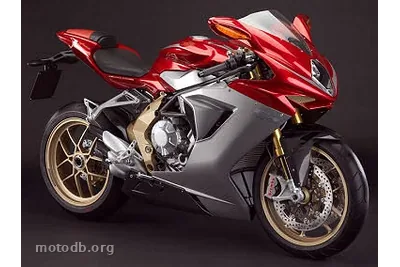
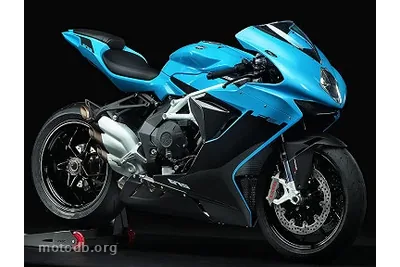
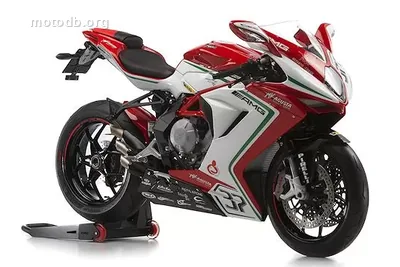
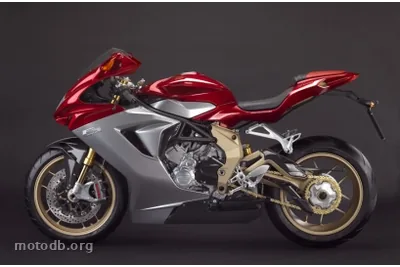
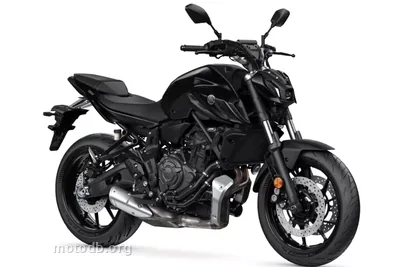
At 167 kg dry weight for 187 kg fully fueled and a seat height of 820 mm, this machine is primarily aimed at riders who know what they are looking for. Not beginners, who will find in the A2 license a sufficient argument to look elsewhere, even if the A2-restricted Triumph Daytona 675 exists. Not touring riders either, who will suffer after fifty kilometers in a frankly forward-leaning riding position. Its natural target is the weekend track rider, someone looking for a Triumph Daytona 675 capable of competing with the MV Agusta F3 or provoking the Yamaha R6 without paying the price of a Panigale. At €12,790 new, the Triumph Daytona 675 price remains defensible in its category, even if the used Triumph Daytona 675 now constitutes a tempting alternative for those who want to access the myth without paying the full price.
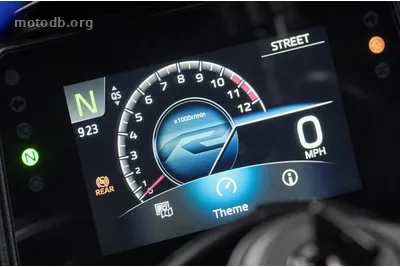
What is lacking in this final version can be frankly named: no traction control, no multiple riding modes, electronics reduced to ABS and anti-wheelie. The MV Agusta already offered more in this area. But Triumph chose mechanical purity over screen menus, and this choice remains consistent with the machine's DNA. The Triumph Daytona 675 2013 laid the foundations, the following model years refined the result without betraying the spirit. It stops in 2016 at the peak of its form, which is perhaps the best possible exit.
Reviews & comments
No reviews yet. Be the first to share your opinion!