Key performance
Technical specifications
Engine
- Displacement
- 689 cc
- Power
- 73.4 ch @ 8750 tr/min (54.0 kW)
- Torque
- 68.0 Nm @ 6500 tr/min
- Engine type
- Bicylindre en ligne, parallèle, 4 temps, calé à 270°
- Cooling
- liquide
- Compression ratio
- 11.5 : 1
- Bore × stroke
- 80 x 68.6 mm
- Valves/cylinder
- 4
- Camshafts
- 2 ACT
- Fuel system
- Injection Ø nc
- Starter
- électrique
- Euro standard
- Euro 5+
Chassis
- Frame
- type diamant en acier
- Gearbox
- boîte à 6 rapports
- Final drive
- Chaîne
- Front suspension
- Fourche téléhydraulique inversée Ø 41 mm, déb : 120 mm
- Rear suspension
- Mono-amortisseur, déb : 121 mm
Brakes
- Front brakes
- Freinage 2 disques Advics Ø 298 mm, fixation radiale, étrier 4 pistons
- Rear brakes
- Freinage 1 disque Advics Ø 245 mm, étrier simple piston
- Front tyre
- 120/70-17
- Rear tyre
- 180/55-17
Dimensions
- Seat height
- 830.00 mm
- Seat type
- Selle biplaces
- Fuel capacity
- 14.00 L
- Weight
- 189.00 kg
- New price
- 10 799 €
Overview
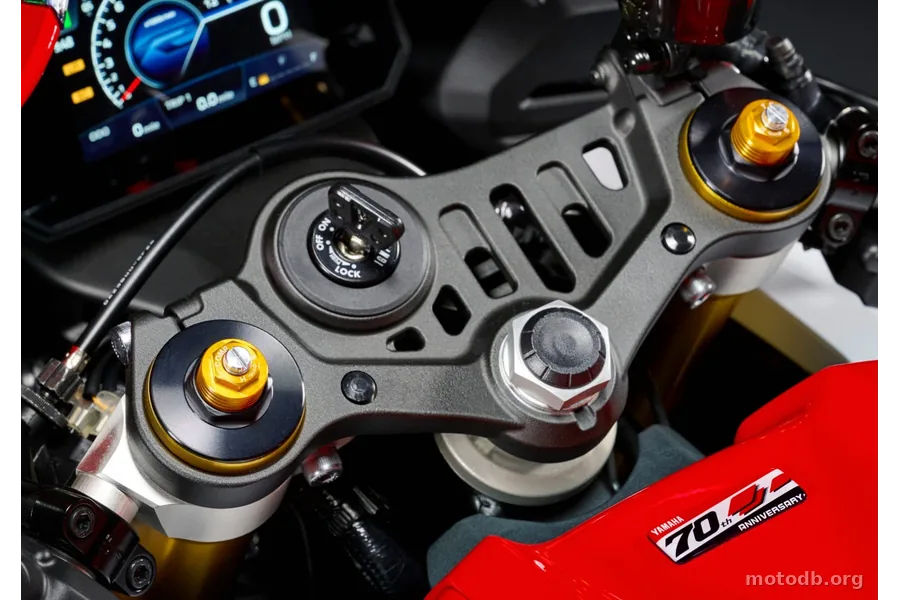
Can you wear a legendary livery without having the track record to match? That's the whole paradox of this 2026 Yamaha R7, dressed in the colors of the brand's 70th anniversary. Immaculate white, vivid red, Speedblocks emblazoned on the fairing sides, and a gold badge on the tank: the outfit is that of a World Superbike warrior. The 689 cc parallel twin beating beneath it, however, puts out 73.4 horsepower at 8,750 rpm. We're a long way — a very long way — from the mythical YZF-R7 OW02 and its Endurance racing victories. Yamaha is trading on visual lineage, not raw power. And you have to admit, the brushstroke works.
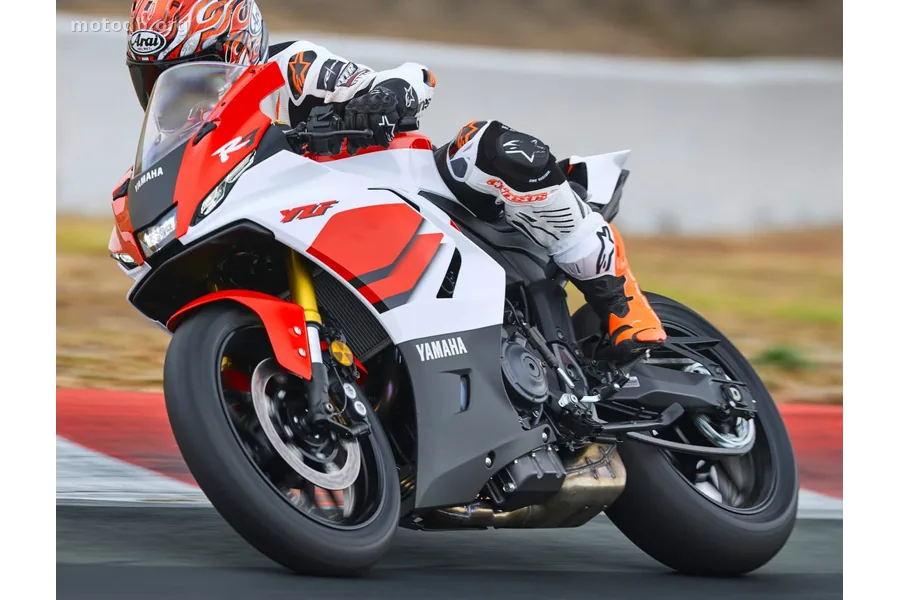
Yet this 2026 model year isn't just a simple color change. Yamaha has reworked the R7 in depth. The diamond-type steel frame has been reinforced, the SpinForged wheels shed weight, the 41 mm inverted fork has been retuned, and the redesigned fairing sharpens the silhouette. The engine, still set at a 270° crank angle for that distinctive exhaust note and characteristic torque delivery, meets Euro 5+ without sacrificing character. The 68 Nm available from just 6,500 rpm provide strong drive out of corners — an asset the Aprilia RS 660 and Kawasaki Ninja 650 know well in this segment. The riding position, criticized on the previous generation for being too aggressive for daily use, has been revised. Good news for those who don't ride exclusively on track.
The most dramatic leap is in electronics. The old R7, it must be said, looked almost anachronistic with ABS as its only safety net. The 2026 version packs an IMU inertial platform, five riding modes, lean-sensitive traction control and ABS, anti-wheelie, slide control, engine brake management, a standard Up & Down quickshifter, and even a launch assist. On paper, that's the equipment level of a sportbike twice as powerful. This technological bounty on a bike weighing 189 kg wet and making 73 horsepower may come as a surprise. Above all, it lets developing riders push their limits within a safe framework, without the machine running out of forgiveness before they do.
Then there's the question of price. At 10,799 euros for this anniversary livery — 300 euros more than the standard color — the R7 sits in a tight pricing zone. The Kawasaki Ninja 650 is significantly more affordable. The Aprilia RS 660, more powerful with its 100 horsepower, isn't that far off in price. Yamaha is banking on its onboard electronics and build quality to justify the sticker. The 14-liter tank and 830 mm seat height confirm the mission: this is a sportbike built for track days, twisty back roads, and learning proper lines — not a tourer in disguise.
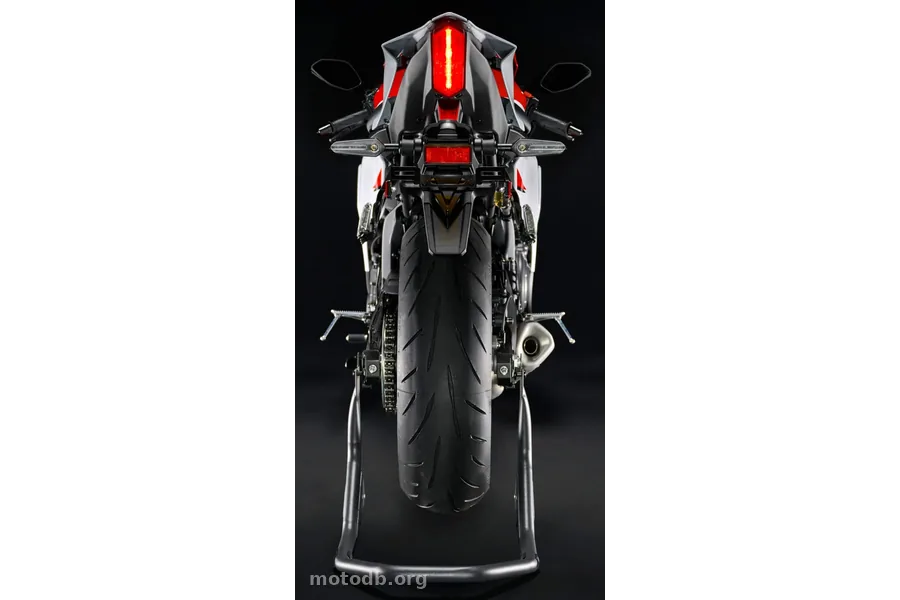
The 2026 R7 in 70th anniversary livery is aimed at those who want to enter the world of faired sportbikes without getting burned, while riding a technically accomplished machine. It proudly wears the colors of a glorious lineage, even if it shares only the look and the ambition. For an intermediate rider or a motorcyclist discovering track riding, it's one of the most coherent offerings on the market today. Provided you're willing to pay the price for that coherence.
Standard equipment
- Assistance au freinage : ABS cornering
- Nombre de mode de conduite : 5
- Taille de l'écran TFT couleur : 12,70 cm / 5 pouces
- Jantes forgées
- Indicateur de vitesse engagée
- Shifter
- Centrale inertielle
- Contrôle de traction
- Centrale inertielle
- Contrôle anti wheeling
- Aide au départ arrêté (Launch Control)
- Jantes aluminium
- ABS Cornering
- Bluetooth
Practical info
- Véhicule accessible au permis A2 ou bridable à 47.5ch / 35 Kw
- La moto est accessible aux permis : A, A2
Reviews & comments
No reviews yet. Be the first to share your opinion!