Key performance
Technical specifications
Engine
- Displacement
- 996 cc
- Power
- 135.0 ch @ 8500 tr/min (99.3 kW)
- Torque
- 105.9 Nm @ 7500 tr/min
- Engine type
- Bicylindre en V, 4 temps
- Cooling
- liquide
- Compression ratio
- 11.7:1
- Bore × stroke
- 98 x 66 mm
- Valves/cylinder
- 4
- Camshafts
- 2 ACT
- Fuel system
- Injection
Chassis
- Frame
- double poutre en alu et éléments de fonderie
- Gearbox
- boîte à 6 rapports
- Final drive
- Chaîne
- Front suspension
- Fourche téléhydraulique inversée Ø 43 mm, déb : 115 mm
- Rear suspension
- monoamortisseur type Rotary Damper, déb : 125 mm
Brakes
- Front brakes
- Freinage 2 disques Ø 320 mm, étrier 6 pistons
- Rear brakes
- Freinage 1 disque Ø 220 mm, étrier 2 pistons
- Front tyre
- 120/70-17
- Front tyre pressure
- 2.50 bar
- Rear tyre
- 190/50-17
- Rear tyre pressure
- 2.50 bar
Dimensions
- Seat height
- 815.00 mm
- Fuel capacity
- 17.00 L
- Weight
- 230.00 kg
- Dry weight
- 197.00 kg
- New price
- 10 989 €
Overview
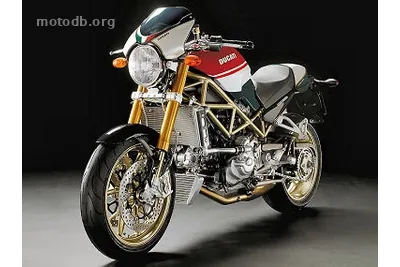
Do you remember the moment when Suzuki decided to play apprentice wizard? Around the turn of the 2000s, the Japanese giant, seeing red at Ducati's success in Superbike, pulled a secret weapon from its hat: the Suzuki TLR 1000. The idea was simple on paper: take the base of the TLS, a sporty road bike with a V-twin engine, and transform it into a thoroughbred racing machine ready to fight on race tracks around the world. The result, this 2003 Suzuki TLR 1000, is a motorcycle that never really found its place, caught between its crazy ambition and a mechanical reality a little too heavy to bear.
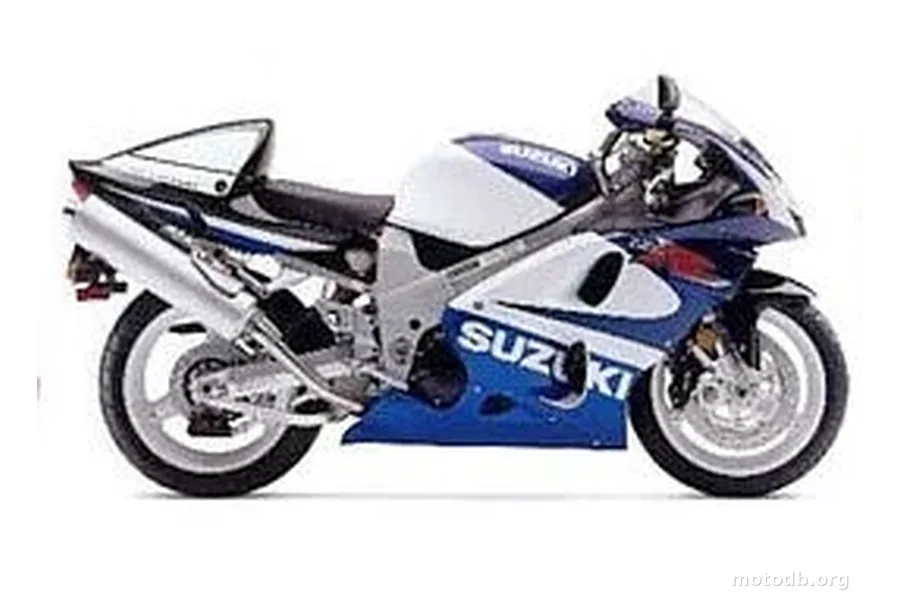
From the first glance, the intention is clear. You are facing a full-fledged superbike, with an imposing aluminum twin-spar frame, 43 mm inverted forks, and a rotary shock absorber inherited from the GSX-R. The engine, a 996 cm3 twin, has been seriously reworked with dual-stage injection and SRAD management, to make it produce 135 horsepower at 8500 rpm. On paper, it's playful. On the track, things went wrong. Despite generous torque of 106 Nm, the beast displayed a fully fueled weight of 230 kg, a significant handicap compared to more agile competitors. Opinions on the 2002 Suzuki TLR 1000 were often mixed: a charming engine, but a machine lacking agility in tight situations.
Yet, outside the limits of the stopwatch, the magic works. This power of the Suzuki TLR 1000, linear and tonic, turns out to be a real treat on open roads. The front end inspires absolute confidence, the traction is exemplary, and the position, although sporty, remains surprisingly practical. It is a motorcycle that breathes robustness, with its six-piston brake calipers biting 320 mm discs. The problem is that it drains its 17-liter tank shamelessly, seriously limiting duo rides, an experience that quickly becomes physical labor given the weight of the 1998 Suzuki TLR 1000 and subsequent versions.
Today, looking for a used Suzuki TLR 1000, especially in its famous yellow livery, means targeting a piece of history, a mechanical curiosity with a well-tempered character. Its original price, around 11,000 euros, made it an interesting alternative at the time. Now, it addresses the enthusiast who is looking for a raw sensation, a twin with a deep sound, and who accepts its flaws as an integral part of its charm. It is not the easiest motorcycle to live with, but consulting its technical specifications reminds us of a time when Suzuki was taking a bold gamble, with a machine that, despite its imperfections, marked people's minds with its mechanical frankness.
Practical info
- La moto est accessible aux permis : A
Reviews & comments
No reviews yet. Be the first to share your opinion!