Key performance
Technical specifications
No spec differences between these two model years.
Engine
- Displacement
- 996 cc
- Power
- 135.0 ch @ 8500 tr/min (99.3 kW)
- Torque
- 105.9 Nm @ 7500 tr/min
- Engine type
- Bicylindre en V, 4 temps
- Cooling
- liquide
- Compression ratio
- 11.7:1
- Bore × stroke
- 98 x 66 mm
- Valves/cylinder
- 4
- Camshafts
- 2 ACT
- Fuel system
- Injection
Chassis
- Frame
- double poutre en alu et éléments de fonderie
- Gearbox
- boîte à 6 rapports
- Final drive
- Chaîne
- Front suspension
- Fourche téléhydraulique inversée Ø 43 mm, déb : 115 mm
- Rear suspension
- monoamortisseur type Rotary Damper, déb : 125 mm
Brakes
- Front brakes
- Freinage 2 disques Ø 320 mm, étrier 6 pistons
- Rear brakes
- Freinage 1 disque Ø 220 mm, étrier 2 pistons
- Front tyre
- 120/70-17
- Front tyre pressure
- 2.50 bar
- Rear tyre
- 190/50-17
- Rear tyre pressure
- 2.50 bar
Dimensions
- Seat height
- 815.00 mm
- Fuel capacity
- 17.00 L
- Weight
- 230.00 kg
- Dry weight
- 197.00 kg
- New price
- 10 989 €
Overview
Are you looking for a raw sportbike that made Italian V-twins whine at the end of the 1990s? The Suzuki TLR 1000 was that Japanese provocation, a declaration of war sent onto Superbike circuits. Suzuki took the engine from the TLS, a powerful V-twin already, and subjected it to military-grade preparation: dual injection, optimized intake, sharpened internal components. The result is an engine that officially displays 135 horsepower, but whose internals were calibrated to brush against 150. Some preparers, like a Belgian whose story is still told, even extracted 180 horsepower from this twin cylinder. The question "What is the power of the Suzuki TLR 1000?" therefore deserves a nuanced answer: it is officially 135 hp, but its real potential is much wilder.
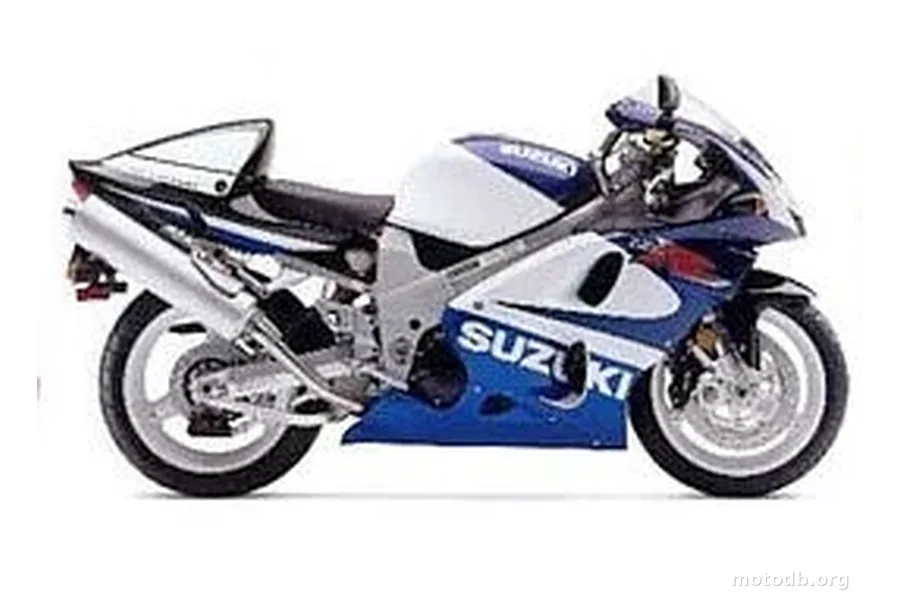
But this raw power was encased in a controversial envelope. The aluminum double-beam frame is as solid as a rock, the 43 mm inverted fork and the famous rotary shock absorber are high-end equipment. Braking with six-piston calipers leaves no room for doubt. However, the fully fueled weight of 230 kg, or approximately 197 kg dry depending on the versions, was its Achilles' heel. On the track, this mass was felt, despite very extensive settings. The Suzuki TLR 1000 was not the most agile in tight corners; it lacked the feverishness of its European rivals. Opinions on the 2002 Suzuki TLR 1000 or previous models often converge on this point: a fabulous engine in a chassis that is too generous.
It is precisely outside the purely competitive context that this motorcycle finds its true grace. On the open road, it transforms. The front end is remarkably efficient and safe, the driveability of this twin is deep and addictive. The position, although sporty, allows for acceptable comfort, and the protection is correct. It then becomes an extremely pleasant sporty touring bike, balanced despite its weight. The torque of 105.9 Nm available at 7500 rpm provides acceleration that sculpts the landscape. Only the 17-liter tank, with often ridiculous range, and the passenger space, which turns the duo into a carrying exercise, limit travel. But for those seeking a temperamental sportbike, the behavior of this engine is an enchanting argument.
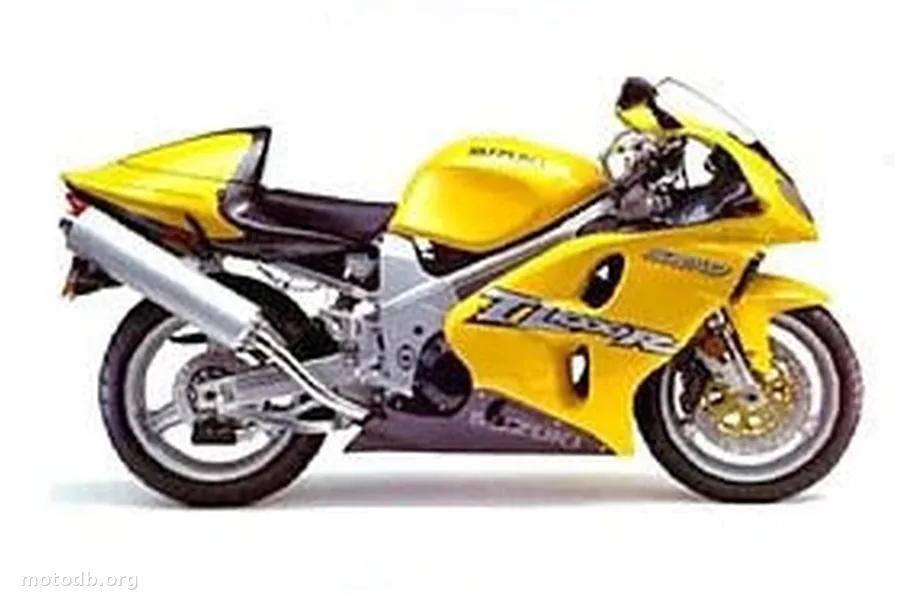
Today, finding a used Suzuki TLR 1000, especially in its signature yellow livery, is an adventure for enthusiasts of atypical mechanics. Its price at the time, around 10900 euros, was an argument, but today its value is historical. Studying the technical specifications of the Suzuki TLR 1000 reveals a transitional motorcycle, a bridge between the raw power of twins and Japanese sophistication. It won't beat a Ducati 916 on a stopwatch, but it offers a unique sensory experience, a V-twin rumble combined with robust construction. It's the sportbike for those who prefer the sensation of a torrential power to surgical precision, a piece of history that continues to fascinate.
Practical info
- La moto est accessible aux permis : A
Reviews & comments
No reviews yet. Be the first to share your opinion!