Key performance
Technical specifications
Engine
- Displacement
- 1255 cc
- Power
- 98.0 ch @ 7500 tr/min (72.1 kW)
- Torque
- 107.9 Nm @ 3700 tr/min
- Engine type
- 4 cylindres en ligne, 4 temps
- Cooling
- liquide
- Bore × stroke
- 79 x 64 mm
- Valves/cylinder
- 4
- Camshafts
- 2 ACT
- Fuel system
- injection
Chassis
- Frame
- Tubulaire en acier
- Gearbox
- boîte à 6 rapports
- Final drive
- Chaîne
- Front suspension
- Fourche téléhydraulique 43 mm de diamètre, déb : 130 mm
- Rear suspension
- Mono-amortisseur, déb : 136 mm
Brakes
- Front brakes
- Freinage 2 disques Ø 310 mm, étrier 4 pistons
- Rear brakes
- Freinage 1 disque Ø 240 mm, étrier simple piston
- Front tyre
- 120/70-17
- Front tyre pressure
- 2.50 bar
- Rear tyre
- 180/55-17
- Rear tyre pressure
- 2.90 bar
Dimensions
- Seat height
- 790.00 mm
- Fuel capacity
- 19.00 L
- Dry weight
- 225.00 kg
- New price
- 8 499 €
Overview
Who said you had to break the bank to rack up miles two-up? For years, the Bandit has played the clever outsider in the large touring segment, and this 2008 GT version pushes things a notch further. Suzuki takes its GSF 1250, already recognized for its generous temperament and rock-bottom price, and grafts on the equipment needed to play in the touring league. The result doesn't claim to rival a Honda Pan-European or a BMW K 1200 GT when it comes to refinement, but it poses an awkward question to premium competitors: what exactly do they offer that's so different to justify a price tag that's sometimes double?
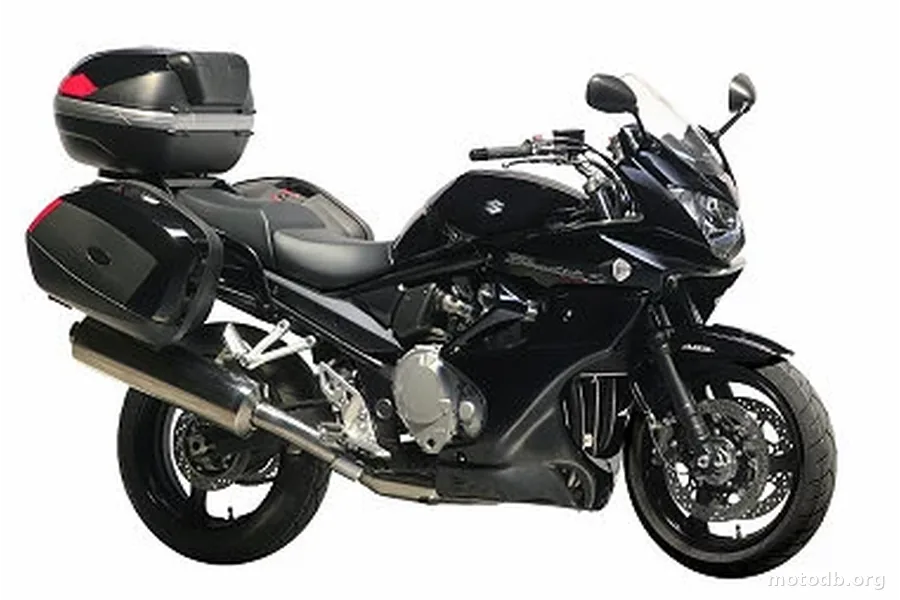
The water-cooled 1255 cc inline four-cylinder engine is the heart of the argument. With 98 horsepower available at 7500 rpm and, more importantly, 107.9 Nm of torque from just 3700 rpm, the powerplant isn't chasing outright performance. It banks on availability. In sixth gear at low revs, the Bandit GT pulls without complaint, hauling the machine and its crew without constantly demanding downshifts. That's exactly what you want from an engine built for touring. The Yamaha FJR 1300, more powerful and more sophisticated, also demands an extra 4000 euros. The Suzuki bets on pragmatism, and on that front, it scores points.
On the equipment side, the step up from the S to the GT version brings a full fairing that reshapes the silhouette and provides decent wind protection, a pair of 35-liter side cases, and a 49-liter top case with a passenger backrest. Everything you need to set off as a couple without worrying about logistics. The 19-liter tank allows reasonable range, even if an extra two or three liters would have been appreciated to space out motorway stops. The seat, set at 790 mm, remains accessible to most rider builds, which is no small matter on a touring machine where confidence at a standstill matters as much as comfort on the move.
The tubular steel frame and suspension — a 43 mm telescopic hydraulic fork and a rear mono-shock — do the job without any sporting pretension. Travel of 130 and 136 mm respectively soaks up the battered roads of southern Europe without turning every pothole into an ordeal. Braking, handled by twin 310 mm discs with four-piston calipers up front and a 240 mm disc at the rear, proves reassuring, especially with ABS keeping watch. At 225 kg dry, the Bandit GT is no featherweight, but it stays within the segment's norm. You can maneuver it without apprehension in a service station parking lot, which isn't always the case with the big German tourers.
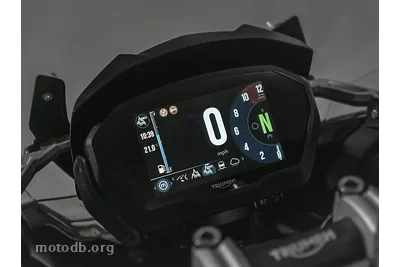
At 8499 euros, the Suzuki GSF 1250 Bandit GT ABS is aimed at the touring rider who refuses to pay top dollar for technologies he doesn't necessarily need. It has no electronic suspension, no cruise control, no TFT display. What it does offer is a solid engine, comprehensive standard equipment, and a price tag that leaves enough in the budget to fund the first road trip. For the sensible long-distance rider, the one who'd rather ride than show off, it's a hard choice to argue against.
Standard equipment
- Assistance au freinage : ABS
Practical info
- La moto est accessible aux permis : A
Reviews & comments
No reviews yet. Be the first to share your opinion!